**
How AI is Revolutionizing the Diagnosis of Sleep Disorders: A Glimpse into the Future of Sleep Medicine
**
**Introduction**
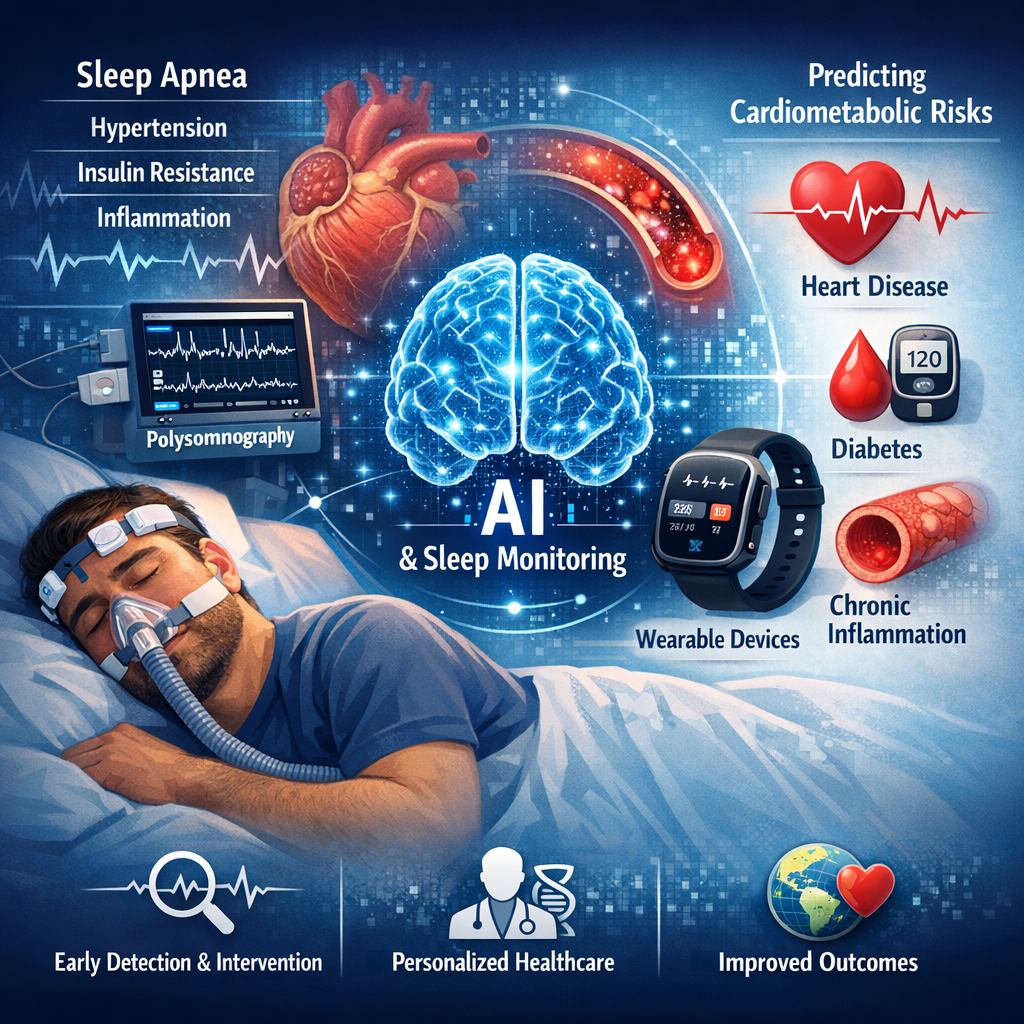
The journey to a restful night’s sleep is challenging for many, plagued by **sleep disorders** like insomnia, **sleep apnea**, and narcolepsy. These disorders interrupt rest and cause significant health issues if untreated. Traditional diagnoses involve cumbersome procedures such as **polysomnography**, requiring an overnight stay in a sleep lab. Now, the advent of **Artificial Intelligence** (**AI**) is transforming this field. By utilizing **machine learning** algorithms, AI identifies patterns in sleep data with a precision often exceeding human capabilities. Integrated into **wearable devices** and **smartphone apps**, AI offers non-intrusive monitoring, broadening access and personalizing the diagnosis process. Individuals can now gather sleep data at home, which AI analyzes to identify potential sleep disturbances. This aligns with the demand for **telemedicine**, offering a future of simpler, quicker, and more accurate sleep disorder diagnostics.
A notable advantage of AI is processing massive datasets, correlating diverse factors—such as **genetics**, lifestyle, and environment—contributing to sleep disorders. AI systems can distinguish between normal states and disorder indicators with precision. **Real-time feedback** allows for quick treatment plan adjustments, improving patient outcomes. As AI evolves, it aims to not only enhance diagnosis protocols but also introduce new treatment methods, altering the landscape of sleep medicine.
**Features**
Recent research highlights AI’s utility in diagnosing and managing sleep disorders. A notable study in *The Lancet Digital Health journal* [link](https://www.thelancet.com/journals/landig/issue/vol1-no1/PIIS2589-7500(19)X0197-0) showcases AI’s ability to improve diagnostic accuracy for **sleep apnea** by analyzing vast datasets from wearables, achieving over 90% accuracy compared to conventional methods. This success lies in AI’s ability to detect subtle physiological signals and breathing nuances overlooked by traditional methods.
Beyond sleep apnea, AI’s potential extends to diagnosing disorders like **insomnia** and **periodic limb movement disorder**. Research by the **Massachusetts Institute of Technology’s Computer Science and Artificial Intelligence Laboratory** [link](https://www.csail.mit.edu/) developed machine learning models to distinguish sleep stages in real-time. Correctly identifying sleep stages is crucial, as misdiagnosis often leads to ineffective treatment plans. These models show promise in outpatient settings, providing continuous monitoring without the inconvenience of high-density wiring used in sleep labs.
AI is transforming personalized medicine through **predictive analytics**. By analyzing data trends over time, AI identifies individuals at risk for developing sleep disorders before clinical manifestations. A pioneering study from *Nature Medicine* [link](https://www.nature.com/articles/s41591-019-0464-4) demonstrates how deep learning models, trained on extensive sleep study datasets, facilitate early identification and tailored intervention strategies.
Moreover, AI-based platforms like **IBM’s Watson Health** explore AI-driven patient engagement and education tools. These platforms serve as diagnostic aids and interactive resources for patients, offering insights on lifestyle and environmental adjustments to enhance sleep quality. Patients become active participants in their care, setting a new standard for future sleep medicine.
**Conclusion**
The integration of **AI** in sleep diagnostics promises significant improvement in patient care. AI’s capability to analyze complex datasets enhances diagnosis accuracy, reducing human errors. AI in wearables and mobile applications democratizes healthcare access, enabling more people to seek diagnosis and treatment from home. The predictive power of AI is tapping into preemptive medicine, aiming to reduce the prevalence of sleep-related health issues.
In conclusion, ongoing AI advancements offer a promising future for sleep medicine. Collaborative efforts among data scientists, medical professionals, and technologists will be vital in refining these AI systems to better serve patients. A future where AI-driven insights enhance diagnostic processes and inform targeted treatments is within reach, significantly reshaping global sleep health approaches. As awareness and capabilities grow, AI stands as a beacon of hope for those struggling with sleep disorders, lighting the way toward restful, rejuvenating sleep for all.
**Concise Summary**
AI is revolutionizing sleep medicine by enhancing the diagnosis of disorders like insomnia and sleep apnea. By utilizing machine learning, AI offers unprecedented accuracy in identifying sleep patterns and disorders. This technology is integrated into wearables and smartphone apps, enabling individuals to gather and analyze sleep data at home. AI processing of large datasets identifies at-risk individuals and informs personalized treatment plans. With platforms like IBM’s Watson Health, AI also fosters patient engagement, empowering active participation in healthcare. As AI continues to evolve, it promises a future of simplified, precise sleep disorder diagnostics and innovative treatment methods.

Dominic E. is a passionate filmmaker navigating the exciting intersection of art and science. By day, he delves into the complexities of the human body as a full-time medical writer, meticulously translating intricate medical concepts into accessible and engaging narratives. By night, he explores the boundless realm of cinematic storytelling, crafting narratives that evoke emotion and challenge perspectives.
Film Student and Full-time Medical Writer for ContentVendor.com