The Neural Pathways Between Sleep Apnea and Neurodegeneration: Breaking the Silent Link
Introduction
**Sleep apnea** is more than just a disruptive nighttime disorder that causes loud snoring and sporadic breathing interruptions. Its implications reverberate deeply into our **neural architecture**, potentially precipitating or exacerbating **neurodegenerative diseases**. Sleep apnea occurs when the tissues in the throat relax excessively, temporarily blocking the airway and leading to intermittent lapses in breathing during sleep. This common disorder affects millions globally, with varying degrees of severity.
Now, put neurodegenerative diseases into the mix: conditions such as **Alzheimer’s**, **Parkinson’s**, and other memory-related diseases emerge as people age, characterized by the gradual degeneration of neurons in the brain. The connection between sleep apnea and neurodegenerative conditions, though not overt at first glance, unveils a silent link that could reshape our understanding of how one impacts the other.
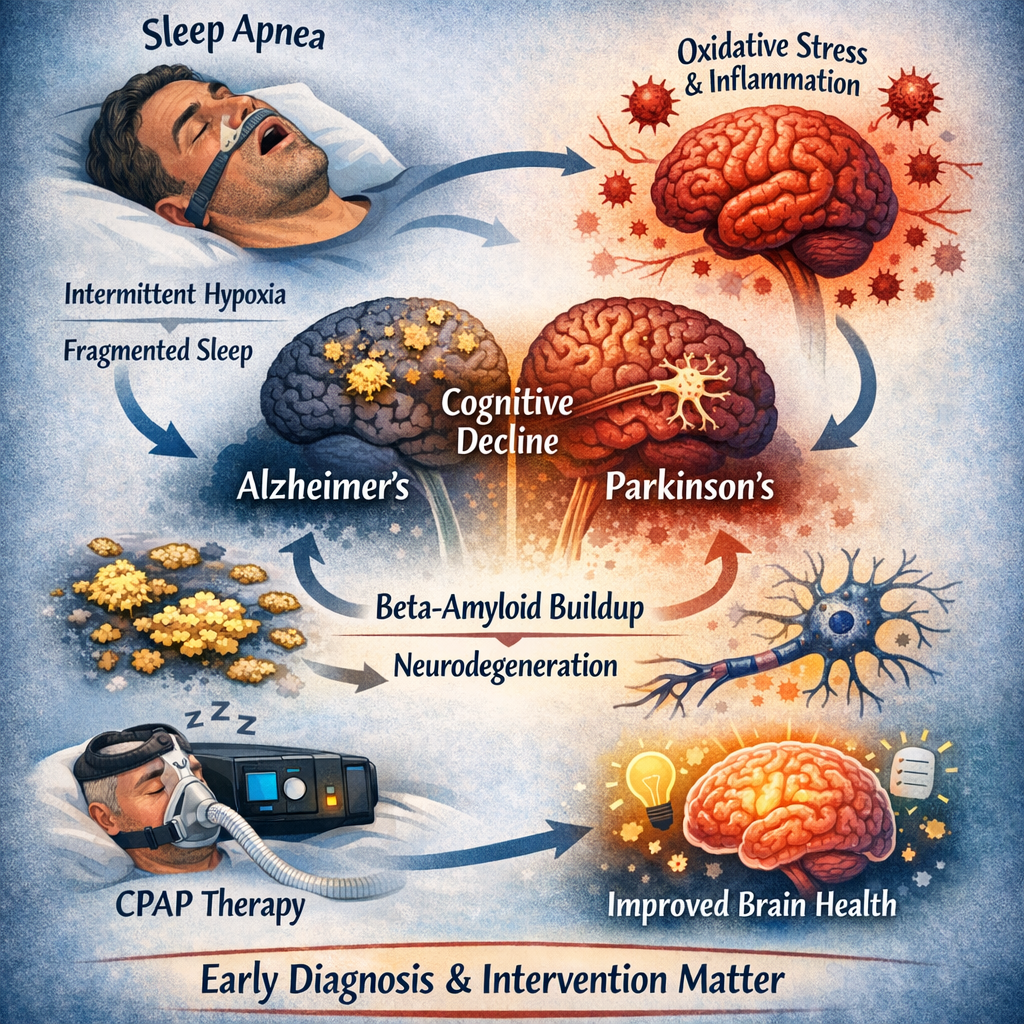
Current research suggests that **sleep apnea** can lead to **sleep fragmentation** and **hypoxemia** (low blood oxygen levels), which may have cumulative damaging effects on brain structures and functions. This sleep disorder can lead to insufficient restorative sleep and may directly contribute to neural damage. Meanwhile, the low oxygen levels associated with sleep apnea could provoke **oxidative stress** and **inflammation**, both of which are known contributors to neurodegeneration.
Furthermore, the intermittent hypoxia in sleep apnea might lead to a buildup of **beta-amyloid peptide plaques** and **tau protein tangles**, both pivotal markers in **Alzheimer’s disease**. The constant cycle of breathing cessation and resumption could invoke chronic stress responses, further impairing brain health over time. Recent studies also indelibly link sleep disturbances with the hastening of cognitive decline, establishing sleep apnea not only as a respiratory issue but also a neurological concern.
Given the prevalence of both sleep apnea and neurodegenerative diseases, understanding the neural pathways connecting these conditions is critical. By doing so, we can improve preventative measures and therapeutic approaches, ultimately enhancing quality of life for those affected.
Features
Significant strides have been made in understanding the interplay between **sleep apnea** and **neurodegenerative diseases** through various professional and medical studies. One prominent study published in the [*Journal of Alzheimer’s Disease*](https://content.iospress.com/journals/journal-of-alzheimers-disease) highlighted that individuals experiencing untreated obstructive sleep apnea (OSA) showed accelerated cognitive decline compared to those without sleep apnea. This research underscores the importance of early diagnosis and treatment of sleep apnea to possibly mitigate its impact on cognitive health.
Beyond **cognitive decline**, studies have observed actual changes in brain structure associated with sleep apnea. Research from the [*American Journal of Respiratory and Critical Care Medicine*](https://www.atsjournals.org/journal/ajrccm) identified reductions in **gray matter volume** in areas of the brain responsible for memory, mood regulation, and executive functions in **sleep apnea patients**. This finding is particularly significant as it emphasizes the tangible impact this sleep disorder can have on brain health.
Researchers from the **University at Buffalo** conducted a study demonstrating that treating sleep apnea with **continuous positive airway pressure (CPAP) therapy** not only improved sleep quality but also positively influenced cognitive functions. Participants showed substantial improvements in memory, attention, and executive functions after consistent CPAP use, which points to the reversible nature of apnea-induced neurodegeneration when appropriate interventions are employed early.
Moreover, studies have investigated the pathophysiology underlying this link. A publication in [*Sleep*](https://academic.oup.com/sleep) explored how oxidative stress triggered by intermittent hypoxia could lead to increased production of **amyloid-beta peptides**, thus connecting the dots between sleep apnea and Alzheimer’s pathology. Another study published in [*Annals of Neurology*](https://onlinelibrary.wiley.com/journal/15318249) focused on the inflammatory mechanisms whereby sleep apnea might accelerate neurodegeneration, prompting further research into anti-inflammatory treatments as a potential strategy for managing, and perhaps even reversing, some of these effects.
Conclusion
The intricate neural pathways that link sleep apnea to neurodegeneration represent a vital frontier in both sleep and neurological research. Recognizing and acknowledging this connection allow for a more holistic approach to tackling these prevalent health concerns. The implications of these discoveries suggest that healthcare professionals need to prioritize screening and treating sleep apnea, particularly in populations at risk for neurodegenerative diseases.
As research progresses, there is hope that better diagnostic tools and therapies will emerge, enabling earlier intervention and potentially altering the course of these devastating brain disorders. Treatment modalities like **CPAP therapy** offer a promising glimpse into how addressing sleep apnea can mitigate neural decline, providing a beacon of hope for preserving cognitive function and quality of life.
Ultimately, breaking the silent link between sleep apnea and neurodegeneration begins with heightened awareness and proactive healthcare measures. By fostering a deeper understanding and facilitating early interventions, we can aim to significantly reduce the burden of neurodegenerative diseases and improve the overall health landscape for future generations.
References
1. [Journal of Alzheimer’s Disease](https://content.iospress.com/journals/journal-of-alzheimers-disease)
2. [American Journal of Respiratory and Critical Care Medicine](https://www.atsjournals.org/journal/ajrccm)
3. [Sleep](https://academic.oup.com/sleep)
4. [Annals of Neurology](https://onlinelibrary.wiley.com/journal/15318249)
These references provide a basis for the studies and findings discussed in the article, illustrating the ongoing research efforts in understanding the link between sleep apnea and neurodegeneration.
**Concise Summary**: The article discusses the connection between sleep apnea and neurodegenerative diseases like Alzheimer’s, showing how the former can lead to brain structure damage and cognitive decline due to sleep fragmentation and hypoxemia. Studies highlight that treating apnea with CPAP therapy not only improves sleep but also cognitive function. This emphasizes the need for early diagnosis and treatment of sleep apnea to potentially mitigate its impact on neurological health, aiming to reduce the burden of neurodegenerative diseases and preserve cognitive function.

Dominic E. is a passionate filmmaker navigating the exciting intersection of art and science. By day, he delves into the complexities of the human body as a full-time medical writer, meticulously translating intricate medical concepts into accessible and engaging narratives. By night, he explores the boundless realm of cinematic storytelling, crafting narratives that evoke emotion and challenge perspectives.
Film Student and Full-time Medical Writer for ContentVendor.com