AI-Driven Sleep Disorder Risk Calculator Revolutionizing Home Diagnosis for a Healthier Tomorrow
**Introduction**
In an era where **artificial intelligence (AI)** is reshaping industries globally, the field of **sleep medicine** is experiencing its transformative influence. **Sleep disorders** are prevalent health issues that significantly impact the well-being of millions worldwide. According to the [American Sleep Association](https://www.sleepassociation.org/about-sleep/sleep-statistics/), an estimated 50-70 million US adults have a sleep disorder. Sleep disturbances have been linked to numerous physical and mental health problems, including obesity, depression, cardiovascular disease, and diabetes, making diagnosis and management crucial.
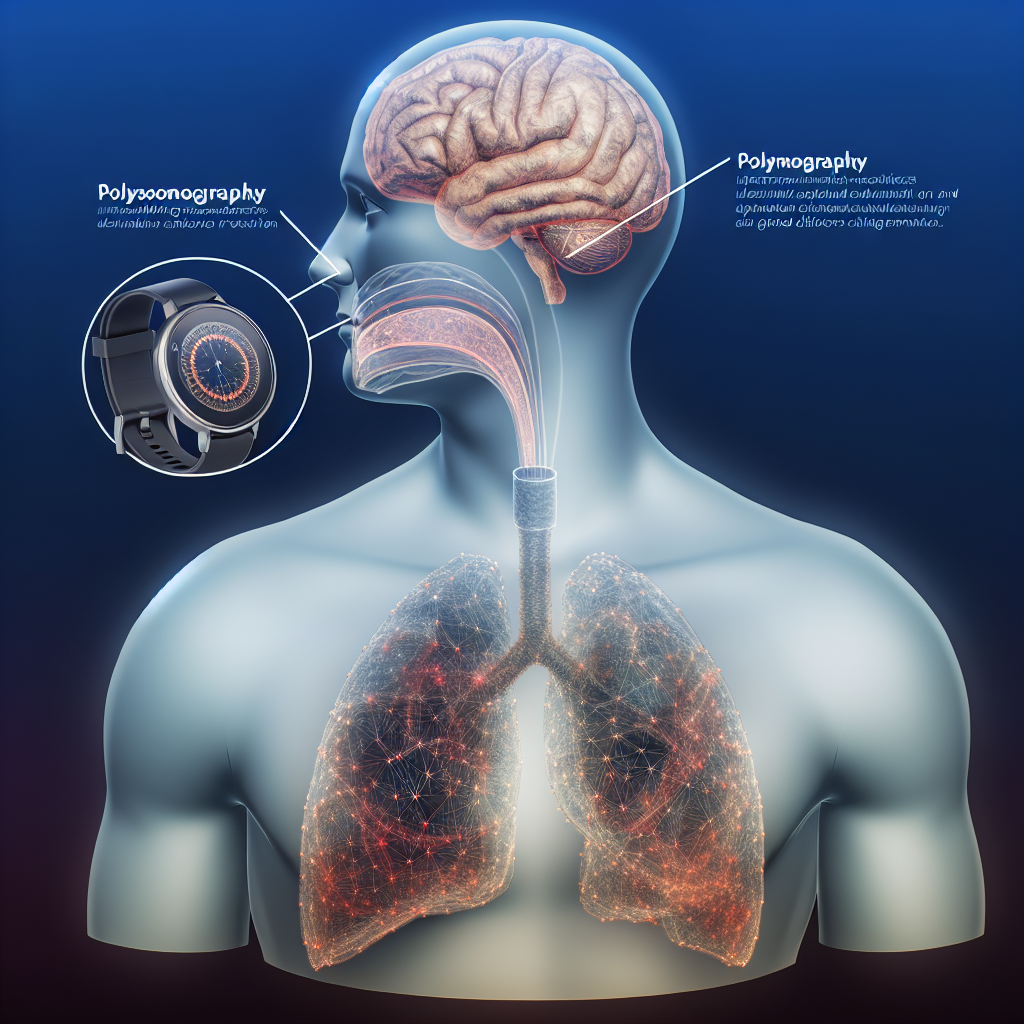
Traditional sleep disorder diagnosis often involves overnight **polysomnography studies** conducted in clinical settings, which can be expensive and inconvenient. This has led to an increased interest in developing methods that simplify **home diagnosis**. Enter AI-driven sleep disorder risk calculators, tools designed to assess the potential for sleep disorders using data inputs and predictive algorithms. These cutting-edge technologies promise to democratize **sleep health** by allowing individuals to identify potential risks from the comfort of their homes.
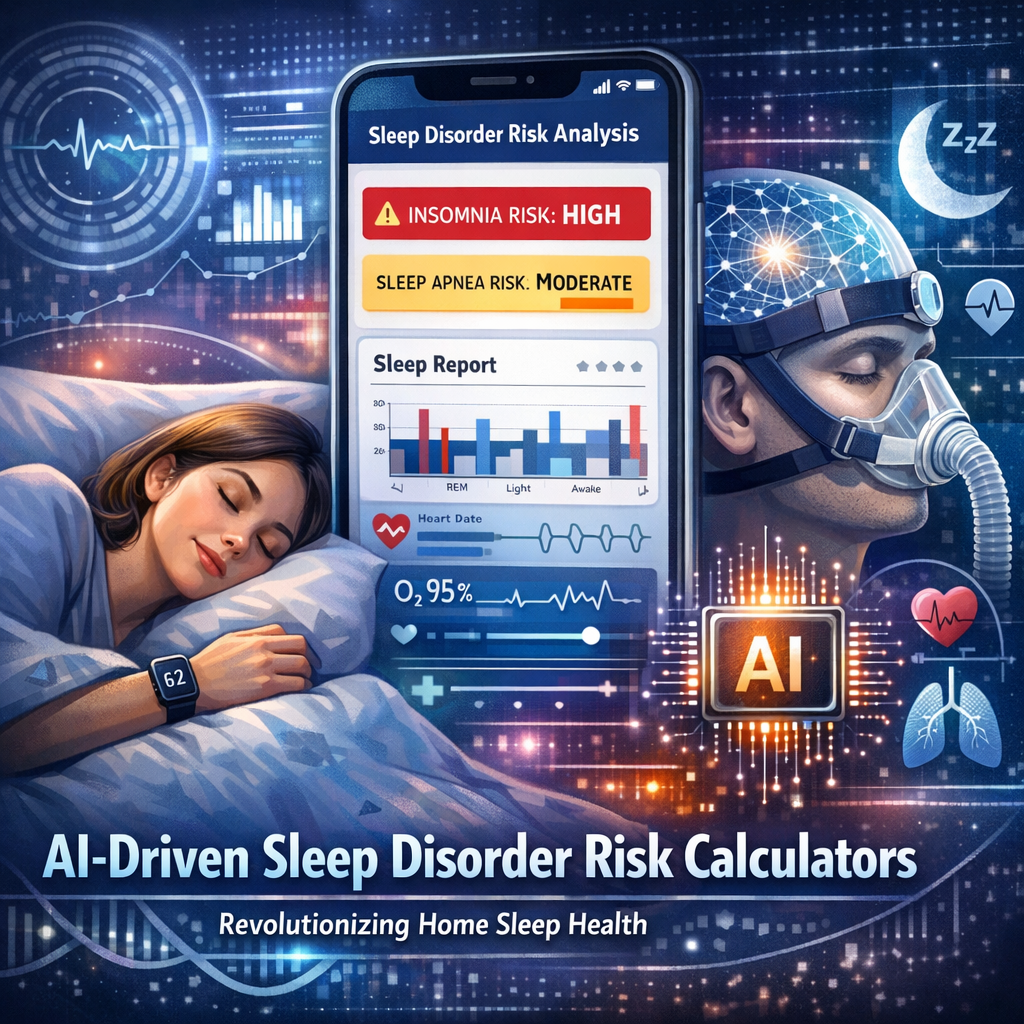
AI-powered tools work by analyzing various data points related to sleep, such as **sleep patterns**, body movements, and even physiological markers like heart rate and breathing. These calculations can provide users with risk assessments for conditions such as insomnia, sleep apnea, restless leg syndrome, and narcolepsy. By leveraging **machine learning**, these tools can adapt and improve their accuracy over time, making them increasingly reliable.
The integration of AI in sleep diagnosis is not just a technological advancement—it represents a fundamental shift toward personalized healthcare. Users gain actionable insights into their **sleep health**, allowing them to seek professional advice if a potential risk is identified. Furthermore, these tools empower users by increasing their awareness of **sleep hygiene** practices that can improve sleep quality. As AI technology continues to evolve, its applications in home diagnosis present an exciting frontier in mitigating sleep-related health issues and paving the way for a healthier tomorrow.
Features
Recent years have witnessed a surge in the development of AI technologies tailored to healthcare, with particular emphasis on sleep medicine. A study published in the [journal Nature and Science of Sleep](https://www.dovepress.com/journals/nature-and-science-of-sleep) highlights the effectiveness of AI algorithms in analyzing sleep data to predict disorders. The study demonstrated that AI models could identify complex patterns in sleep data that might be overlooked by human experts, thereby increasing diagnostic accuracy.
Moreover, research documented in [Sleep Medicine Reviews](https://www.sciencedirect.com/journal/sleep-medicine-reviews) examines the use of **machine learning algorithms** to evaluate and categorize sleep stages from wearable device data. This advances the capabilities of tools like AI-driven risk calculators by providing more granular insights into user sleep behavior, which is crucial for accurate risk assessment of conditions like **sleep apnea**.
The development of AI-driven sleep tools is further supported by interdisciplinary collaboration across fields such as **data science**, **biomedical engineering**, and **psychology**. Such collaboration ensures these tools are backed by scientific rigor and practicality. For instance, a pioneering project known as “SleepAI” leverages open-source data to train algorithms capable of diagnosing sleep disorders at home, demonstrating the potential of community-driven AI innovations.
These projects are significant because they push the boundaries of traditional medical diagnostics. AI-driven solutions offer scalable and cost-effective alternatives to in-clinic sleep tests, making them accessible to a broader audience. The continuous refinement of these tools through real-world data collection ensures their ongoing improvement in efficacy and reliability.
Conclusion
The emergence of AI-driven sleep disorder risk calculators marks a pivotal advancement in personal health management. By providing an accessible and efficient means of assessing the risk of sleep disorders, they empower individuals to take proactive steps towards improving their sleep health. As these technologies continue to evolve, they promise not only to enhance diagnostic precision but also to foster a culture of preventive health practices centered around sleep hygiene.
Ultimately, the integration of AI in sleep health represents a broader trend towards personalized, data-driven healthcare. For a healthier tomorrow, the focus must be on advancing tools that not only diagnose but also predict and prevent health issues. By revolutionizing home diagnosis, AI-driven sleep solutions are setting new standards in healthcare, making it an exciting time for both medical professionals and individuals keen on bettering their health. As we continue to embrace these innovations, we move closer to a future where optimal sleep health is attainable for all, significantly enhancing quality of life.
**Summary**
AI-driven sleep disorder risk calculators are transforming sleep medicine by enabling home diagnosis of sleep conditions such as insomnia and sleep apnea. These tools, which analyze sleep data using AI algorithms, represent a shift towards personalized healthcare, allowing individuals to gain insights into their sleep health and seek timely medical advice. Supported by interdisciplinary research, they provide cost-effective, scalable, and reliable alternatives to traditional in-clinic tests. As AI evolves, these technologies promise to improve diagnostic accuracy and foster preventive health practices, marking significant progress in making optimal sleep health accessible to everyone.

Dominic E. is a passionate filmmaker navigating the exciting intersection of art and science. By day, he delves into the complexities of the human body as a full-time medical writer, meticulously translating intricate medical concepts into accessible and engaging narratives. By night, he explores the boundless realm of cinematic storytelling, crafting narratives that evoke emotion and challenge perspectives.
Film Student and Full-time Medical Writer for ContentVendor.com