The Oxygen-Health Connection: How Breathing Practices Could Be the Key to Cardiovascular Longevity
In our fast-paced world, the act of **breathing** is often overlooked, reduced to an automatic background function that sustains life without much thought. However, breathing is not merely a life-sustaining process—its rhythm and quality can significantly influence our overall **health**, particularly when it comes to **cardiovascular longevity**. At the heart of this connection lies the simple molecule, **oxygen**, an element that is both vital and powerful in its role to maintain and optimize bodily functions.
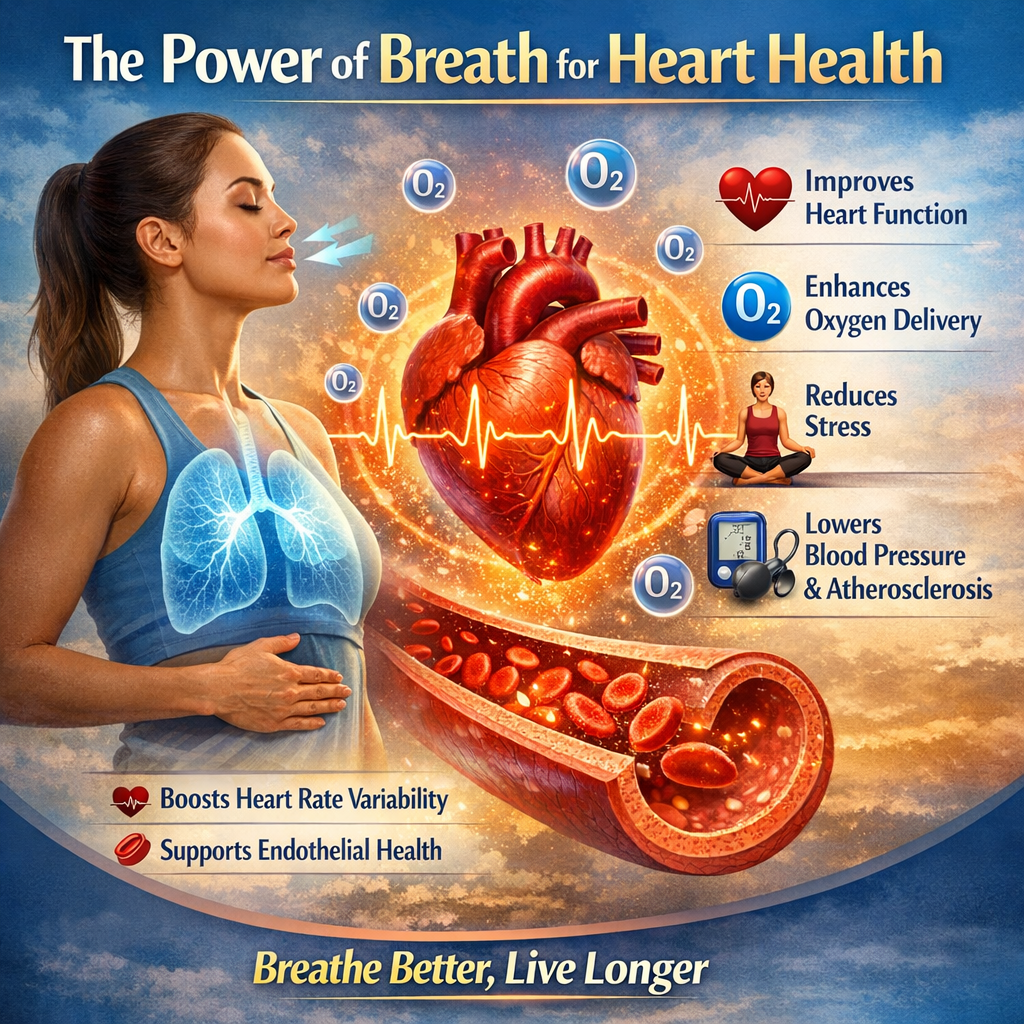
The relationship between oxygen and cardiovascular health is profound. Our circulatory system is designed to transport oxygen throughout the body, enriching tissues and organs, and maintaining the vitality of each system. When we take a breath, oxygen is absorbed by the blood in our **lungs**, attaches to hemoglobin molecules, and is then delivered to various parts of the body. This is a critical process where oxygen acts as a key nutrient for cells, fueling their function and promoting repair and regeneration.
However, beyond the sheer necessity of oxygen, the way we breathe can significantly impact cardiovascular health. The heart and lungs work in close coordination; when our breath is calm and deep, it fosters a state known as **coherence**, where **heart rate variability (HRV)** is optimized. HRV is an important measure that indicates the heart’s ability to respond to varying demands and stressors, correlating with better cardiovascular health and greater longevity. Conversely, poor breathing habits, such as shallow or erratic breathing, can compromise this coordination, leading to stress and potential cardiovascular strain.
The notion of using breathing practices to enhance cardiovascular health is not new, yet its potential is gaining more attention in both scientific circles and mainstream health guidance. Practices such as **diaphragmatic breathing**, **pranayama** from yoga, and other meditative breathing techniques have shown promise not only in enhancing oxygen intake but also in promoting relaxation and reducing stress—a significant risk factor for cardiovascular disease.
Features: Evidence from Medical Studies
Medical research has increasingly focused on the intersection of breathing practices and cardiovascular health. A study published in the [Journal of Applied Physiology](https://journals.physiology.org/doi/full/10.1152/japplphysiol.00386.2017) highlights how controlled breathing exercises can improve HRV, suggesting a positive impact on cardiovascular health. Participants practicing slow, deep breathing exhibited significant improvements in their autonomic function—an indicator of reduced stress and improved heart health.
Another pivotal study in the [Circulation Research](https://www.ahajournals.org/doi/full/10.1161/CIRCRESAHA.116.310401) journal explored the effects of pranayama, a yogic breathing technique, on cardiovascular parameters. The findings suggested that regular practice of pranayama improved blood pressure, heart rate, and overall heart function. This aligns with the theory that enhanced oxygen delivery and stress reduction can fortify the heart against disease.
Moreover, a comprehensive review in the [Frontiers in Physiology](https://www.frontiersin.org/articles/10.3389/fphys.2017.00010/full) detailed how breathing exercises influenced endothelial function—the inner lining of blood vessels—which is crucial for maintaining vascular health and elasticity. Improved endothelial function translates to a reduced risk of **atherosclerosis**, a condition characterized by hardened or narrowed arteries that can lead to cardiovascular events.
These studies underscore a growing recognition within the medical community: breathing practices are not just ancillary wellness activities but potentially powerful interventions for maintaining cardiovascular health. As these practices are non-invasive and accessible to almost everyone, they present a practical complement to traditional healthcare strategies aimed at enhancing longevity and quality of life.
Conclusion
In conclusion, the oxygen-health connection provides us with a valuable perspective on how we can influence our own cardiovascular longevity through simple, conscious actions. Breathing practices, rooted in ancient traditions and now supported by modern science, offer a pathway to enhancing oxygen delivery, reducing stress, and improving heart health. As we continue to navigate an ever-demanding world, taking the time to focus on our breath could indeed be a cornerstone strategy for living longer, healthier lives. The act of mindful breathing is not only revitalizing but empowers individuals to take control of their health naturally and effectively. Embracing the power of breath offers a significant return on investment: a potential increase in cardiovascular vitality and overall longevity.
**Summary:**
Breathing is crucial not only for basic survival but also impacts **cardiovascular health**. Modern studies highlight the benefits of practices like **diaphragmatic breathing** and **pranayama**, which enhance **oxygen** intake, improve heart rate variability, and reduce stress, thereby boosting heart health and longevity. Such practices improve blood pressure, heart function, and endothelial health, potentially circumventing conditions like **atherosclerosis**. As accessible and non-invasive methods, breathing exercises offer a promising complement to traditional healthcare strategies aimed at improving cardiovascular wellbeing and increasing longevity.

Dominic E. is a passionate filmmaker navigating the exciting intersection of art and science. By day, he delves into the complexities of the human body as a full-time medical writer, meticulously translating intricate medical concepts into accessible and engaging narratives. By night, he explores the boundless realm of cinematic storytelling, crafting narratives that evoke emotion and challenge perspectives.
Film Student and Full-time Medical Writer for ContentVendor.com