How AI-Driven Diagnostics Are Revolutionizing Sleep Apnea Treatment: The Future of Sleep Medicine
Introduction
**Sleep apnea**, a common disorder characterized by interrupted breathing during sleep, affects millions of people globally. It contributes to a range of health problems from daytime fatigue to cardiovascular issues. Traditional diagnostic methods primarily rely on **polysomnography**, an expensive procedure conducted in a sleep lab. However, the advent of **artificial intelligence (AI)** in medicine is transforming this landscape, promising more accessible, efficient, and personalized care for sleep apnea patients.
AI-driven diagnostics utilize **machine learning algorithms** to analyze patient data with unprecedented precision. By sifting through vast amounts of sleep data, these algorithms can identify patterns and anomalies that may go unnoticed by human eyes. This capability not only speeds up the diagnostic process but also enhances accuracy, enabling clinicians to tailor treatment plans more effectively.
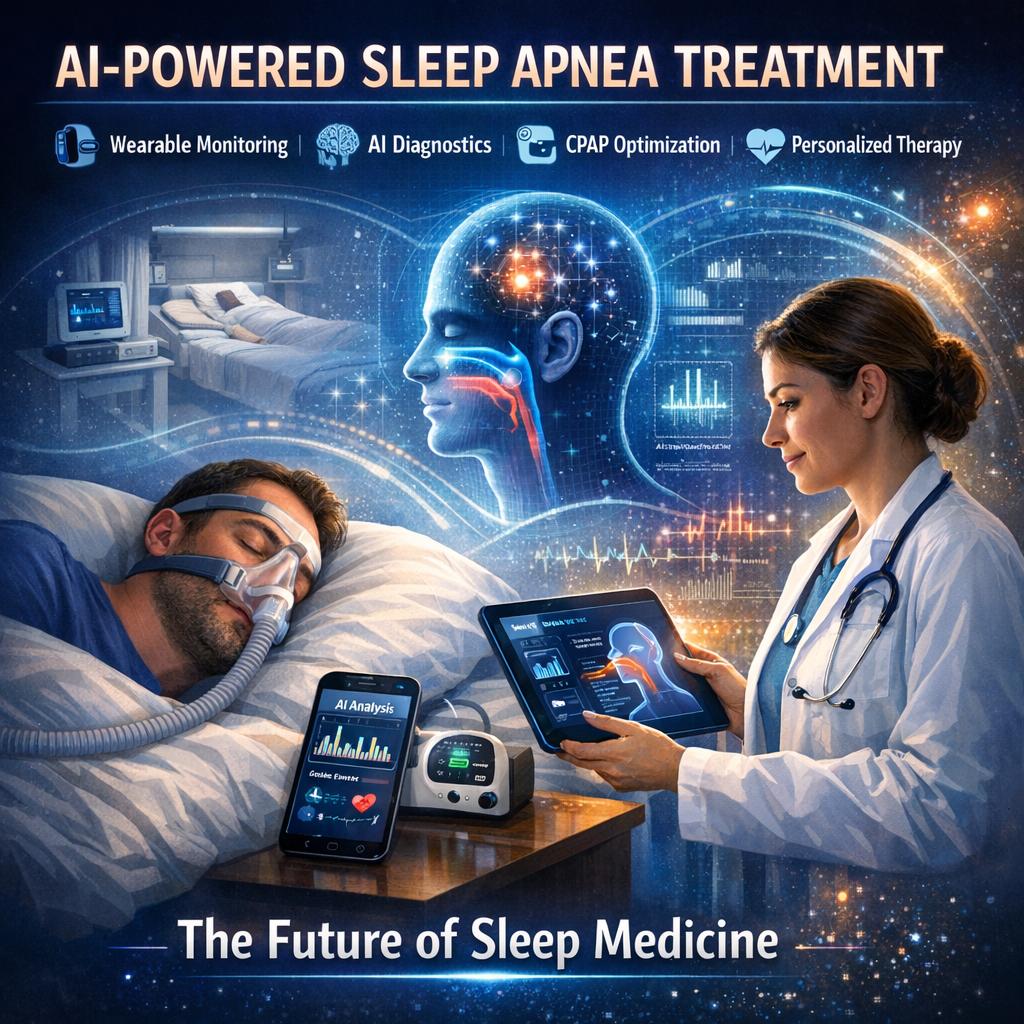
The integration of AI into **sleep medicine** heralds a new era of home-based diagnosis and monitoring. **Wearable devices** equipped with AI technology allow patients to conduct sleep tests in the comfort of their homes. These devices collect data on physiological parameters like respiratory patterns, oxygen levels, and heart rate, which are processed using AI algorithms to provide real-time insights into a patient’s sleep health. This shift reduces the burden on healthcare facilities, making it easier for individuals to seek diagnosis and treatment.
Moreover, AI’s role in **predictive analytics** reshapes how clinicians approach sleep apnea treatment. By examining past data, AI systems can predict the progression of sleep apnea and potential complications, empowering healthcare providers to intervene earlier and prevent adverse health outcomes. This proactive approach is crucial given the chronic nature of sleep apnea and its association with numerous health conditions.
Features
Several studies underscore the transformative role of AI in sleep apnea treatment. A pivotal study published in the journal [Nature Machine Intelligence](https://www.nature.com/articles/s41539-019-0052-4) highlighted AI’s ability to analyze complex datasets with a 90% accuracy rate in diagnosing sleep apnea, compared to the traditional polysomnography method, which boasts an accuracy of around 80%. This study underscores the success of AI in narrowing the diagnostic gap and enhancing the screening process for sleep apnea.
Another study by researchers from [MIT](http://news.mit.edu/2020/deep-learning-sleep-apnea-diagnosis-1029) demonstrated the effectiveness of **deep learning models** in identifying sleep apnea events. By training AI on extensive datasets derived from wearable devices, researchers achieved a diagnostic accuracy comparable to that of experienced sleep specialists. These findings suggest that AI can serve as both an adjunct and a potential substitute for traditional diagnostic methods, paving the way for widespread, scalable solutions.
AI’s ability to continuously learn from new data means it can adapt to the evolving nature of sleep apnea, which may present differently across diverse populations and age groups. This adaptability is crucial for **personalized medicine**, offering bespoke treatment plans tailored to each patient’s unique profile. AI-generated insights can assist clinicians in deciding the most appropriate interventions, whether it involves lifestyle modifications, **Continuous Positive Airway Pressure (CPAP) therapy**, or surgical options.
AI-driven platforms are proving instrumental in monitoring treatment efficacy over time. By analyzing ongoing data from patients using CPAP devices, AI algorithms can assess adherence to treatment and therapeutic outcomes, providing real-time feedback to both patients and healthcare providers. This continuous loop of data and feedback helps in fine-tuning treatment protocols and maintaining optimal sleep health.
Conclusion
The integration of AI in **sleep apnea diagnostics** and treatment signifies a leap forward for sleep medicine. By combining AI algorithms’ precision with home-based monitoring convenience, this technology makes sleep apnea management more accessible and personalized. This revolutionary shift not only improves diagnostic accuracy and treatment effectiveness but also empowers patients by giving them greater control over their health.
As AI-driven diagnostics evolve, the future of sleep medicine looks promising. By leveraging **AI capabilities**, healthcare providers can deliver more efficient and patient-centered care, improving outcomes for millions affected by sleep apnea. This ongoing transformation underscores AI’s potential to reshape healthcare landscapes, not just for sleep disorders, but across various medical fields. As we stand on this new frontier, the promise of AI in revolutionizing sleep apnea treatment becomes ever clearer.
**Concise Summary**
The integration of **AI** in **diagnosing and treating sleep apnea** is revolutionizing sleep medicine by enhancing accuracy, reducing costs, and shifting diagnosis from lab-based to home-based environments. AI-driven technology uses **machine learning** to analyze vast amounts of patient data, identifying patterns with precision. It’s proven more accurate than traditional methods and provides real-time insights into sleep health. These advancements allow for personalized treatment plans, proactive interventions, and continuous monitoring of therapy effectiveness. As AI technology continues to evolve, it promises a future of more accessible and efficient sleep apnea management, significantly impacting overall healthcare.

Dominic E. is a passionate filmmaker navigating the exciting intersection of art and science. By day, he delves into the complexities of the human body as a full-time medical writer, meticulously translating intricate medical concepts into accessible and engaging narratives. By night, he explores the boundless realm of cinematic storytelling, crafting narratives that evoke emotion and challenge perspectives.
Film Student and Full-time Medical Writer for ContentVendor.com