The Oxygen Deception: How Your Breathing Patterns Could Be Secretly Sabotaging Your Healthspan
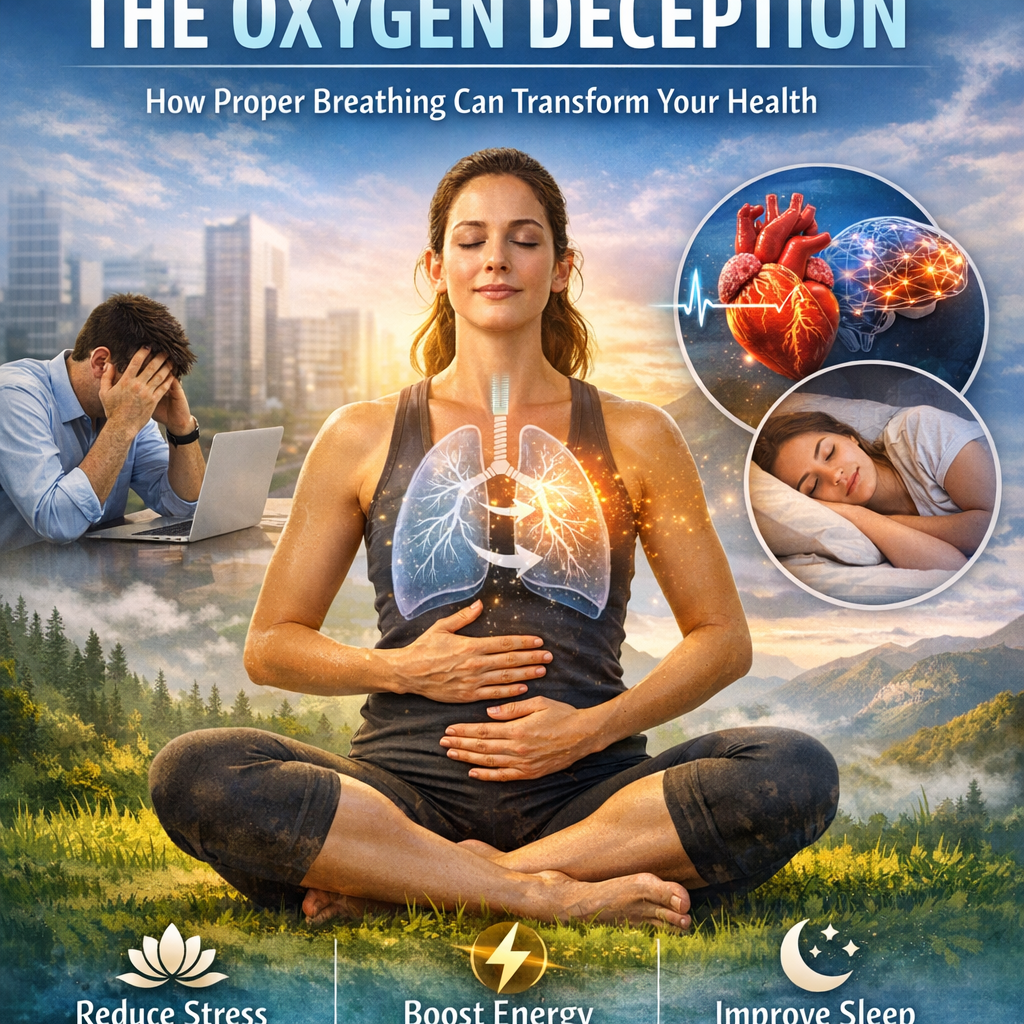
Proper **breathing** is as fundamental to life as eating and sleeping, yet many of us barely give it a second thought. We often consider **breath** as an involuntary action, something so intrinsic that its complexity is overlooked. But what if your seemingly natural **breathing patterns** are quietly undermining your **healthspan**? Understanding how you **breathe** is vital to optimizing health. The quality of breath can influence everything from **sleep** and **digestion** to **mood** and **energy levels**. Despite the critical role **breathing** plays, improper patterns often remain unchecked, inadvertently curtailing our full potential for longevity and well-being.
**Current lifestyle trends** are contributing to the rise of unhealthy breathing habits. The hustle and bustle of modern life, characterized by prolonged hours in sedentary positions, excessive screen time, and high **stress** levels, can all play a role. Many people develop shallow breathing habits, inhaling only into the chest instead of using the diaphragm. This kind of breathing restricts oxygen intake and can elevate stress responses, perpetuating a cycle of fatigue and poor health. The solution begins with awareness and education.
The implications of inefficient **breathing** are profound, affecting both mental and physical health. Shallow breathing, for instance, can lead to an increase in **anxiety** and **stress** levels, interfere with **sleep quality** by contributing to **sleep apnea**, and exacerbate conditions like **asthma**. Over time, this can diminish the quality of life and reduce **healthspan**—the period of one’s life spent in good health, free from chronic diseases.
On the contrary, adopting better breathing techniques can enhance overall health. By shifting to **diaphragmatic** or belly breathing, individuals can significantly improve their body’s oxygen exchange, optimizing the delivery of oxygen to vital organs. This type of breathing encourages relaxation, reduces blood pressure, and optimizes the body’s use of oxygen, thereby increasing energy and enhancing cognitive function.
Features: Recent Scientific Insights into Breathing and Healthspan
Recent research has shone a light on the importance of proper breathing techniques and their far-reaching impacts on our **healthspan**. One study published in the [Journal of Clinical Psychology](https://onlinelibrary.wiley.com/journal/10974679) analyzed the effects of controlled breathing exercises on stress levels. They found that regular practice of deep, diaphragmatic breathing significantly reduced levels of **cortisol**—a hormone linked to stress. By adopting these practices, subjects exhibited not only lower stress but also improved resilience in stressful situations.
In another study, researchers at the [Harvard School of Medicine](https://hms.harvard.edu) examined how **breathing techniques** affect cardiovascular health. The study revealed that individuals who practiced deep, efficient breathing showed marked improvements in their heart rate variability (HRV). Improved HRV is an indicator of a well-balanced autonomic nervous system and is associated with a reduced risk of heart disease and improved longevity. Such research emphasizes the symbiotic relationship between **heart health** and breath regulation.
Sleep quality, another crucial component of **healthspan**, is profoundly influenced by breathing. The [Journal of Clinical Sleep Medicine](https://jcsm.aasm.org) published a study on the therapeutic effects of breath-focused interventions for **sleep apnea** patients. They found significant reductions in sleep apnea episodes and improvements in sleep quality among participants who practiced specific breathing exercises. Proper breathing extends beyond sleep; it also impacts mental health. A comprehensive review in the [Journal of Neuropsychopharmacology](https://academic.oup.com/ijnp) concluded that controlled breathing influences the body’s biochemistry to reduce symptoms of **depression** and **anxiety**.
Moreover, breathing is intrinsically linked to **cognitive function**. Researchers at Stanford University identified a direct correlation between breathing patterns and neural activity related to **attention** and focus. This study suggested that diaphragmatic breathing may enhance alertness while promoting mental clarity and peace.
These studies demonstrate that improving one’s breathing can play a key role in enhancing not only lifespan but also **healthspan**. They underline the transformative potential of focusing on breath, not just as a life-sustaining mechanism, but as a tool for fostering resilience, enhancing cognitive function, and reducing the risk of chronic diseases.
Conclusion
By understanding and improving our breathing patterns, we can tackle hidden health saboteurs, ultimately extending our **healthspan**. In times when stress and lifestyle diseases are on the rise, the simple act of mindful breathing can be an empowering tool. Encouragingly, it requires no special equipment or extensive time commitments—just awareness and practice. Begin by acquainting yourself with diaphragmatic breathing: inhale deeply through the nose, filling your belly rather than just your chest, then exhale fully. Regular practice not only optimizes oxygen utilization but also fortifies both physical and mental health.
As you let good breathing practices become a part of your daily routine, you’ll likely notice an improvement in energy levels, a reduction in stress, and an enhancement in overall well-being. Ultimately, proper breath might just be the key that unlocks your path to a healthier, more fulfilling life.
**Concise Summary**
Understanding and improving your breathing patterns can significantly enhance **healthspan** by influencing mental and physical health. Unchecked improper breathing can increase stress, anxiety and impact sleep quality, contributing to chronic conditions like asthma. Modern lifestyles contribute to unhealthy **breathing habits**. Recent scientific studies reveal benefits of **proper breathing techniques** like lowered stress through cortisol reduction, improved heart health via heart rate variability, and enhanced cognitive functions, like focus. By integrating diaphragmatic breathing into daily routines, we can alleviate stress, boost energy, and foster better mental clarity, advocating for a longer, more vibrant life.
**References**
1. [Journal of Clinical Psychology](https://onlinelibrary.wiley.com/journal/10974679)
2. [Journal of Clinical Sleep Medicine](https://jcsm.aasm.org)
3. [Harvard School of Medicine](https://hms.harvard.edu)
4. [Journal of Neuropsychopharmacology](https://academic.oup.com/ijnp)

Dominic E. is a passionate filmmaker navigating the exciting intersection of art and science. By day, he delves into the complexities of the human body as a full-time medical writer, meticulously translating intricate medical concepts into accessible and engaging narratives. By night, he explores the boundless realm of cinematic storytelling, crafting narratives that evoke emotion and challenge perspectives.
Film Student and Full-time Medical Writer for ContentVendor.com