Unlocking the Sleep-Disease Connection: How AI is Revolutionizing Sleep Disorder Diagnostics for Longevity and Healthspan Extension
**Introduction**
**Sleep** is a fundamental pillar of overall health and well-being, with profound implications for cognitive functioning, physical health, and emotional resilience. However, **sleep disorders** are increasingly recognized as significant risk factors for a spectrum of diseases, from cardiovascular conditions to neurodegenerative disorders. In recent years, the burgeoning field of **artificial intelligence (AI)** has emerged as a game-changer in the diagnosis and management of these sleep disorders, promising to extend both **longevity** and **healthspan**—the period of life spent in good health.
**Sleep disorders** such as **insomnia**, **sleep apnea**, and **restless leg syndrome** often go undiagnosed, silently affecting millions worldwide. Traditional sleep studies, or **polysomnography**, are crucial but can be cumbersome—requiring overnight stays in clinical settings and expert analysis. Herein lies the transformative potential of **AI**: offering accessible, efficient, and precise diagnostic solutions.
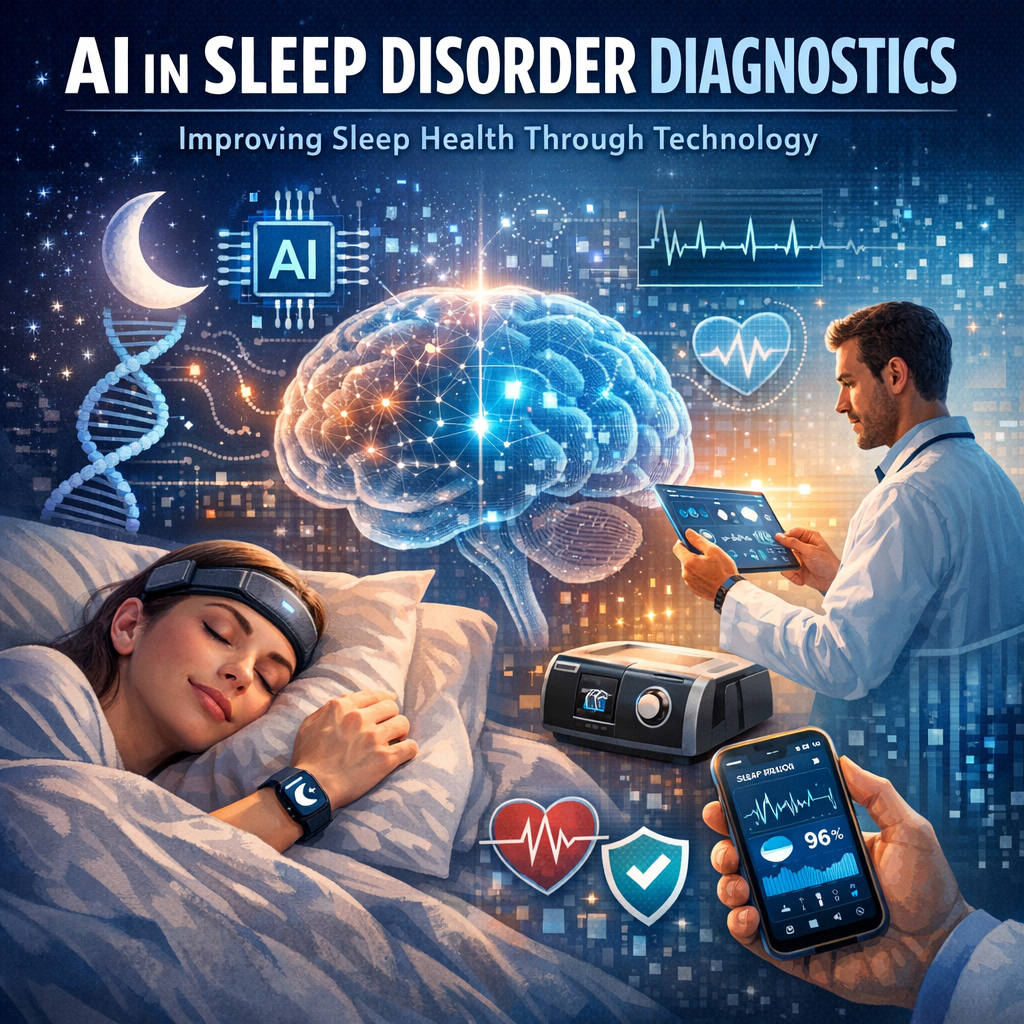
AI leverages **machine learning algorithms** capable of handling vast amounts of data, thereby transforming how sleep disorders are diagnosed. Wearable technology, smart home devices, and even smartphone applications can now gather extensive **sleep data**, from heart rate variability to movement patterns, which AI systematically analyzes to detect abnormalities and predict potential health risks. This development heralds a new era in **personalized medicine**, where interventions can be tailored to individual patterns, maximizing therapeutic outcomes while minimizing risks.
This innovative integration of **AI in sleep medicine** also dovetails with **preventive healthcare** strategies. Early detection through AI means addressing sleep-related issues before they escalate into chronic health problems. This proactive approach could prevent conditions like **hypertension**, **diabetes**, and **depression**, frequently exacerbated by poor sleep quality.
Moreover, research indicates a critical link between **sleep disorders** and accelerated aging, emphasizing the importance of optimizing sleep for both healthspan and lifespan augmentation. As AI continues to evolve, its application in sleep medicine not only enhances diagnostic accuracy but ultimately aims to facilitate healthier, longer lives. The intersection of AI and sleep science, thus, represents a cutting-edge advancement in healthcare, striving for a future where restorative sleep is accessible to all.
Features
Current professional and medical studies underscore the significance of **AI** in revolutionizing the diagnostic landscape of sleep disorders. A noteworthy study published in [Nature and Science of Sleep](https://www.dovepress.com/getfile.php?fileID=51069) highlights how machine learning algorithms have surpassed traditional methods in accurately diagnosing **obstructive sleep apnea (OSA)**. This condition, characterized by repeated interruption of breathing during sleep, significantly increases the risk of cardiovascular diseases. AI’s capacity to analyze **continuous positive airway pressure (CPAP)** usage data and biometric signals in real-time is not only enhancing diagnostic accuracy but also refining treatment efficacy.
Additionally, a study from [The Journal of Clinical Sleep Medicine](https://jcsm.aasm.org/doi/full/10.5664/jcsm.8220) demonstrated the power of AI in predicting the onset of **insomnia** using sleep pattern data collected via wearable devices. In a world where insomnia is often undiagnosed until it significantly impacts quality of life, AI offers a proactive solution. **Machine learning systems** can identify subtle deviations in normal sleep patterns, alerting individuals and healthcare providers to intervene earlier, thereby mitigating potential detrimental health impacts.
Furthermore, AI’s role in understanding the genetic underpinnings of sleep disorders is expanding. Initiatives like the [UK Biobank](https://www.ukbiobank.ac.uk/learn-more-about-uk-biobank/news/2019/ai-research-initiative-to-tackle-genome-sequencing) have gathered extensive genomic data, enabling AI to connect specific genetic markers with sleep disorders. This capability advances **precision medicine**, allowing for genotype-based interventions that are more effective and less intrusive.
The emergence of AI in sleep medicine is aligned with a broader healthcare evolution toward personalized, predictive, and preventative care. AI not only enhances diagnostic precision but also drives innovation in treatment modalities—whether through improved CPAP device algorithms or refined **cognitive behavioral therapy for insomnia (CBT-I)** protocols. Ultimately, AI’s integration into sleep health heralds a significant shift towards comprehensive approaches that prioritize both quality of life and longevity.
Conclusion
The incorporation of **artificial intelligence** into sleep disorder diagnostics represents a revolution in healthcare that offers promising paths to extend healthspan and lifespan. By optimizing the precision and accessibility of diagnoses, AI not only facilitates early intervention but also aligns with a more holistic view of health, which prioritizes prevention, personalization, and precision. As AI technology continues to mature, it bridges the gap between sleep science and comprehensive healthcare, promising a future where restorative sleep is not just a luxury, but a standard for all. Through the intelligent utilization of data and innovative technological developments, AI is poised to transform sleep medicine, ensuring that we all have the opportunity for longer, healthier, and more rejuvenating lives.
**Concise Summary**
Artificial intelligence (AI) is significantly transforming sleep disorder diagnostics, promising to extend longevity and healthspan. Traditional methods like polysomnography are being supplemented by AI’s ability to analyze vast sleep data efficiently. From **wearable devices** to smartphone apps, AI detects and predicts sleep abnormalities, ensuring personalized interventions. Enhanced diagnostic precision, proactive health management, and understanding of genetic factors are all within AI’s capabilities. This evolution in sleep medicine aligns with preventative care, potentially forestalling conditions like hypertension and diabetes, and paving the way for a future where restorative sleep is a standard, accessible benefit.

Dominic E. is a passionate filmmaker navigating the exciting intersection of art and science. By day, he delves into the complexities of the human body as a full-time medical writer, meticulously translating intricate medical concepts into accessible and engaging narratives. By night, he explores the boundless realm of cinematic storytelling, crafting narratives that evoke emotion and challenge perspectives.
Film Student and Full-time Medical Writer for ContentVendor.com