The Future of Sleep Health: How AI Is Revolutionizing Diagnosis and Treatment Beyond CPAP
Introduction
**Sleep** is an essential **physiological process** that is fundamental to our **health and well-being**. However, **sleep disorders** such as **obstructive sleep apnea (OSA)** and **insomnia** affect millions worldwide, compromising their overall **health and quality of life**. The traditional approach to managing sleep disorders, particularly sleep apnea, often involves the use of **Continuous Positive Airway Pressure (CPAP)** devices. While **CPAP** is effective for many, it is not suitable for everyone due to adherence challenges and discomfort. As technology advances, **emerging solutions** are on the horizon to transform how we diagnose and treat sleep-related ailments.
**Artificial Intelligence (AI)** has emerged as a pivotal force in reshaping various aspects of **healthcare**, and **sleep medicine** is no exception. AI brings a new frontier in **sleep health** with its ability to **analyze vast amounts of data** swiftly and accurately. This revolutionary approach promises more **personalized, effective**, and **less invasive treatment options**.
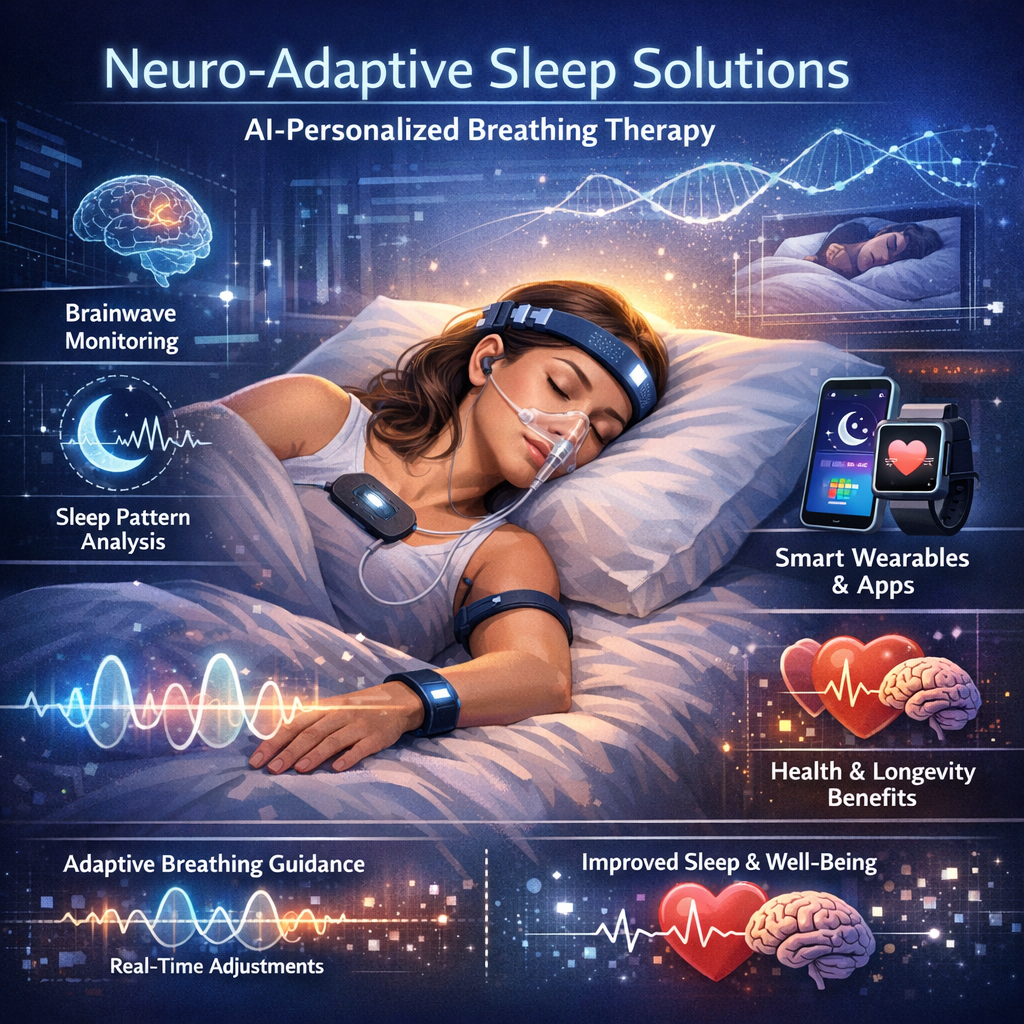
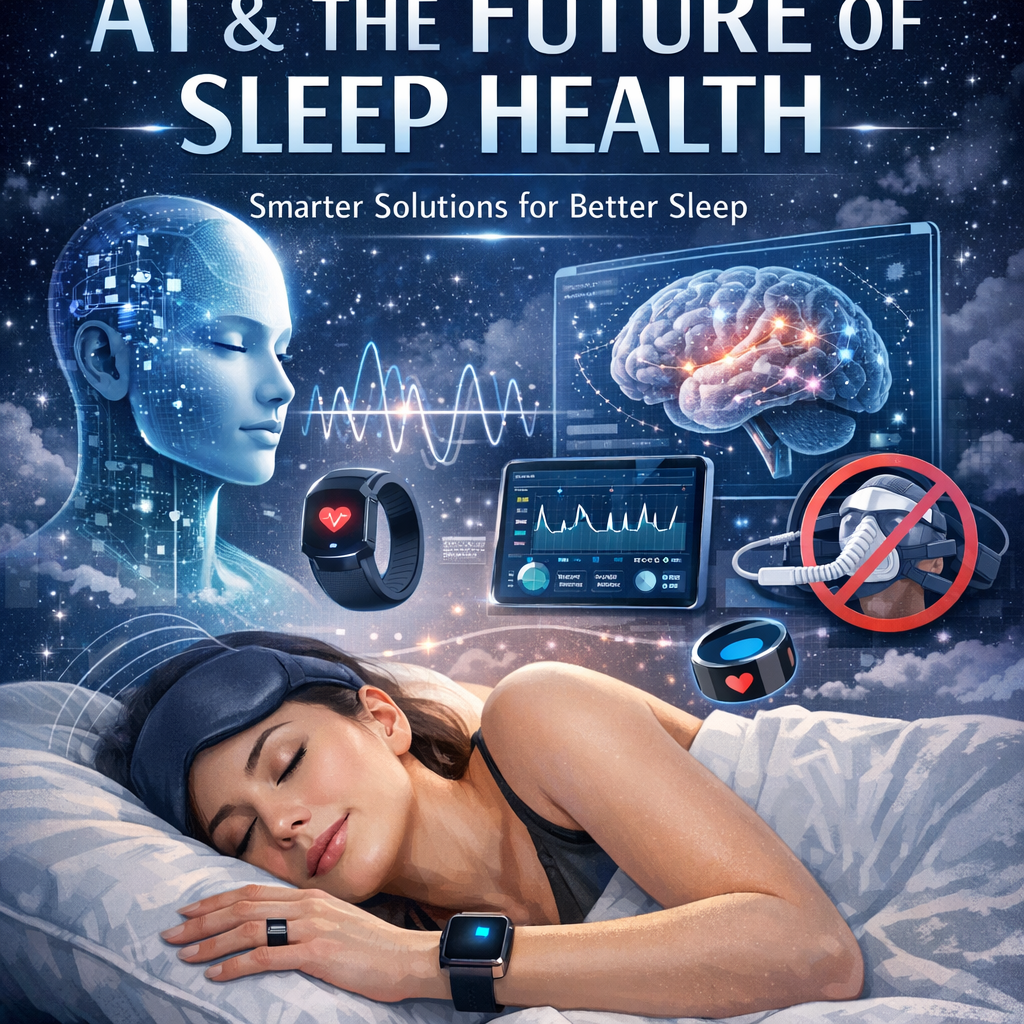
AI’s integration into sleep medicine allows for a **deeper analysis of sleep patterns** and the detection of anomalies that might be missed by traditional monitoring systems. **Wearable devices** and advanced **sleep trackers**, enhanced by **AI algorithms**, offer a non-invasive means to monitor a person’s sleep in real-time. These devices collect a myriad of physiological data, including **heart rate, breathing patterns**, and movement, providing insights that can aid in **diagnosing and managing sleep disorders**.
Apart from diagnostics, AI is also making strides in **therapy**. **Personalized treatment plans** can be devised using AI, tailoring interventions to the individual’s unique sleep patterns and disorder severity. AI-driven applications and solutions are now being developed to offer customized **cognitive-behavioral therapy for insomnia** (CBT-I), explore new avenues in **circadian rhythm synchronization**, and even explore **novel neuromodulation techniques** for sleep enhancement.
As we delve into this exciting field, we will explore the professional studies backing these developments and examine how AI is poised to offer alternatives and enhancements to traditional treatments like CPAP. This exploration illuminates a future where AI not only alleviates the symptoms of sleep disorders but addresses their **root causes**, paving the way for **holistic sleep health solutions**.
Features
Several professional and medical studies highlight the transformative role of **AI in sleep health**. A study published in [*Nature Science of Sleep*](https://www.ncbi.nlm.nih.gov/pmc/articles/PMC7084538/) emphasizes AI’s potential in automating the analysis of **polysomnography data**, which is the gold standard for diagnosing sleep disorders. Traditional polysomnography involves complex data that requires extensive analysis, often subject to human error and variability. AI algorithms can enhance accuracy and reduce study time, facilitating a faster diagnosis.
In the [Journal of Clinical Sleep Medicine](https://jcsm.aasm.org), researchers have demonstrated the efficacy of AI in developing more refined therapeutic strategies for **sleep apnea**. Through **machine learning**, AI can predict CPAP adherence and adjust settings dynamically based on real-time data, thereby improving compliance and treatment outcomes.
AI’s role in **cognitive-behavioral therapy for insomnia** (CBT-I) is another breakthrough, as highlighted in [*Sleep Medicine Reviews*](https://www.sciencedirect.com/science/article/pii/S1087079220302695). Virtual sleep coaching platforms, powered by AI, can deliver CBT-I with personalized feedback, allowing users to modify behavior gradually and effectively manage insomnia without medication.
The potential of AI extends to exploring **brainwave patterns** associated with sleep, offering insights into the treatment of disorders like insomnia beyond behavioral therapy. Innovative AI algorithms can analyze **electroencephalogram (EEG)** data to detect and predict neurological anomalies, paving the way for interventions in new neuromodulation treatments that are still in nascent stages of research.
AI’s application also extends into less traditional therapeutic avenues such as **biofeedback** and **virtual reality environments** designed to optimize sleep hygiene and circadian rhythms. By providing insights derived from massive datasets, AI has the potential to inform new therapies that can restore natural sleep patterns.
Overall, these studies and innovations highlight **AI’s growing role in sleep medicine**, offering a shift from managing symptoms to addressing the underlying causes of sleep disorders. This paradigm shift in sleep health holds promise for improving the lives of those with these conditions, making treatment more accessible, effective, and less burdensome.
Conclusion
AI’s impact on the future of **sleep health** is profound and multifaceted, providing new hope for those suffering from **sleep disorders**. By automating diagnosis, enhancing treatment adherence, and offering novel therapeutic avenues, AI is not just replacing existing methods like CPAP but is also presenting an ecosystem where interventions are tailored, effective, and less disruptive to the user’s lifestyle. As AI technology continues to evolve, its contributions will likely lead to further breakthroughs in personalization, predictive diagnostics, and innovative therapeutic approaches.
Incorporating AI into sleep medicine could transform conventional approaches to treatment, making it more **holistic and accessible**. The robust body of research and innovation in this space underscores the potential of AI to redefine sleep health, from improving diagnostic accuracy to offering cutting-edge treatment options for various sleep disorders. As we continue to embrace these technological advancements, the goal remains clear: achieving **restful, quality sleep** for all, fundamentally enhancing wellbeing and overall health.
By staying informed and open to these advancements, stakeholders in healthcare, including professionals, patients, and policymakers, can ensure that AI’s potential is realized in a manner that best serves society, paving the way for smarter sleep solutions tomorrow.
**Concise Summary:**
The article explores how **AI revolutionizes sleep health**, helping diagnose and treat disorders like **sleep apnea** and **insomnia** beyond the use of **CPAP** devices. AI’s ability to swiftly analyze data enhances diagnostic accuracy and offers personalized therapy options, including **cognitive-behavioral therapy**. Professional studies validate AI’s efficacy in automating polysomnography data analysis, predicting CPAP adherence, and exploring new therapeutic avenues, such as neuromodulation. AI’s advancements promise holistic solutions addressing sleep disorders’ root causes, enhancing treatment accessibility and effectiveness. By embracing these innovations, we advance toward better **sleep and wellbeing** globally.

Dominic E. is a passionate filmmaker navigating the exciting intersection of art and science. By day, he delves into the complexities of the human body as a full-time medical writer, meticulously translating intricate medical concepts into accessible and engaging narratives. By night, he explores the boundless realm of cinematic storytelling, crafting narratives that evoke emotion and challenge perspectives.
Film Student and Full-time Medical Writer for ContentVendor.com