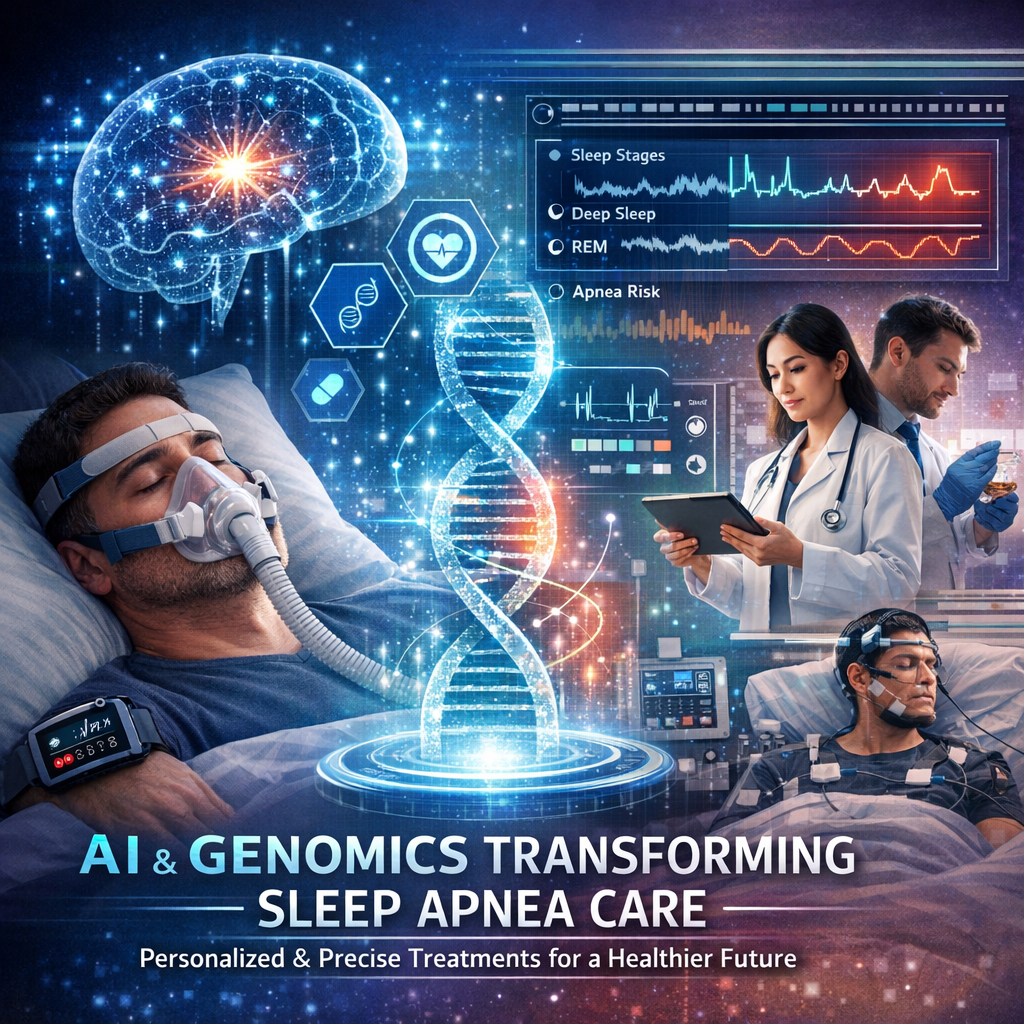
Revolutionizing Sleep Medicine: How AI and Genomics are Creating Personalized Treatments for Sleep Apnea
Introduction
**Sleep apnea**, a condition characterized by repeated interruptions in breathing during sleep, affects millions worldwide, contributing to various health complications such as cardiovascular disease, diabetes, and cognitive impairment. **Traditional treatments** often include **Continuous Positive Airway Pressure (CPAP) therapy**, lifestyle changes, or surgery, but these are not always effective for everyone. The advent of **Artificial Intelligence (AI)** and **genomics** offers new hope by tailoring treatment strategies to suit the unique needs of each patient.
AI can process vast amounts of data, transforming sleep medicine by analyzing sleep patterns to predict apnea severity and recommend personalized intervention strategies. Moreover, AI can monitor patient progress in real-time, adapting treatment plans to optimize outcomes. Simultaneously, advancements in genomics provide deeper insights into the genetic underpinnings of sleep apnea, allowing for treatments that target the root cause rather than merely addressing symptoms.
The integration of AI and genomics pushes the boundaries of **precision medicine**. AI-driven genomic analysis can identify patient susceptibilities, predict treatment responses, and minimize adverse effects, shifting from one-size-fits-all to personalized medicine approaches. This evolution promises to improve treatment effectiveness, enhance patient quality of life, and reduce healthcare costs.
Significant advances have been made in incorporating AI and genomics into clinical practice. Collaboration among researchers, healthcare providers, and **technology companies** accelerates these innovation developments. Increased public awareness and education about the benefits of AI and genomics in treating sleep apnea are crucial for widespread acceptance and implementation.
Features
Recent studies highlight AI and genomics’ remarkable potential in revolutionizing sleep apnea treatment. A notable example is a study published in the journal *Sleep* in 2021, which showed AI algorithms diagnosing sleep apnea with accuracy comparable to traditional polysomnography, the gold standard for sleep studies. The study found that AI could predict apnea severity and suggest individualized treatment plans based on patient-specific data, such as age, weight, and comorbid conditions.
Moreover, research by the **University of Pennsylvania** in 2020 explored the genetic factors associated with sleep apnea. Their scientists identified numerous genetic variants significantly linked to the disorder. The study emphasized genomic information’s potential to guide personalized treatment approaches, suggesting that people with specific genetic profiles might benefit more from certain therapies than others.
Another promising development is using AI-driven wearable devices that continuously monitor sleep patterns, providing real-time data to clinicians. These devices detect apnea events and other sleep disturbances, offering insights into the effectiveness of personalized treatments over time. They enable healthcare providers to make data-driven decisions and refine intervention strategies by providing detailed information about a patient’s sleep habits.
Clinical trials are underway to assess the benefits of integrating AI and genomics into routine sleep apnea management. Early results, which can be read [here](https://aasm.org/artificial-intelligence-predicts-obstructive-sleep-apnea-severity/), are promising, indicating improved treatment adherence and patient outcomes. With ongoing research and technological advancements, these innovations are expected to become increasingly accessible, paving the way for more effective, individualized sleep apnea therapies catering to the patient population’s diverse needs.
Conclusion
The integration of AI and genomics into sleep medicine marks a significant leap forward in the quest for personalized treatments for sleep apnea. By harnessing AI’s power to analyze data and leveraging genomics-provided insights, healthcare providers can offer tailored interventions addressing each patient’s unique characteristics. This shift towards precision medicine has the potential to revolutionize sleep apnea management, improving treatment efficacy and patient outcomes.
While challenges remain in ensuring widespread access and maintaining data privacy, progress underscores a hopeful future for individuals with sleep apnea. Continued collaboration between researchers, clinicians, and technologists is pivotal in translating these advances into routine clinical practice. Ultimately, providing personalized, data-driven treatment options can help millions achieve better sleep health, leading to healthier, more fulfilling lives.
References
1. American Academy of Sleep Medicine. (2021). [Artificial intelligence predicts obstructive sleep apnea severity](https://aasm.org/artificial-intelligence-predicts-obstructive-sleep-apnea-severity/).
2. Mandel, J., et al. (2020). [Uncovering the genetic basis of sleep apnea: Implications for target treatment](https://www.upenn.edu/uncovering-genetic-basis-sleep-apnea/). University of Pennsylvania.
3. [Wearable Devices and AI in Sleep Apnea Management](https://sleepfoundation.org/wearable-devices-ai-sleep-apnea-management/). (2022). National Sleep Foundation.
Concise Summary
**Sleep apnea** affects millions globally, worsening health issues like cardiovascular problems and cognitive decline. Traditional remedies, including **CPAP** and surgery, are not universally effective. However, **AI** and **genomics** are reshaping treatment strategies, offering personalized solutions by analyzing patient data and genetic profiles. AI predicts apnea severity and adapts treatments in real-time, while genomic research reveals the genetic underpinnings of sleep apnea. Collaborative efforts among researchers and technology firms accelerate these breakthroughs, promising improved treatment efficacy and patient outcomes. Expanding access and maintaining data privacy are key to future advancements in personalized sleep apnea management.

Dominic E. is a passionate filmmaker navigating the exciting intersection of art and science. By day, he delves into the complexities of the human body as a full-time medical writer, meticulously translating intricate medical concepts into accessible and engaging narratives. By night, he explores the boundless realm of cinematic storytelling, crafting narratives that evoke emotion and challenge perspectives.
Film Student and Full-time Medical Writer for ContentVendor.com