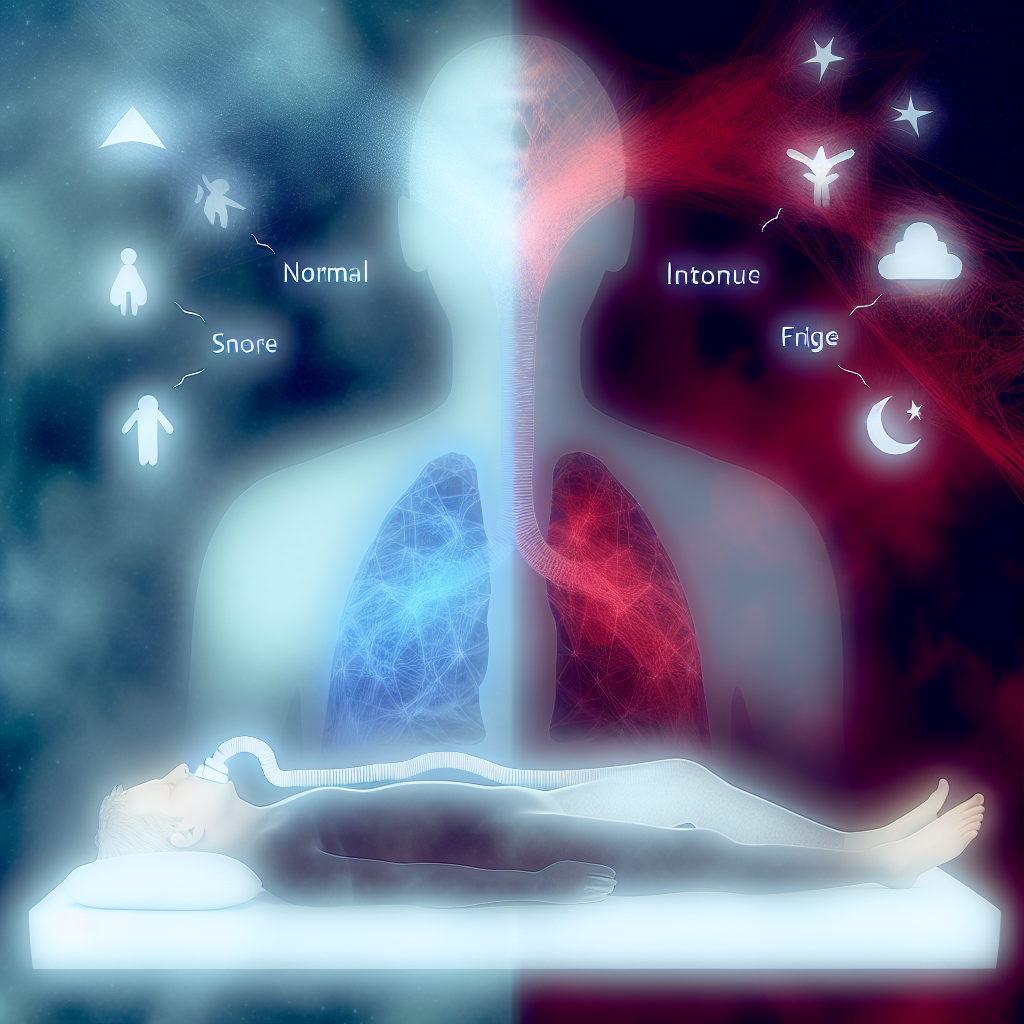
The Oxygen Paradox: How Sleep Apnea Turns Your Breath into a Silent Health Threat
Introduction
Every night, as we surrender to the comforting embrace of **sleep**, we trust our bodies to undertake the daunting task of rejuvenation and repair. However, for millions, this natural process is interrupted by a silent intruder: **sleep apnea**. While sleeping, our breathing ought to be effortless and regular, ensuring that each breath delivers vital **oxygen** throughout our bodies. Yet, sleep apnea disrupts this rhythm, converting an essential life function into a nocturnal **health hazard**.
Sleep apnea is characterized by repeated interruptions in **breathing** during sleep. There are two primary forms: **obstructive sleep apnea (OSA)**, which occurs when throat muscles relax excessively, and **central sleep apnea**, where the brain fails to send proper signals to muscles that control breathing. OSA is more common and affects people of all ages, including children. Many remain unaware they’re living with this condition, as its symptoms often occur during sleep, and partners or family members may be the first to notice the signs.
The impact of sleep apnea extends far beyond the night. When deprived of oxygen intermittently, our bodies launch a series of responses that can lead to significant **health concerns**. This condition has been linked to **hypertension**, **cardiovascular disease**, **diabetes**, and even **strokes**. Furthermore, sleep apnea can severely affect **mental health**, causing excessive daytime sleepiness, anxiety, depression, and impairments in concentration and memory.
Despite its prevalence, sleep apnea remains undiagnosed in many individuals, leaving them vulnerable to its insidious effects. This oversight is partly because its symptoms, such as loud **snoring**, **choking** during sleep, or morning headaches, may be easily attributed to lifestyle factors or mistaken for normal tiredness. Moreover, cultural perceptions about snoring being a harmless inconvenience rather than a potential health risk contribute to the underdiagnosis.
Raising awareness about sleep apnea is crucial to preventing its long-term health implications. By understanding the mechanics behind this disorder and recognizing the serious consequences of untreated sleep apnea, we can better appreciate the importance of addressing it.
Features
A growing body of research highlights the significant impact of sleep apnea on overall health, elucidating the disconcerting nature of this disorder. One pivotal study published in the Journal of Clinical Sleep Medicine found that untreated sleep apnea was significantly associated with an increased risk of severe cardiovascular events, including heart attack and stroke. The intermittent reduction in blood oxygen levels, known as **hypoxemia**, triggers a cascade of physiological responses, including increased blood pressure and heightened sympathetic activity, which can exacerbate heart problems. [Study Reference](https://jcsm.aasm.org/doi/10.5664/jcsm.5285)
Moreover, research published in the American Journal of Respiratory and Critical Care Medicine highlighted the link between sleep apnea and insulin resistance, a precursor to type 2 diabetes. The study demonstrated that individuals with moderate to severe sleep apnea exhibited impaired glucose metabolism, even when accounting for variables such as obesity. This suggests that the oxygen fluctuations seen in sleep apnea can directly impact mechanisms involved in insulin sensitivity. [Study Reference](https://www.atsjournals.org/doi/10.1164/ajrccm.164.10.2107044)
The mental health dimension of sleep apnea is profound yet often overlooked. A comprehensive analysis from the Journal of Psychiatric Research discovered a notable correlation between untreated sleep apnea and increased incidences of depression and anxiety. The fragmented sleep patterns and disrupted circadian rhythms associated with sleep apnea can adversely affect mood regulation and cognitive functions, contributing to these mental health challenges. [Study Reference](https://www.journalofpsychiatricresearch.com/article/S0022-3956(14)00137-4/fulltext)
In terms of public health interventions, research has underscored the importance of Continuous Positive Airway Pressure (CPAP) therapy, which has been shown to reduce cardiovascular risks and improve quality of life in individuals with sleep apnea. Regular use of CPAP devices helps maintain open airways, ensuring a steady flow of oxygen throughout the night. [Study Reference](https://www.thejes.org/journals/jss/article/S1389-9457(14)00775-1/fulltext)
Conclusion
Sleep apnea represents a paradox in health—transforming an innocuous act of breathing into a potential health hazard. Left unaddressed, it becomes a catalyst for a host of serious health conditions, silently affecting bodily systems with each interrupted breath. Awareness is the first step towards intervention. By recognizing the signs and understanding the potential consequences, those affected by sleep apnea can seek timely diagnosis and treatment.
With further research and greater public awareness, the silent threat of sleep apnea can be transformed into a manageable condition, reducing its health burden significantly. Healthcare professionals, researchers, and technology developers are vital allies in this battle, collectively working to provide tools, treatments, and enhanced education to mitigate the risks associated with this condition. Ultimately, acknowledging and addressing sleep apnea elevates our overall approach to holistic health, ensuring that sleep once again serves its intended role as a restorative and life-sustaining process.
For further information, consult these sources: [1](https://jcsm.aasm.org/doi/10.5664/jcsm.5285), [2](https://www.atsjournals.org/doi/10.1164/ajrccm.164.10.2107044), [3](https://www.journalofpsychiatricresearch.com/article/S0022-3956(14)00137-4/fulltext), [4](https://www.thejes.org/journals/jss/article/S1389-9457(14)00775-1/fulltext).
**Concise Summary**
Sleep apnea is a prevalent condition characterized by interruptions in breathing during sleep, significantly impacting physical and mental health. Despite its commonality, it often goes undiagnosed due to misinterpretation of symptoms such as snoring. Untreated, it increases risk for cardiovascular issues, diabetes, and mental health conditions like depression and anxiety. CPAP therapy is an effective intervention. Raising awareness about this disorder is crucial, as early diagnosis and treatment can mitigate its severe health risks, ensuring sleep fulfills its restorative purpose.

Dominic E. is a passionate filmmaker navigating the exciting intersection of art and science. By day, he delves into the complexities of the human body as a full-time medical writer, meticulously translating intricate medical concepts into accessible and engaging narratives. By night, he explores the boundless realm of cinematic storytelling, crafting narratives that evoke emotion and challenge perspectives.
Film Student and Full-time Medical Writer for ContentVendor.com