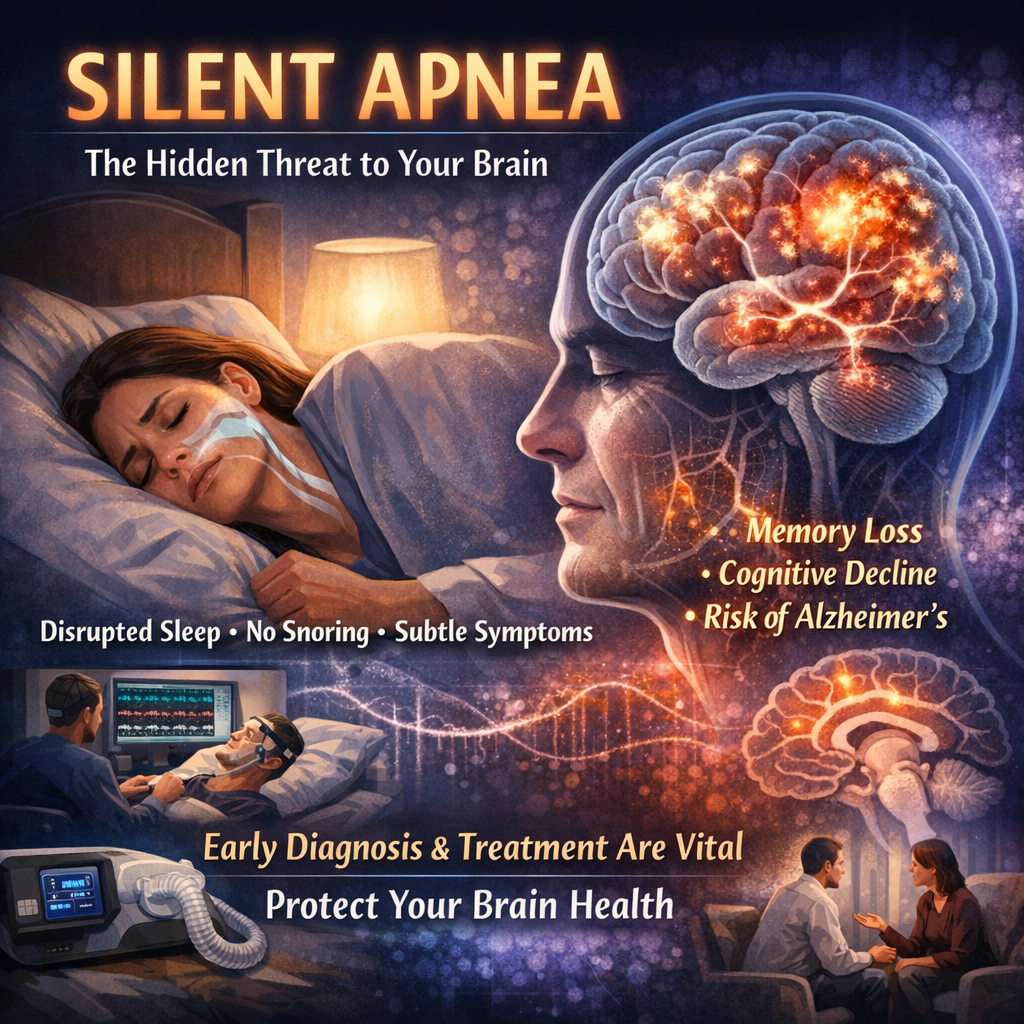
Unveiling “Silent Apnea”: How Undiagnosed Breathing Disorders Secretly Impair Neurological Health
In today’s fast-paced world, prioritizing **sleep** seems more critical than ever. However, many individuals might not be aware of the “silent” sleep disruptors that can significantly impact overall health. Among these hidden disturbances stands **Silent Apnea**, a term used to describe undiagnosed **breathing disorders** during sleep that can subtly but critically impair **neurological health**. As research continues to unravel the intricacies of sleep-related breathing disorders, it becomes increasingly evident that the repercussions of these often-overlooked conditions extend far beyond daytime fatigue.
Silent Apnea is insidious because its symptoms are subtle or entirely absent, making it difficult to diagnose without medical intervention. While obstructive sleep apnea (**OSA**) is widely known to affect millions, Silent Apnea often goes unnoticed, as it might not present with the typical signs, such as loud snoring or abrupt awakenings. The condition occurs when individuals experience more minor, frequent interruptions in breathing, which do not necessarily result in waking up but still disrupt sleep cycles and reduce sleep quality. Because of this, sufferers may feel drowsy and exhausted yet lack an apparent explanation for their symptoms, complicating the pursuit of treatment.
The neurological implications of Silent Apnea are particularly concerning. Disrupted sleep patterns affect the body’s ability to repair and rejuvenate itself, presenting considerable risks to cognitive function. Over time, consistent disturbances in sleep may lead to memory issues, difficulty focusing, mood disorders, and even long-term cognitive decline. Furthermore, Silent Apnea is associated with a heightened risk of developing neurodegenerative conditions such as **Alzheimer’s** and other forms of **dementia**.
This blog article will explore the potential dangers of Silent Apnea, shedding light on existing medical research addressing its impact on neurological health. We’ll delve into notable studies, examining how this unassuming yet pervasive issue slips under the radar for countless people. By better understanding Silent Apnea, individuals and healthcare providers can take informed steps toward diagnosis, intervention, and improved sleep health, ultimately enhancing the quality of life for those affected.
Features and Studies on Silent Apnea and Neurological Health
Silent Apnea might not yet command the same attention as its more obstructive counterpart, yet the condition has garnered interest in several scientific studies focused on its latent impact on overall health. One landmark study published in the [American Journal of Respiratory and Critical Care Medicine](https://www.atsjournals.org/doi/full/10.1164/rccm.201703-0420OC) delved into the depth of undiagnosed obstructive sleep apnea and its link to neurological issues, suggesting that even subtle disruptions in sleep architecture can be detrimental to cognitive functions over time. The study emphasized that frequent, minor interruptions in breathing could lead to chronic sleep deprivation, depriving the brain of essential restorative periods during deep sleep cycles.
Another significant study published in [Neurology](https://n.neurology.org/content/82/12/1073) highlighted the correlation between untreated sleep apnea and deteriorating white matter in the brain. **White matter** is crucial for efficient neural communication, and any compromise in its integrity can impair cognitive functions, disrupting attention, memory, and processing speed. By using advanced imaging techniques, researchers discovered that participants with undiagnosed sleep apnea displayed widespread white matter damage, akin to aging symptoms seen in much older individuals.
Furthermore, research appearing in [The Lancet Neurology](https://www.thelancet.com/journals/laneur/article/PIIS1474-4422(15)00072-X/fulltext) explored the connection between sleep disorders and neurodegenerative diseases. The study found that sleep-disordered breathing could accelerate the deposition of **beta-amyloid plaques**, linked to the development of Alzheimer’s disease. Persistent apnea episodes were shown to increase oxidative stress and inflammatory markers, creating an environment conducive to neurodegeneration.
These studies suggest an urgent need for greater awareness and proactive diagnoses of sleep-disordered breathing conditions such as Silent Apnea. Increased awareness, facilitated by more accessible diagnostic methods such as **home sleep studies**, could lead to earlier intervention, mitigating neurological damage before it progresses. **Cognitive Behavioral Therapy (CBT)** for Insomnia and devices like **Continuous Positive Airway Pressure (CPAP)** machines have been noted as effective treatments for varying forms of apneas, emphasizing the potential for significant health improvements when Silent Apnea is addressed.
Conclusion
Understanding and addressing silent sleep disruptors like Silent Apnea is essential for safeguarding neurological health. As studies reveal the profound connections between undiagnosed sleep disorders and cognitive decline, it is crucial for individuals to recognize the subtle signs of Silent Apnea. Improved awareness and proactive measures, including the use of sleep studies and effective treatment options, can lead to considerable health benefits. Awareness campaigns and educational programs should prioritize the dissemination of information about Silent Apnea, empowering individuals to seek appropriate care. As research continues, the hope is to bridge the gap between silent suffering and actionable solutions, paving the way for healthier and more cognitively resilient populations.
**Concise Summary**
Silent Apnea, an undiagnosed breathing disorder during sleep, poses significant risks to neurological health by disrupting sleep architecture without the typical symptoms of obstructive sleep apnea (OSA). Emerging studies show that even minor interruptions in breathing can lead to cognitive decline and increased risk of neurodegenerative diseases such as Alzheimer’s. With advanced imaging revealing white matter damage akin to premature aging, the call for heightened awareness and proactive diagnosis is urgent. By using comprehensive diagnostic methods like home sleep studies, and effective treatments such as CPAP and CBT, sufferers can significantly improve their quality of life.

Dominic E. is a passionate filmmaker navigating the exciting intersection of art and science. By day, he delves into the complexities of the human body as a full-time medical writer, meticulously translating intricate medical concepts into accessible and engaging narratives. By night, he explores the boundless realm of cinematic storytelling, crafting narratives that evoke emotion and challenge perspectives.
Film Student and Full-time Medical Writer for ContentVendor.com