Harnessing AI for Early Detection of Undiagnosed Sleep Apnea: A Game Changer for Healthcare
Introduction
**Sleep apnea** is a common yet frequently undiagnosed sleep disorder affecting millions globally. It is characterized by interrupted breathing during sleep, potentially leading to serious health complications, including cardiovascular diseases, depression, and diabetes if untreated. Many remain unaware due to subtle symptoms and cumbersome traditional testing methods.
Enter **Artificial Intelligence (AI)**, a revolutionary technology poised to redefine healthcare diagnostics, especially in sleep medicine. AI can rapidly analyze vast quantities of data, offering a promising solution to diagnosing sleep apnea. By leveraging AI algorithms, researchers and healthcare professionals can identify patterns and anomalies in sleep data with remarkable accuracy and speed.
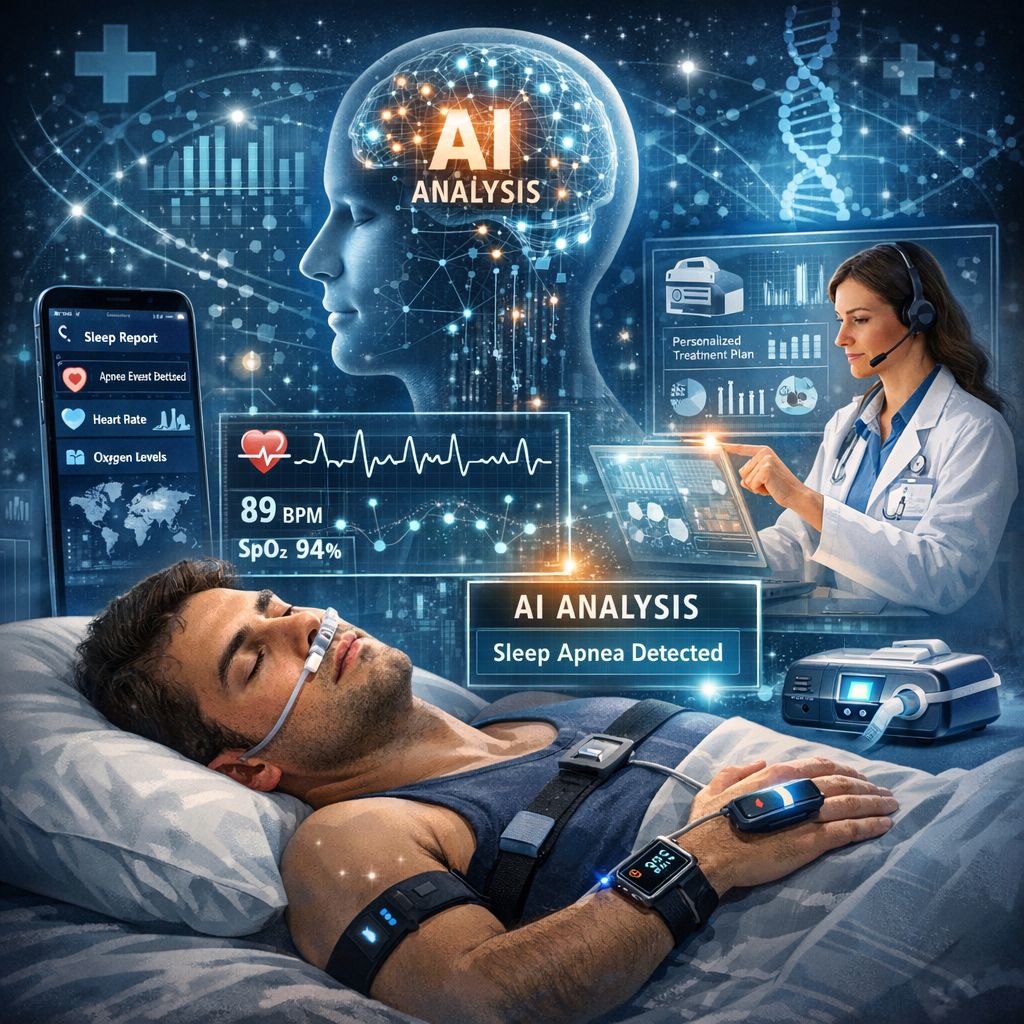
The integration of AI in detecting sleep apnea represents a paradigm shift in how health professionals approach the disorder. Traditionally, diagnosing sleep apnea required an overnight stay at a sleep center for **polysomnography**—a costly, uncomfortable, and inconvenient procedure. AI allows for non-invasive detection methods utilizing data from wearable devices and smartphones, thus making the process more accessible to a broader population.
AI-powered applications can analyze **sleep patterns**, **heart rate variability**, and **breathing anomalies**, alerting individuals and healthcare providers to potential sleep apnea cases. This proactive approach enables early intervention, crucial for preventing the array of health issues associated with untreated sleep apnea. Furthermore, AI can personalize treatment plans by analyzing individual responses to different therapies, enhancing overall patient outcomes.
With its ability to transform data into actionable insights, AI is not only improving the accuracy of sleep apnea diagnoses but also increasing awareness about the disorder. As healthcare systems globally handle an increasing patient load, AI offers a scalable, efficient, and effective solution. The future of sleep medicine is intricately linked with AI technology, marking a new era in health management where preventive care and personalized treatments become the standard.
Features
Recent advancements in AI and **machine learning** have opened new avenues for medical studies focusing on sleep apnea. A 2020 study published in the “Journal of Clinical Sleep Medicine” highlighted the efficacy of AI in early detection of **obstructive sleep apnea**. Researchers used a deep learning model analyzing data from large datasets containing recorded physiological signals from overnight sleep studies. This AI system demonstrated impressive accuracy, identifying sleep apnea events with precision comparable to trained sleep technicians.
In addition to improving diagnostic accuracy, AI tools have significantly reduced the time needed to analyze sleep data. A study featured in “Nature and Science of Sleep” in 2021 explored the effectiveness of AI in sleep medicine. The research emphasized that AI algorithms could process sleep data much faster than traditional methods, shortening the time from testing to diagnosis. This efficiency benefits patients, allowing for quicker diagnoses and alleviating the burden on healthcare facilities by streamlining operations.
Furthermore, AI’s potential extends to optimizing treatment plans for diagnosed sleep apnea patients. According to research discussed in the “Journal of Medical Internet Research” (JMIR) in 2019, AI algorithms can predict patient responses to various treatment modalities, such as **CPAP therapy**, oral appliances, or lifestyle changes. By considering a patient’s unique physiological and behavioral data, AI aids in crafting personalized treatment regimens that enhance efficacy and adherence rates.
AI is also a key player in raising awareness about sleep apnea. Technology companies have integrated AI into health monitoring apps and **wearable devices**, enabling continuous tracking of sleep health at home. This accessibility encourages individuals to self-assess risk factors and fosters a deeper understanding of sleep apnea.
Conclusion
The integration of AI into sleep medicine represents a monumental leap forward in managing sleep apnea. Through its capacity for early detection and personalized health solutions, AI favors preventive healthcare. By intelligently analyzing sleep data, AI enhances diagnostic precision and offers invaluable insights into effective treatment strategies. As more healthcare providers adopt AI-driven technologies, barriers to diagnosing and treating sleep apnea are dissolving, promising a future where sleep disorders management is efficient and accessible. With continuous advancements in AI and machine learning, possibilities for enhancing healthcare outcomes remain boundless, improving life quality for millions globally.
**Concise Summary**: AI is transforming the detection and management of **sleep apnea**, a common but often undiagnosed disorder. By utilizing AI algorithms, healthcare professionals can accurately and efficiently analyze sleep data from wearable devices, providing non-invasive and accessible diagnostic methods. Beyond detection, AI facilitates personalized treatment plans and raises awareness through continuous health monitoring. As AI technology in healthcare continues to advance, it promises a future of enhanced, preventive, and patient-tailored sleep medicine, reducing the burden on global healthcare systems and improving patient outcomes.

Dominic E. is a passionate filmmaker navigating the exciting intersection of art and science. By day, he delves into the complexities of the human body as a full-time medical writer, meticulously translating intricate medical concepts into accessible and engaging narratives. By night, he explores the boundless realm of cinematic storytelling, crafting narratives that evoke emotion and challenge perspectives.
Film Student and Full-time Medical Writer for ContentVendor.com