Transforming Sleep Health: How AI-Powered Voice Analysis Can Predict and Diagnose Sleep Apnea Before Symptoms Appear
In the quest for optimal health, **sleep** often stands as an underrated pillar. Quality sleep is foundational to **physical health**, **mental clarity**, and **emotional balance**. However, **sleep disorders**, particularly **sleep apnea**, disrupt this essential recovery process, putting a significant percentage of the population at risk for a slew of health complications, including **hypertension**, **cardiovascular disease**, and **cognitive impairment**. Despite its prevalence, sleep apnea remains largely underdiagnosed, with many individuals unaware they suffer from the condition. The emergence of **artificial intelligence (AI)** in **healthcare** promises a transformative shift, offering innovative solutions to diagnose and manage sleep disorders more effectively.
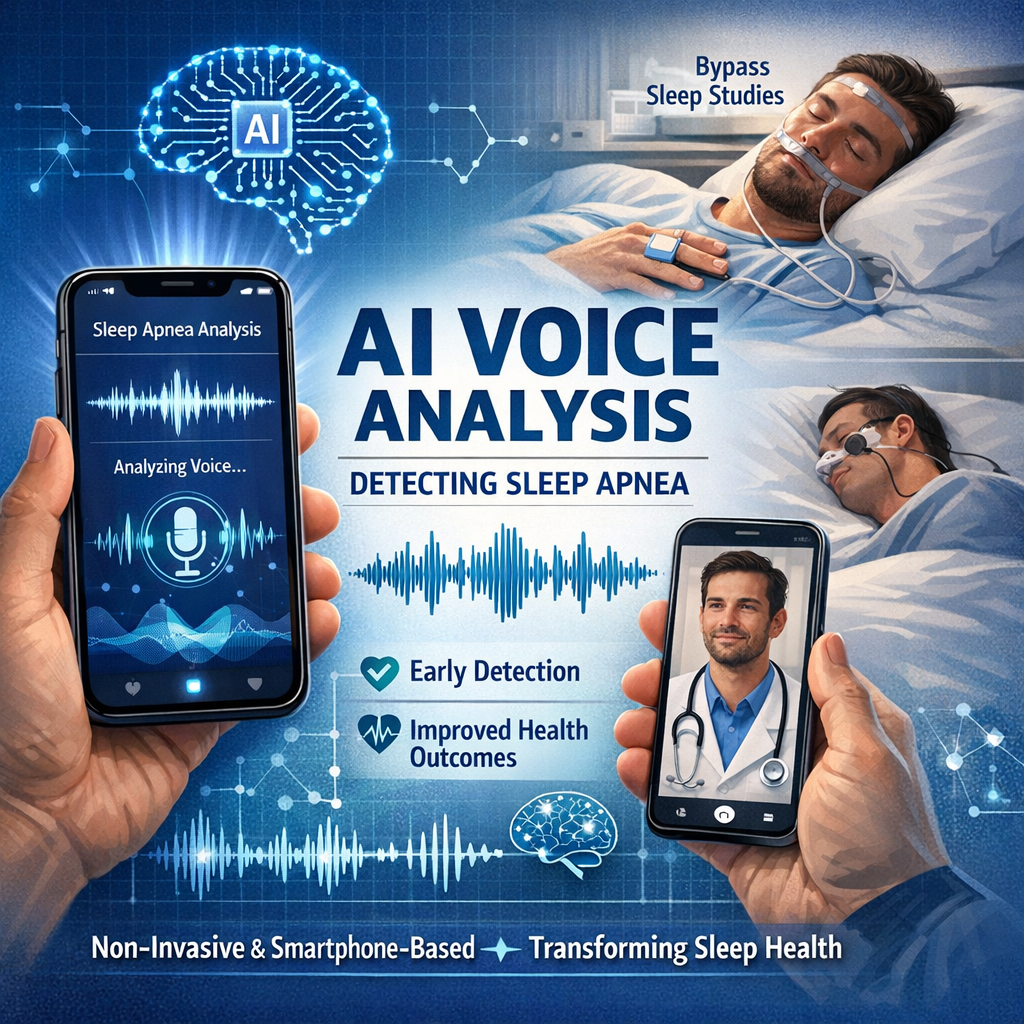
One of the most exciting advancements is **AI-powered voice analysis** as a non-invasive tool to predict and diagnose sleep apnea before clinical symptoms fully emerge. **Voice analysis** involves scrutinizing spoken audio for specific patterns and anomalies that correlate with various health conditions. Sleep apnea, characterized by repeated interruptions in breathing during sleep, often impacts the respiratory systems utilized for speech. AI can detect subtle changes in voice frequency, tone, and rhythm that human perception would likely overlook. This technology, grounded in **machine learning algorithms**, can analyze large datasets to identify vocal biomarkers indicative of sleep disturbances with impressive accuracy. By leveraging advanced statistical and computational methods, AI-powered voice analysis can sift through large amounts of data rapidly, identifying patterns and variations that can be precursors to more significant health issues related to sleep apnea.
Furthermore, AI-powered voice analysis democratizes the diagnostic process, making it accessible to populations that might lack ready access to traditional healthcare resources. Unlike overnight **polysomnography**—currently the gold standard for diagnosing sleep apnea—voice analysis can be conducted using a **smartphone** or any recording device, significantly reducing the cost and discomfort associated with conventional diagnostic procedures. This not only facilitates early detection but also encourages individuals to seek medical advice before the condition exacerbates, ultimately improving outcomes and reducing healthcare burdens.
Features
Recent developments in AI-driven voice analysis for sleep apnea are underpinned by compelling research. A pioneering study conducted by a team at Northwestern University explored the potential of voice biomarkers in diagnosing obstructive sleep apnea ([Northwestern University Study](https://news.northwestern.edu/stories/2022/04/voice-analysis-for-sleep-apnea)). The research demonstrated a correlation between voice changes and the severity of OSA, marking a significant step forward in non-invasive diagnostics. Participants underwent controlled voice recordings, which were then analyzed using AI algorithms trained to discern patterns associated with sleep apnea.
Complementing this, another notable study by researchers at the University of Southern Queensland developed an AI model capable of distinguishing sleep apnea patients from healthy individuals through voice signal analysis with over 80% accuracy ([University of Southern Queensland Study](https://www.researchgate.net/publication/331446860_Voice_Analysis_for_Sleep_Apnea_Diagnosis)). This study emphasized the potential of AI to analyze not only the voice but also other vocalization metrics that are imperceptibly impacted by sleep apnea, offering a more holistic approach to diagnosis. The amalgamation of these studies’ findings indicates that AI-driven voice technology could become integral to routine health assessments, particularly for those at higher risk.
These studies highlight the potential of integrating voice analysis into regular **health assessments**, particularly for individuals in high-risk categories for sleep apnea, such as those with **obesity** or a family history of the condition. The data-driven insights from voice analysis enable a deeper understanding of the nuances of sleep disorders, encouraging preventive measures before they manifest as noticeable symptoms. This predictive capability allows healthcare providers to tailor interventions and support systems conducive to mitigating disease progression.
Further, major technology companies are collaborating with healthcare providers to refine these AI tools, aiming to create user-friendly applications that can seamlessly fit into daily life. For example, **smartphone apps** that analyze user speech during calls or specific tasks are in development, providing real-time feedback on the potential presence of sleep apnea. These innovations reflect a promising convergence of technology and healthcare, tailoring solutions to individual needs while empowering users with knowledge about their health status.
Conclusion
**AI-powered voice analysis** stands at the frontier of modern healthcare, offering a promising avenue for early detection and diagnosis of sleep apnea. By transforming accessible technology into a potent diagnostic tool, it addresses significant barriers faced by traditional methods, including cost, accessibility, and invasiveness. As research progresses and technology continues to evolve, voice analysis for sleep apnea diagnosis could become a standard health assessment, akin to checking blood pressure or cholesterol levels. This early intervention is crucial, given the long-term health risks associated with untreated sleep disorders.
For healthcare providers, AI-driven voice analysis enhances the ability to offer personalized care while reducing systemic burdens associated with late diagnosis and treatment. As we stride into this new era, the integration of AI in sleep health promises to redefine diagnostic standards, paving the way for a healthier, more informed society. Embracing these technological advancements today can empower individuals to take proactive steps in safeguarding their sleep health, thus ensuring better quality of life for generations to come.
**Concise Summary:**
AI-powered voice analysis is revolutionizing the diagnosis of sleep apnea by providing a non-invasive, cost-effective means of detection. By analyzing vocal changes indicative of sleep disturbances, AI offers predictive capabilities previously unavailable, potentially integrating regular health assessments. Studies from institutions like Northwestern and the University of Southern Queensland underscore the efficacy and accuracy of these methods. As technology giants develop user-friendly applications, AI-driven voice analysis is poised to overcome traditional barriers of accessibility and invasiveness, offering a more proactive and personalized approach to managing sleep health.

Dominic E. is a passionate filmmaker navigating the exciting intersection of art and science. By day, he delves into the complexities of the human body as a full-time medical writer, meticulously translating intricate medical concepts into accessible and engaging narratives. By night, he explores the boundless realm of cinematic storytelling, crafting narratives that evoke emotion and challenge perspectives.
Film Student and Full-time Medical Writer for ContentVendor.com