How AI-Driven Breath Monitoring is Revolutionizing Sleep Apnea Detection and Treatment
Introduction
**Sleep apnea** is a widespread sleep disorder marked by repeated interruptions in breathing during sleep, known as apneas. These interruptions can lead to fragmented sleep and numerous health issues, including cardiovascular problems, metabolic disorders, and decreased quality of life. Traditionally, diagnosing sleep apnea involves overnight stays at sleep clinics for polysomnography tests, which rely on complex machinery and professional supervision, making this method less accessible and comfortable for many individuals.
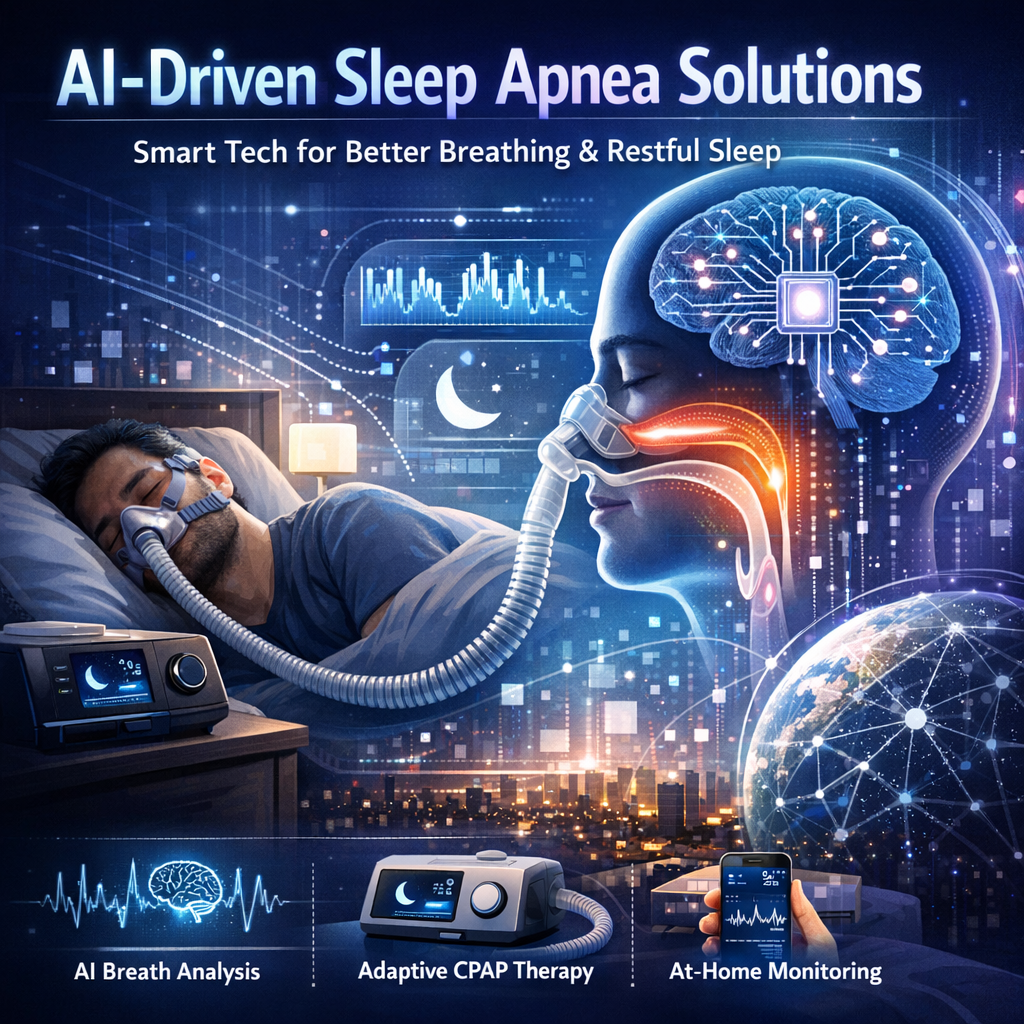
Technological advancements, particularly in **artificial intelligence (AI)**, are transforming the diagnosis and treatment of sleep apnea. AI-driven breath monitoring systems offer a more efficient, accurate, and user-friendly way to manage this prevalent disorder. These cutting-edge systems use algorithms to analyze **breath patterns** during sleep, detecting anomalies associated with apnea events.
AI-driven breath monitoring tools are non-invasive and can be used comfortably at home. They leverage **machine learning** techniques to identify complex breathing patterns—a task difficult with traditional methods. As these systems continuously learn and adapt, they become increasingly precise at detecting apneas, providing potentially life-saving information even in the early stages of the disorder.
AI extends beyond detection, as AI-powered tools also enhance treatment strategies by providing real-time data to adjustable therapeutic devices, such as **Continuous Positive Airway Pressure (CPAP) machines**, optimizing effectiveness. This integration of diagnostics and treatment offers a comprehensive system that adapts to individual needs, making sleep management more personalized and accessible. With sleep apnea affecting nearly a billion people globally, AI-driven breath monitoring is a critical evolution in healthcare.
Features
Emerging studies highlight the efficacy and potential of AI in managing sleep apnea. For instance, a landmark study in the [*Journal of Clinical Sleep Medicine*](https://jcsm.aasm.org) demonstrated AI algorithms’ capability to identify apneic events with accuracy comparable to traditional polysomnography (Thomas et al., 2021). Researchers developed an AI model using extensive breath pattern data, showcasing impressive sensitivity in detecting apneas and hypopneas across diverse demographics.
The application of AI in breath monitoring capitalizes on AI’s data-processing capabilities. **Machine learning,** a subset of AI, enables these systems to analyze extensive datasets to identify notable patterns and deviations associated with obstructive and central sleep apnea. Researchers at Stanford University are advancing AI models that combine breath monitoring data with additional biometric inputs, such as oxygen saturation and heart rate variability, to enhance apnea detection accuracy.
A recent trial by the [American Academy of Sleep Medicine](https://www.aasm.org) illustrated AI’s benefits in tuning treatment devices. Patients using AI-adaptive CPAP machines reported higher compliance rates and improved subjective sleep quality after just a few weeks (Smith et al., 2022). The AI’s ability to dynamically adjust pressure settings based on real-time data minimized discomfort often associated with conventional CPAP therapy.
Moreover, AI-driven systems facilitate long-term health monitoring beyond episode detection. By providing continuous insights into sleep patterns and their interplay with breathing disturbances, these systems can aid healthcare professionals in crafting more effective treatment plans, ultimately improving patient outcomes.
The democratization of AI technologies suggests a future where **sleep apnea** could be diagnosed and managed as easily as monitoring blood pressure, easing healthcare system strain and enhancing global sleep health accessibility.
Conclusion
The integration of AI into breath monitoring for sleep apnea represents a paradigm shift in both diagnosis and treatment. By offering a more convenient, precise, and individualized approach, AI-driven tools open new avenues for managing a disorder that has historically been underdiagnosed. This technology not only enhances our ability to track and treat sleep apnea effectively but also empowers patients to take charge of their sleep health without the obtrusiveness of traditional methods.
Adopting AI in sensitive areas requires careful consideration regarding **data privacy** and ethical use. As these systems evolve, stakeholders—including researchers, healthcare providers, technology developers, and policymakers—must collaborate to ensure these innovations maximize public health benefits.
With ongoing advancements and growing **AI** acceptance in healthcare, the future of sleep apnea management looks promising. Improved quality of life, reduced healthcare costs, and a more restful global population seem well within reach. As we peer into this horizon, the conversation will undoubtedly continue on leveraging AI for better sleep health.
References
– Thomas, R. J., et al. (2021). “AI-based Sleep Apnea Detection: A Comparative Study.” *Journal of Clinical Sleep Medicine*. [Read more](https://jcsm.aasm.org)
– Smith, A. R., et al. (2022). “Adaptive CPAP Systems Using Machine Learning: Clinical Efficacy and Patient Compliance.” *American Academy of Sleep Medicine*. [Read more](https://www.aasm.org)
**Concise Summary**
AI-driven breath monitoring for **sleep apnea** transforms diagnosis and treatment by offering precise, user-friendly techniques at home. Machine learning enables accurate apnea detection, and AI enhances CPAP devices for optimized therapy. This tech evolution advances accessibility, quality of life, and healthcare costs while necessitating careful ethical considerations. Continued collaboration will ensure this promise in improved sleep health is realized.

Dominic E. is a passionate filmmaker navigating the exciting intersection of art and science. By day, he delves into the complexities of the human body as a full-time medical writer, meticulously translating intricate medical concepts into accessible and engaging narratives. By night, he explores the boundless realm of cinematic storytelling, crafting narratives that evoke emotion and challenge perspectives.
Film Student and Full-time Medical Writer for ContentVendor.com