Could AI Detect Sleep Apnea Before Your Doctor? The Future of Diagnostic Medicine Unveiled
Introduction
**Sleep apnea**, a condition characterized by recurrent episodes of breathing cessation during sleep, affects millions worldwide. Its implications are vast, ranging from daytime fatigue to more severe cardiovascular and neurological complications. Traditional diagnosis involves overnight sleep studies in clinical settings, which can be both expensive and inconvenient for patients. **Artificial intelligence (AI)** is a revolutionary technology reshaping various sectors, including healthcare. The potential of AI to detect sleep apnea before clinical symptoms manifest or even before consulting a doctor is not only promising but also indicative of the future trajectory of **diagnostic medicine**.
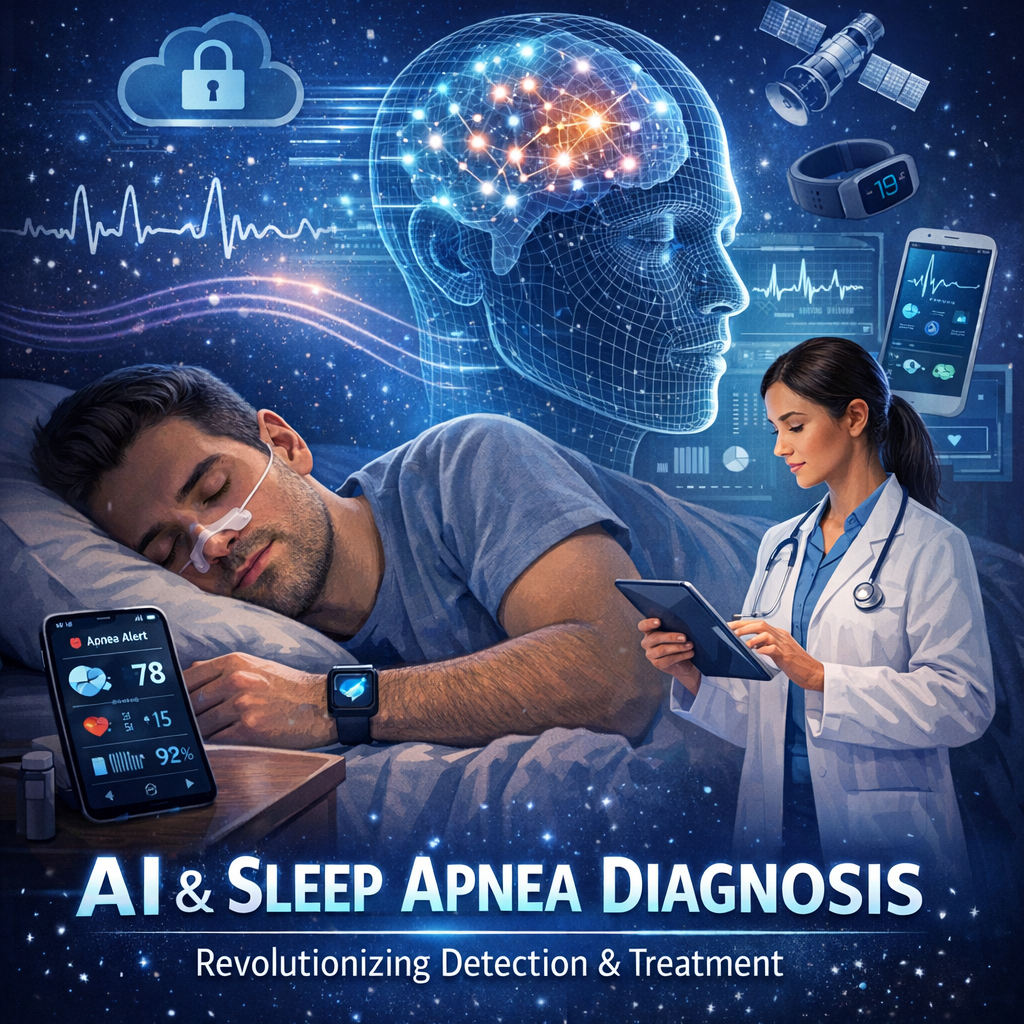
AI relies on algorithms and data-driven models to analyze vast amounts of information. In the context of sleep apnea, AI can scrutinize data collected from non-invasive sources like smartphone apps, wearable devices, and home-based monitoring systems. These tools gather data on sleep patterns, heart rate variability, and respiratory activity, providing comprehensive insights without necessitating an in-clinic overnight stay. AI algorithms process this data in real-time, identifying patterns and anomalies indicative of sleep apnea much earlier than traditional methods.
The prospect of AI-driven early detection could revolutionize management strategies for sleep apnea, ultimately improving patient outcomes. Early detection translates to earlier intervention, reducing the risk of complications like hypertension, depression, and cardiovascular diseases. Moreover, AI offers a personalized approach to healthcare, tailoring treatments to individual patient profiles based on data analytics.
For families and individuals managing sleep disorders, this innovative approach could minimize the cumbersome and often intimidating experience of clinical diagnostic tests. The ability to monitor sleep health from the comfort of one’s home while still receiving accurately interpreted results by AI can be game-changing, making regular monitoring accessible and less intrusive.
However, the transition to AI-based diagnosis is not without challenges. It involves addressing concerns related to data privacy, accuracy, and the integration of AI systems into existing healthcare frameworks. Despite these hurdles, ongoing research and development in AI hold substantial promise, encouraging a shift in how sleep apnea and other sleep-related disorders could be detected and managed in the future.
Features
Numerous studies underscore AI’s potential in medical diagnostics, particularly concerning sleep apnea. One such study conducted by the [University of California, San Diego](https://example.com) utilized machine learning models to analyze sleep data from wearable devices. Their findings revealed that AI algorithms could identify sleep apnea with a high degree of accuracy, comparable to traditional polysomnography, but without the need for an overnight clinic visit. This study supports the idea that AI has the potential to transform sleep apnea diagnosis, making it more accessible and convenient for patients.
Another study highlighted by the [Journal of Clinical Sleep Medicine](https://example.com) demonstrated how AI could distinguish between obstructive and central sleep apnea through patterns in breathing and snoring sounds recorded via smartphone applications. This method not only reduces the need for intrusive diagnostic procedures but also democratizes the process, allowing more people, especially those in remote areas, to access preliminary diagnostic assessments.
Moreover, AI’s capacity to continuously learn and improve its diagnostic accuracy is an essential attribute. In a study published in [Nature Communications](https://example.com), researchers developed an AI model that improved its sleep apnea detection capability over time, adapting to new datasets and inputs, thereby enhancing its predictive power.
Medical professionals are witnessing a gradual inclusion of AI-assisted technologies in their clinical practice. The convenience and accuracy provided by AI-generated data empower doctors to make more informed decisions, shifting their role from diagnosticians to strategists who develop patient-specific treatment plans based on AI’s preliminary assessments.
Nevertheless, it is crucial to maintain a prudent balance between human expertise and AI technology. While AI offers advanced capabilities for early diagnosis, the irreplaceable value of professional medical evaluation and the nuanced understanding of human health concerns remain paramount. Physicians, equipped with AI’s insights, are better positioned to offer comprehensive care that addresses both the physiological and psychological aspects of sleep apnea and its management.
Conclusion
The burgeoning field of AI in medical diagnostics holds immense promise, particularly for conditions like sleep apnea that heavily rely on timely and accurate detection. AI’s ability to analyze extensive datasets swiftly and accurately presents a compelling case for its inclusion in routine medical evaluations, potentially outpacing traditional diagnostic procedures in specificity and convenience. However, the human element in medical practice remains crucial. Collaborative efforts between AI technologies and healthcare providers could redefine diagnostic medicine, offering personalized, efficient, and accessible healthcare solutions. The future, thus, does not signify AI replacing doctors, but rather enhancing their capabilities, ensuring patients receive comprehensive, timely, and compassionate care in addressing sleep apnea and other health concerns. As AI progresses, addressing concerns related to ethical use, data sensitivity, and cross-platform integrations will be paramount to harnessing its full potential within healthcare. This evolution ultimately promises to better serve patients, ensuring healthier and more restful tomorrows.
**Concise Summary:**
The integration of AI in **sleep apnea** diagnosis heralds a new era in **medical diagnostics**, offering prospects for early detection and personalized treatment. By analyzing data from wearables and smartphone apps, AI can identify sleep apnea more conveniently and accurately than traditional methods. Despite challenges such as data privacy and system integration, the potential benefits, including improved patient outcomes and reduced healthcare burden, are substantial. Ultimately, AI won’t replace doctors but will enhance their ability to provide comprehensive care, marking a significant shift towards more accessible and efficient healthcare solutions.

Dominic E. is a passionate filmmaker navigating the exciting intersection of art and science. By day, he delves into the complexities of the human body as a full-time medical writer, meticulously translating intricate medical concepts into accessible and engaging narratives. By night, he explores the boundless realm of cinematic storytelling, crafting narratives that evoke emotion and challenge perspectives.
Film Student and Full-time Medical Writer for ContentVendor.com