Beyond Breathing: Unlocking the Hidden Neurological Impacts of Sleep Apnea on Cognitive Decline
Introduction
**Sleep apnea**, a prevalent yet often underestimated sleep disorder, is recognized primarily for its breathing interruptions during sleep. However, its implications extend far beyond respiratory distress, affecting neurological health intricately. This disorder, characterized by repeated episodes of airway obstruction, results in fragmented sleep and diminished oxygen supply to the brain. Its prevalence spans various age groups, making it a significant public health concern. Traditionally, sleep apnea’s impacts are associated with cardiovascular issues or disruptive symptoms such as snoring and frequent awakenings. However, emerging research suggests a substantial role in **cognitive decline** and neurological deterioration.
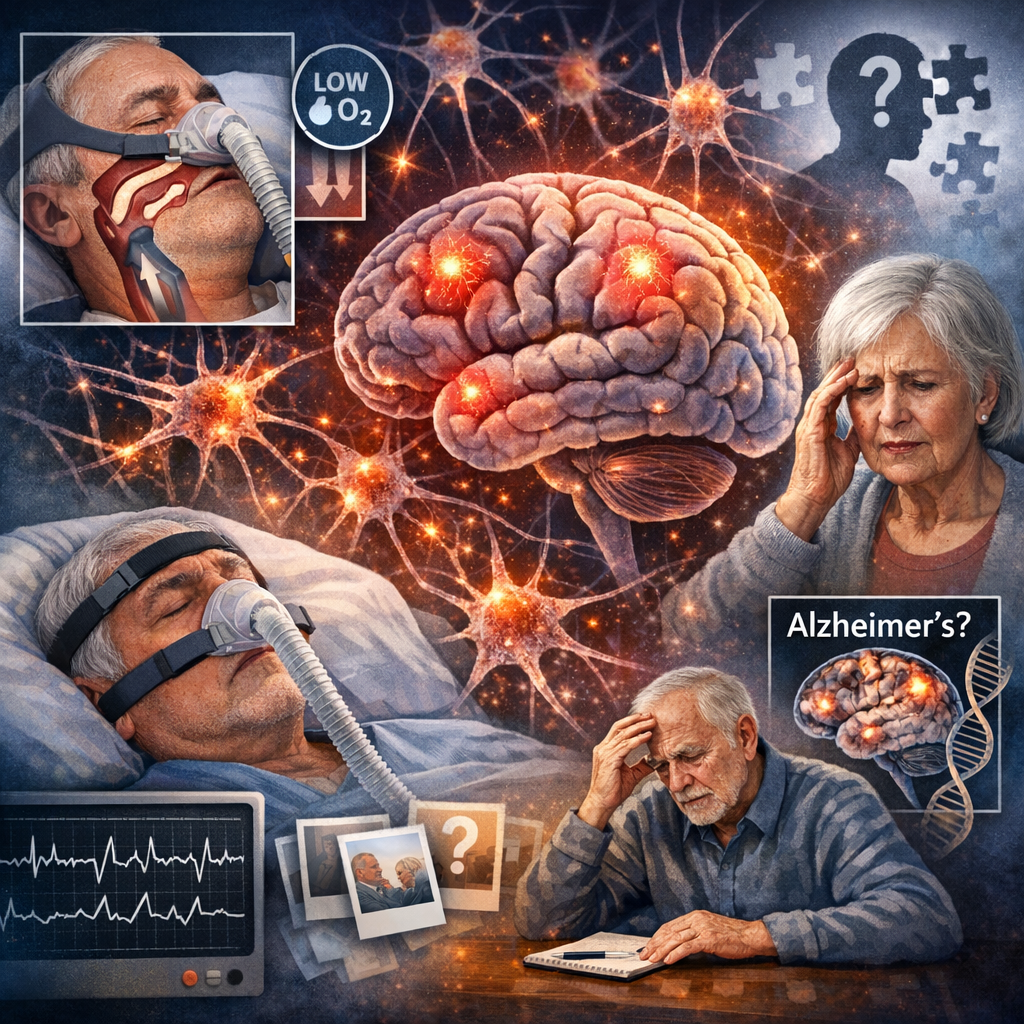
Cognitive decline, marked by impaired memory, decision-making, and reasoning, affects quality of life dramatically. With an aging society, understanding and managing conditions contributing to cognitive deterioration is critical. Evidence highlights the link between sleep apnea and increased risk of **dementia**, **Alzheimer’s disease**, and other neurodegenerative disorders. The combined effects of oxygen deprivation, nighttime awakenings, and sleep fragmentation create a challenging environment for cognitive functions. Both children and adults are susceptible, with symptoms manifesting as daytime fatigue, mood disturbances, and impaired cognitive abilities.
In children, sleep apnea can result in attention deficits and learning challenges, often misdiagnosed as attentional disorders. In adults, these cognitive difficulties may lead to greater susceptibility to neurodegenerative diseases. As awareness of these connections grows, comprehensive approaches to diagnose, manage, and treat sleep apnea become vital, not only to enhance sleep quality but also to safeguard cognitive health. Recognizing the neurological consequences of untreated sleep apnea underscores the need for early diagnosis and intervention. Understanding sleep apnea’s broader effects is essential for unveiling its full impact on the human brain.
Features
Recent advancements in **sleep medicine** highlight the broader impacts of sleep apnea on cognitive decline. Several studies support this connection, showing how untreated sleep apnea fosters an environment ripe for neurological damage. A study published in 2014 by the [American Journal of Respiratory and Critical Care Medicine](https://www.atsjournals.org/doi/full/10.1164/rccm.201309-1665OC) demonstrated significant brain tissue loss in individuals with severe obstructive sleep apnea, particularly in regions critical for memory and thought processing. This underscores the neurobiological consequences of prolonged exposure to intermittent hypoxia, a hallmark of sleep apnea.
In a landmark study, [University of California, Los Angeles](https://www.uclahealth.org/news/sleep-apnea-disrupts-memory-restoration) researchers discovered alterations in brain **white matter** among sleep apnea patients. White matter is vital for efficient communication between brain regions and crucial for various cognitive functions. Their findings indicate that the disrupted sleep patterns and repeated oxygen deprivation associated with sleep apnea can induce changes similar to early dementia, suggesting a troubling trajectory for unmanaged sleep apnea.
A compelling piece of research published in the journal *Neurology* by the [American Academy of Neurology](https://n.neurology.org/content/89/19/1944) revealed that sleep apnea could predict cognitive decline in older adults. The study showed those suffering from sleep apnea had a higher risk of **mild cognitive impairment** (MCI) progression, highlighting the condition’s acceleration of memory loss and impaired executive functions, essential for planning and organizing.
Moreover, pediatric studies highlight sleep apnea’s impact on children’s cognitive development. Research indicates children with sleep apnea show decreased academic performance and behavioral issues, likely due to impaired critical brain structures for learning and attention [American Society of Anesthesiologists](https://ASAabstracts.org/abstract/20/009/pmid/27440238).
These findings collectively stress sleep apnea’s implications beyond respiratory concerns, highlighting neurological health as a key focus. Awareness and tailored treatments are essential to mitigate cognitive risks.
Conclusion
The neurological repercussions of sleep apnea are vast, painting a comprehensive picture of cognitive vulnerability. While noticeable symptoms include snoring and apnea episodes, the hidden brain impacts emphasize proactive strategy needs. Early recognition and effective sleep apnea management not only enhance sleep quality but also uphold **cognitive integrity**, making these critical public health imperatives. These findings call for integrated sleep health approaches acknowledging the full spectrum of apnea’s impacts.
Addressing sleep apnea with proper screening and treatment methods, such as **continuous positive airway pressure** (CPAP) therapy or **mandibular advancement devices**, can significantly mitigate its cognitive effects. Health professionals play a critical role in educating patients and the public on recognizing and managing sleep apnea—not just as a respiratory disorder, but as a profound influencer of overall cognitive health. Understanding and addressing sleep apnea’s latent neurological effects may be key to improving daily cognitive function and mitigating long-term neurodegenerative disease risks.
By unraveling the hidden ties between sleep apnea and cognitive decline, we highlight an essential aspect of sleep medicine, inviting decisive action to safeguard future generations from its silent grip.
Concise Summary
Sleep apnea, often underestimated, extends its impact beyond respiratory issues to affect neurological health significantly, contributing to cognitive decline and increasing risks of dementia and Alzheimer’s disease. Studies highlight significant brain tissue loss and white matter alterations in patients, emphasizing the necessity for early diagnosis and management. Unmanaged sleep apnea affects children and adults, impairing cognitive functions and academic performances. Addressing sleep apnea with appropriate treatments like CPAP therapy helps in mitigating cognitive risks. Understanding and tackling its broader effects is crucial for improving sleep quality and safeguarding long-term cognitive health.

Dominic E. is a passionate filmmaker navigating the exciting intersection of art and science. By day, he delves into the complexities of the human body as a full-time medical writer, meticulously translating intricate medical concepts into accessible and engaging narratives. By night, he explores the boundless realm of cinematic storytelling, crafting narratives that evoke emotion and challenge perspectives.
Film Student and Full-time Medical Writer for ContentVendor.com