Unlocking the Hidden Connection: How Sleep Apnea Undermines Your Professional Performance and What You Can Do About It
**Sleep** is a fundamental pillar of health essential for physical rejuvenation and mental well-being. Yet, for millions of people, **sleep disorders** such as **sleep apnea** are a hidden challenge undermining their daily lives. **Sleep apnea**, characterized by repeated interruptions in breathing during sleep, silently affects one in five adults. Despite its prevalence, many remain unaware of how this condition can sabotage **professional performance**.
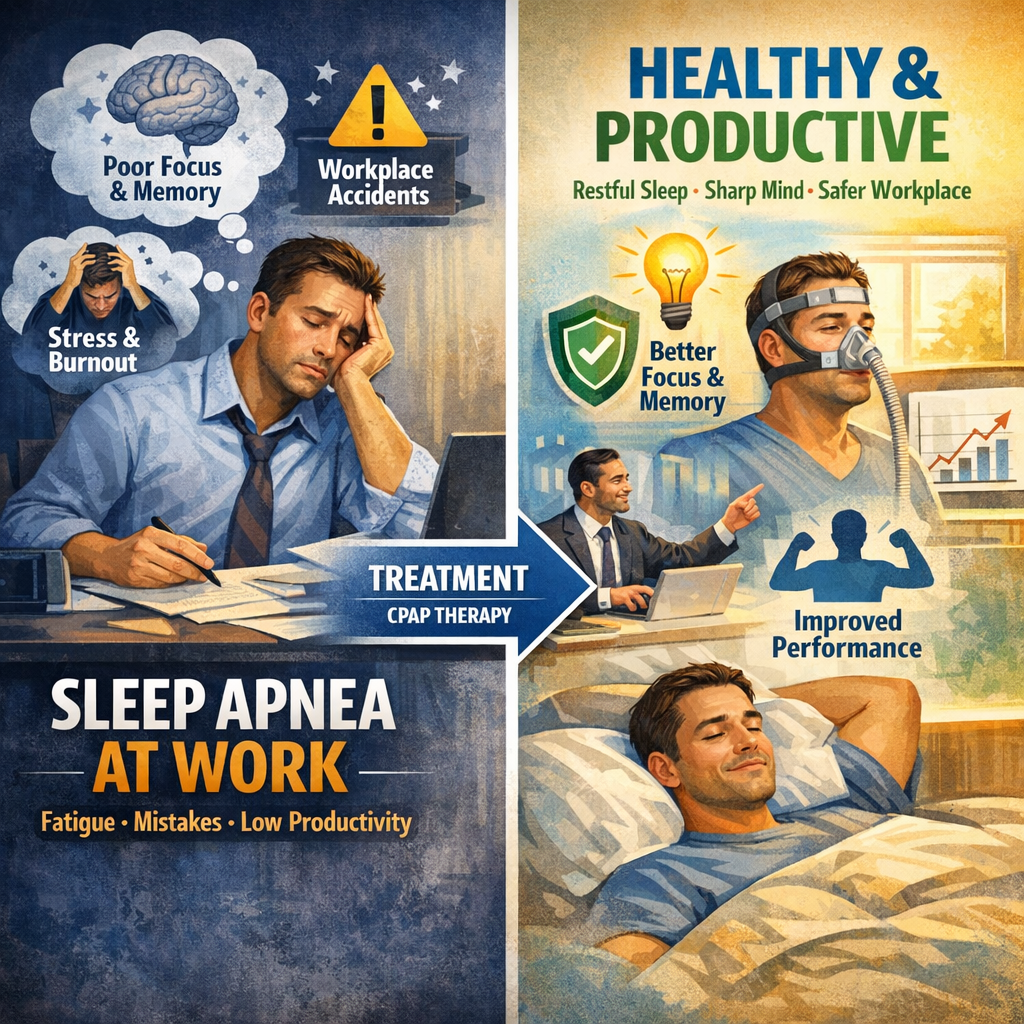
The impact of sleep apnea extends far beyond feelings of **fatigue** or restlessness; it infiltrates **cognitive processes** that are crucial for professional success. **Concentration**, **decision-making**, **problem-solving**, and **memory** can all suffer when quality sleep is disrupted. Essentially, sleep apnea deprives the brain of sufficient oxygen and leads to fragmented sleep cycles. This deficit manifests as **daytime sleepiness**, **irritability**, and impaired cognitive functionality, acting as barriers to productivity and job performance. These symptoms can be detrimental in high-stakes **work environments**, where quick thinking and sharp focus are paramount.
Moreover, the connection between sleep apnea and professional performance has broader implications for **workplace safety** and **company productivity**. Employees suffering from untreated sleep apnea have an increased risk of workplace accidents. A study published in the [Journal of Clinical Sleep Medicine](https://jcsm.aasm.org/doi/10.5664/jcsm.2026) found that untreated sleep apnea can lead to a significant increase in workplace errors and injuries, marking sleep apnea as a critical public health issue that organizations cannot afford to ignore.
Beyond the direct impact on an individual’s performance, sleep apnea can affect **interpersonal dynamics at work**. It can lower **emotional intelligence** and communication efficiency, leading to misunderstandings or conflicts with colleagues. Sleep deprivation also amplifies stress and anxiety levels, which may result in burnout if left unchecked. Addressing sleep apnea is not just a personal health necessity but a professional imperative.
Features: Professional and Medical Studies on Sleep Apnea’s Impact on Performance
**Scientific research** provides compelling evidence linking sleep apnea with diminished professional performance. Research published in the [*Sleep* journal](https://academic.oup.com/sleep/article/34/1/45/2454212) reveals that individuals with untreated sleep apnea are more likely to experience significant deficits in executive function. This part of cognitive processing includes skills such as **working memory**, flexible thinking, and **self-control**, which are crucial for effective decision-making and problem-solving.
Another study conducted by the **Harvard Medical School** highlights a stark increase in motor vehicle accidents among individuals suffering from sleep apnea. This has implications for professionals whose jobs require sharp focus and alertness, like drivers, machine operators, and healthcare workers. The cost associated with such accidents further emphasizes the economic burden untreated sleep apnea places on industries.
A clinical review in [*The Lancet Respiratory Medicine*](https://www.thelancet.com/journals/lanres/article/PIIS2213-2600(13)70182-8/fulltext) emphasizes the role of **Continuous Positive Airway Pressure (CPAP) devices** in improving wakefulness and cognitive function. CPAP therapy is considered the **gold standard treatment** for moderate to severe sleep apnea. It involves using a device that provides a constant stream of air through a mask, keeping airways open during sleep and reducing apnea episodes. Studies show that consistent use of CPAP significantly reduces daytime sleepiness and enhances quality of life, subsequently improving workplace performance and safety records.
An intriguing study in the [*American Journal of Respiratory and Critical Care Medicine*](https://www.atsjournals.org/doi/full/10.1164/rccm.200312-1674OC) examines the link between untreated sleep apnea and professional burnout. Individuals with untreated sleep apnea reported higher levels of workplace stress and lower job satisfaction, indicating the disorder’s potential role in escalating work-related stressors.
Ultimately, addressing sleep apnea in professional settings is not just about enhancing individual health; it’s about fostering a productive, safe, and effective work environment. Employers are increasingly encouraged to consider **sleep health programs** and to accommodate employees who seek treatment, as this can lead to substantial improvements in occupational health and performance.
Conclusion
Recognizing the critical link between **sleep health** and **professional performance** is vital for both individuals and organizations. Sleep apnea, though often undiagnosed, is a significant barrier to achieving peak workplace efficiency and maintaining personal well-being. Fortunately, with advancements in medical research and treatment options like CPAP therapy, individuals can reclaim their health and productivity.
**Change begins with awareness** and is propelled by informed action. If you suspect that sleep apnea might be affecting your work performance or quality of life, consult a healthcare professional for proper diagnosis and treatment. By prioritizing sleep health, you can unlock your full professional potential, enhance your quality of life, and foster a work culture that values health and productivity in equal measure.
**Concise Summary:**
**Sleep apnea** is an often undiagnosed disorder impacting **professional performance** by affecting cognitive functions essential for job success. Mismanagement of this condition can lead to **daytime sleepiness**, increased workplace errors, and safety risks. Professional relationships can suffer due to decreased **emotional intelligence** and increased stress. Research indicates treatments like **CPAP therapy** improve wakefulness and job productivity. Addressing sleep apnea is critical for safe, effective work environments, necessitating organizational interventions like sleep health programs. Emphasizing sleep health can empower workers, enhancing their quality of life and professional efficacy.

Dominic E. is a passionate filmmaker navigating the exciting intersection of art and science. By day, he delves into the complexities of the human body as a full-time medical writer, meticulously translating intricate medical concepts into accessible and engaging narratives. By night, he explores the boundless realm of cinematic storytelling, crafting narratives that evoke emotion and challenge perspectives.
Film Student and Full-time Medical Writer for ContentVendor.com