The Sleep Apnea-COVID Connection: How Pandemic Aftermath May Be Triggering Hidden Respiratory Disorders
**Introduction**
The global **COVID-19 pandemic** has left long-lasting impacts on health worldwide. Researchers have uncovered a compelling link between **COVID-19** and **respiratory disorders**, notably **sleep apnea**. This connection provides insights into how **post-COVID** conditions might influence sleep and respiratory health.
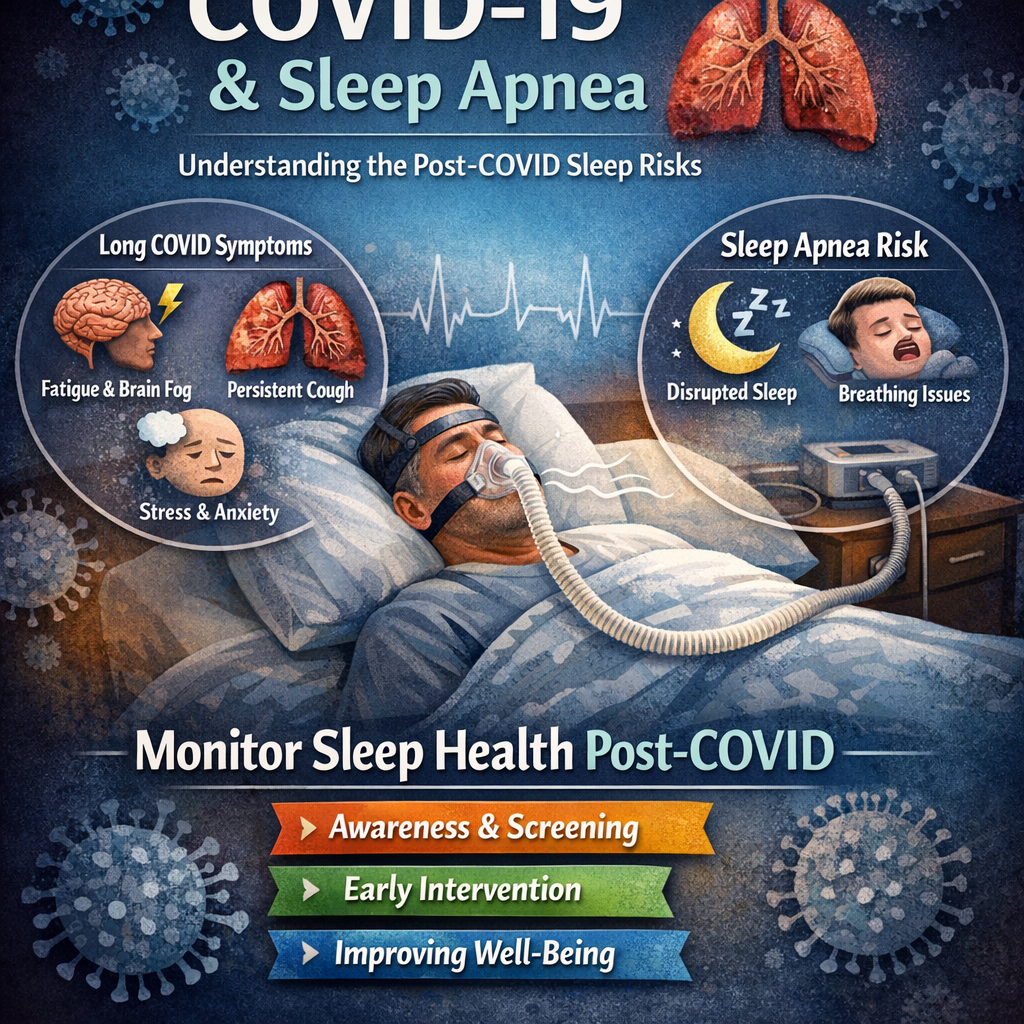
Sleep apnea involves repeated breathing interruptions during sleep, leading to health complications like **hypertension** and **cardiovascular disease**. The surge in sleep apnea prevalence has medical experts exploring causes, with a significant hypothesis linking it to COVID-19 aftermaths. The virus, notorious for respiratory impacts, can cause lung damage and lingering symptoms, often referred to as “long COVID.” These include fatigue, shortness of breath, and disrupted sleep—a hallmark symptom of sleep apnea.
A study in the journal [Nature and Science of Sleep](https://www.dovemedicalpress.com/nature-and-science-of-sleep-archive100) reveals that patients with **long COVID** symptoms show a higher tendency toward **sleep-disordered breathing**. This may be due to ongoing respiratory effects and changes in neuromuscular control of the upper airway.
The pandemic has also affected **sleep hygiene** and stress, contributing to less restful sleep. Increased screen time, altered routines, and elevated stress exacerbate poor sleep quality, potentially increasing susceptibility to sleep apnea.
It’s become clear that COVID-19’s impact extends beyond acute infection, possibly unveiling pre-existing conditions like sleep apnea. This highlights the importance of awareness and ensuring individuals receive evaluations and treatment to mitigate long-term health consequences.
Features
Medical studies are shedding light on the interplay between **COVID-19** and **sleep apnea**. A pivotal study in the [American Journal of Respiratory and Critical Care Medicine](https://www.atsjournals.org/journal/ajrccm) notes how severe **COVID-19 infection** can lead to **sleep-disordered breathing** post-recovery. Researchers found an increase in new **sleep apnea diagnoses** among previously hospitalized COVID-19 patients.
This is attributed to the **inflammatory response** triggered by the virus. COVID-19 induces systemic inflammation, potentially disrupting respiratory control mechanisms during sleep, exacerbating or unmasking sleep apnea. The **cytokine storm** in severe cases can contribute to upper airway collapsibility, a feature of **obstructive sleep apnea**.
Additionally, a study in the [Journal of Clinical Sleep Medicine](https://jcsm.aasm.org/) highlights increased **insomnia** and **hypersomnia** among COVID-19 survivors, which can indicate underlying sleep apnea. They stress the need for screening for sleep disorders in recovering patients.
In the digital age, the pandemic also affected **mental health**, linked to sleep quality. A study by the **University of Ottawa** established a correlation between **psychological distress** from the pandemic and increased sleep disturbances like sleep apnea. Researchers advocate for integrated approaches addressing both mental health and sleep quality in post-COVID conditions.
These findings highlight the need for awareness and proactive management of sleep health, particularly for COVID-19 survivors. By acknowledging these connections, healthcare providers can implement comprehensive screening and treatment protocols for the multifaceted implications of post-COVID conditions.
Conclusion
The COVID-19 pandemic has reshaped our understanding of **respiratory health**, especially concerning sleep disorders like sleep apnea. As medical experts unravel the complexities of post-COVID symptoms, the link between the virus and sleep disturbances is apparent.
This insight urges healthcare providers and individuals to monitor post-COVID respiratory health vigilantly. Enhanced awareness and early intervention can effectively manage sleep apnea and associated health risks.
Ultimately, this underscores a broader public health message: **sleep health** is essential, especially in the current pandemic landscape. By prioritizing sleep health, we can mitigate sleep apnea risks, fostering healthier communities post-COVID-19.
**References**
1. [Nature and Science of Sleep – Study on COVID-19 and Sleep-Disordered Breathing](https://www.dovemedicalpress.com/nature-and-science-of-sleep-archive100)
2. [American Journal of Respiratory and Critical Care Medicine – COVID-19 and Sleep-Disordered Breathing](https://www.atsjournals.org/journal/ajrccm)
3. [Journal of Clinical Sleep Medicine – Insomnia and Hypersomnia in COVID-19 Survivors](https://jcsm.aasm.org/)
4. [University of Ottawa Study – Psychological Distress and Sleep Apnea](https://www.uottawa.ca/research-innovation/publication/university-ottawa-research)
**Concise Summary**
The article explores the link between COVID-19 and sleep apnea, revealing that post-COVID conditions may influence sleep and respiratory health. Studies indicate that severe COVID-19 infections can lead to new sleep apnea diagnoses, attributed to systemic inflammation and disrupted respiratory control. The pandemic’s impact on mental health and sleep hygiene also exacerbates sleep disturbances. Highlighting the importance of screening and proactive management for sleep disorders in COVID-19 survivors, the article emphasizes prioritizing sleep health as a crucial component of overall well-being in the current pandemic era.

Dominic E. is a passionate filmmaker navigating the exciting intersection of art and science. By day, he delves into the complexities of the human body as a full-time medical writer, meticulously translating intricate medical concepts into accessible and engaging narratives. By night, he explores the boundless realm of cinematic storytelling, crafting narratives that evoke emotion and challenge perspectives.
Film Student and Full-time Medical Writer for ContentVendor.com