Revolutionizing Sleep Health: How AI-Powered Biosensors Could Eliminate Sleep Apnea Risks Before They Even Arise
Introduction
**Sleep apnea** is a prevalent but often underdiagnosed condition, characterized by interrupted breathing during sleep. Affecting millions of people worldwide, this disorder disrupts rest and poses significant health risks, including increased chances of cardiovascular disease, diabetes, and daytime fatigue. Traditional diagnosis often requires a costly and uncomfortable sleep study in a clinical setting. However, the advent of **AI-powered biosensors** offers a transformative approach to identifying and mitigating sleep apnea risks even before symptoms manifest, thus revolutionizing the way we approach sleep health.
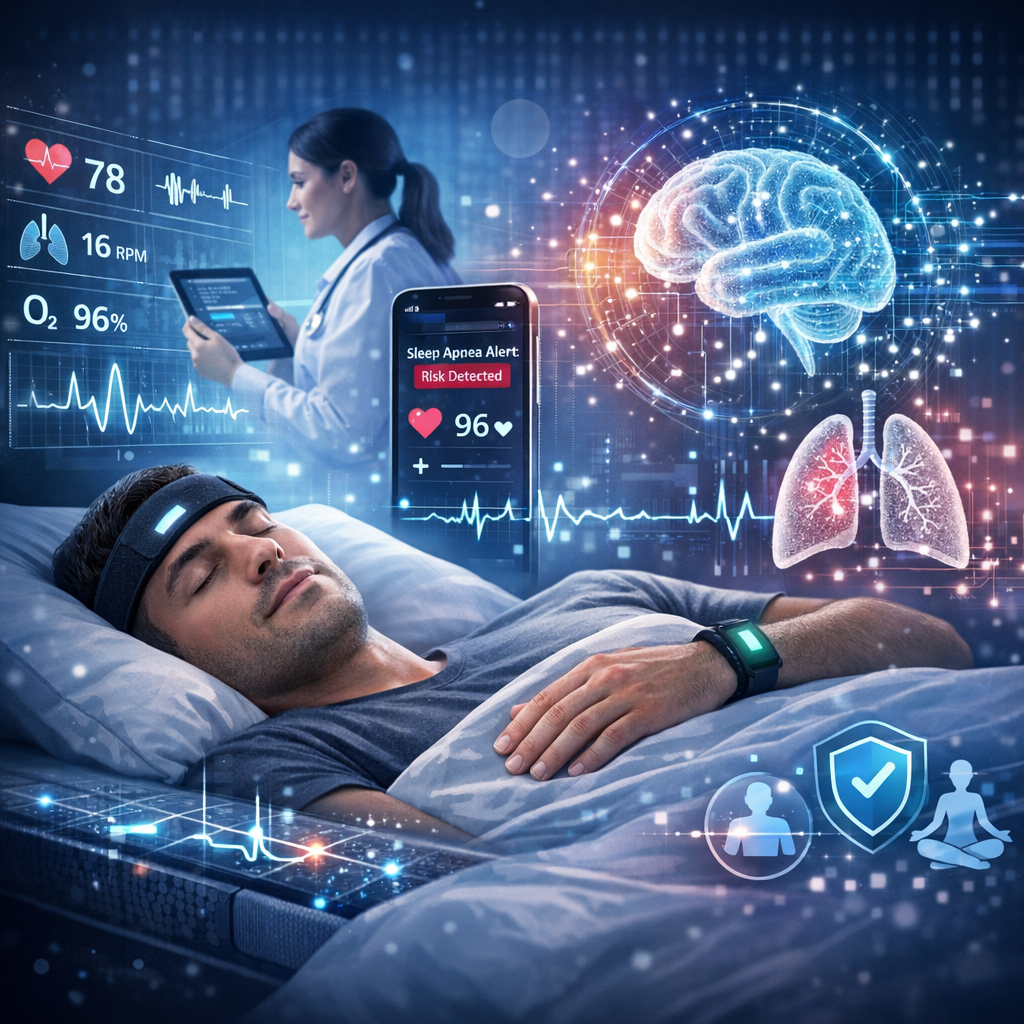
These **AI-powered biosensors** are cutting-edge devices that utilize **artificial intelligence** and **sensor technologies** to monitor physiological parameters continuously. They can be embedded in **wearable devices** like smartwatches, sleep bands, or even integrated into mattresses and pillows. These sensors collect biometric data such as **heart rate**, **breathing patterns**, **oxygen levels**, and body movements while you sleep. The AI algorithms then analyze this data in real-time, identifying patterns or anomalies that may indicate an elevated risk of sleep apnea.
Unlike traditional methods, which require overt symptoms for diagnosis, AI-biosensors provide a proactive approach by alerting individuals about potential risks, enabling timely intervention. This technology not only enhances diagnostic accuracy but also provides personalized sleep insights, empowering individuals to take control of their health. Furthermore, the data gathered can be invaluable for healthcare providers, offering deeper insights into a patient’s sleep health without the need for intrusive monitoring.
The potential impact of AI-powered biosensors extends beyond sleep apnea. They represent a significant stride towards personalized medicine where health interventions can be precisely tailored to each individual. As technology continues to advance, we can anticipate a future where the risks associated with sleep disorders are significantly diminished, improving both the quality of life and overall well-being. The intersection of technology and health marks a new era in sleep health management, promising to transform how we understand and address sleep-related conditions.
Features
Recent studies underscore the promising potential of **AI-powered biosensors** in revolutionizing sleep health. A study published in the [Journal of Clinical Sleep Medicine](https://jcsm.aasm.org/doi/10.5664/jcsm.8106) highlights the efficacy of wearable technologies in detecting sleep apnea. According to the research, AI algorithms integrated with biosensors demonstrated high accuracy in identifying patterns associated with **obstructive sleep apnea**, often comparable to traditional **polysomnography**. This capability is attributed to the enhanced data processing powers of AI, which can incessantly analyze complex datasets to detect subtle deviations relevant to diagnosing sleep disorders.
Several clinical trials have shown that **AI-driven biosensors** provide reliable, continuous monitoring outside clinical settings, increasing patient comfort and compliance. For instance, an innovative study conducted at [Stanford University](https://med.stanford.edu/sleep/slaap/programs/sleep-wearables.html) evaluated a wearable device that uses **machine learning** to predict sleep apnea with 85-90% accuracy. Such findings indicate that wearables equipped with advanced biosensors can serve as practical alternatives to traditional lab-based diagnostics and significantly improve accessibility to sleep health management.
Additionally, the integration of AI with biosensors enables personalized healthcare, an aspect increasingly appreciated in contemporary health paradigms. AI algorithms can adapt to individual physiological variances, offering bespoke interventions aiming at lifestyle modifications or medical advice. According to findings discussed in a paper from the [Journal of Healthcare Engineering](https://www.hindawi.com/journals/jhe/), AI-powered sleep-monitoring devices can offer personalized feedback, tailor interventions, and monitor progress over time. This personalized approach not only aids in managing sleep apnea more effectively but also helps in cultivating better sleep habits and overall health outcomes for users.
Moreover, by combining biosensor data with other health metrics, medical professionals can gain comprehensive insights into a patient’s health, potentially identifying co-morbid conditions associated with sleep apnea such as **hypertension**, **obesity**, and **cardiovascular diseases**. This holistic observational capability underscores the transformational potential of integrating AI and biosensors into the mainstream healthcare ecosystem, promising to enhance diagnostic precision and therapeutic outcomes significantly.
Conclusion
The marriage of **artificial intelligence** and **biosensors** heralds a new dawn in sleep health management, paving the way for unprecedented levels of accuracy and accessibility in the detection and prevention of sleep apnea. By shifting the paradigm from reactive to proactive healthcare, these technologies empower individuals and healthcare providers alike with critical insights into sleep quality and associated health risks. As the technology evolves, AI-powered biosensors offer the promise of optimized sleep health, reducing the burden of sleep disorders on individuals and healthcare systems worldwide.
Future advancements in AI and biosensor technologies will undoubtedly enhance their capabilities, potentially addressing other sleep disorders and health conditions. By embracing this innovation, we step into an era where sleep health is no longer a reactive discipline but an integral aspect of preventative healthcare, underscoring the essence of holistic well-being. As we move toward a future where these technologies become ubiquitous, the potential for improving life quality is boundless, shaping a healthier, more enlightened society.
Concise Summary: AI-powered biosensors hold the promise of transforming sleep health by identifying risks of sleep apnea proactively. By using artificial intelligence and sensors, these devices monitor sleep patterns effectively and offer a more comfortable, accurate alternative to traditional diagnostic methods. With promising results in recent studies, these technologies offer personalized healthcare by adapting data to cater to individual needs, thus improving overall sleep health. As advancements continue, AI-biosensors have the potential to not just reduce the impact of sleep apnea but reshape the future of preventative sleep healthcare on a global scale.

Dominic E. is a passionate filmmaker navigating the exciting intersection of art and science. By day, he delves into the complexities of the human body as a full-time medical writer, meticulously translating intricate medical concepts into accessible and engaging narratives. By night, he explores the boundless realm of cinematic storytelling, crafting narratives that evoke emotion and challenge perspectives.
Film Student and Full-time Medical Writer for ContentVendor.com