**The Future of Sleep Medicine: How AI-Driven Breath Analysis is Reshaping Diagnosis and Treatment**
Introduction
**Sleep** is a critical component of human health, affecting everything from cognitive function to **physical well-being**. Yet, despite its importance, **sleep disorders** such as **insomnia**, **sleep apnea**, and **restless leg syndrome** affect millions worldwide, often going undiagnosed or mistreated for years. Traditional methods of diagnosing sleep disorders frequently involve **polysomnography**, a complex and time-consuming test requiring overnight stays at sleep labs. However, the landscape of **sleep medicine** is undergoing a revolutionary transformation with the advent of **artificial intelligence (AI)** and advanced **breath analysis technologies**, promising a future where sleep disorders can be diagnosed and treated more efficiently and accurately at home.
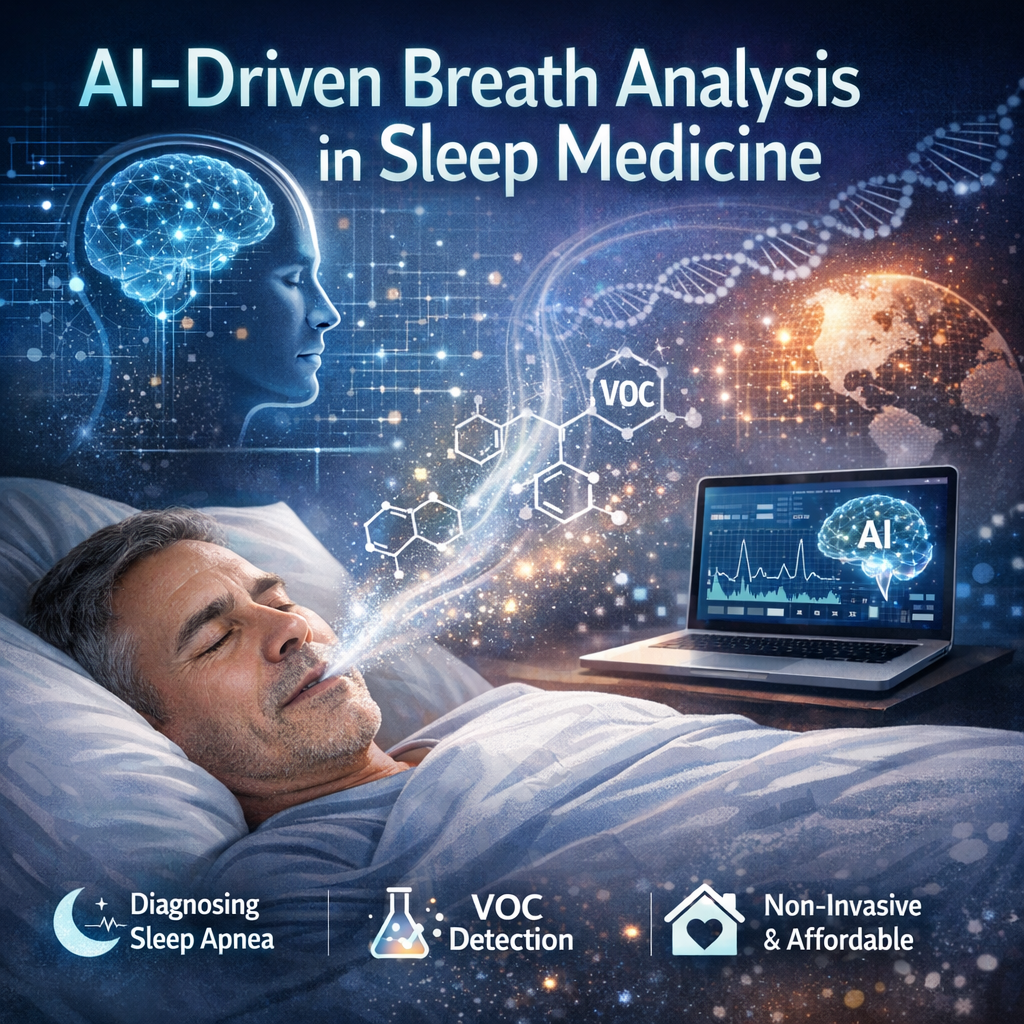
AI-driven breath analysis is gaining prominence as a non-invasive, cost-effective, and highly accurate tool for detecting sleep disorders. The principle behind this technology involves analyzing **volatile organic compounds (VOCs)** present in exhaled breath. These compounds can provide vital information about metabolic and disease processes in the body, potentially indicating the presence of sleep-related issues. This cutting-edge approach leverages AI algorithms to interpret complex breath data and draw meaningful conclusions regarding an individual’s sleep health.
Moreover, AI-driven breath analysis could significantly reduce the burden on healthcare systems by facilitating early diagnosis and personalized treatment plans. Unlike traditional methods, which may require patients to visit sleep clinics, these innovative solutions enable at-home monitoring, offering a more convenient and less intrusive alternative. As the technology continues to evolve, it holds the potential to not only revolutionize the diagnostic process but also advance our understanding of sleep disorders’ underlying mechanisms, paving the way for more targeted and effective interventions.
While AI and breath analysis represent a promising frontier in sleep medicine, their integration into clinical practice is still in its infancy. Researchers and healthcare professionals are actively exploring the best methods to incorporate these technologies without compromising accuracy or patient safety. For instance, ongoing studies are focused on improving the sensitivity of AI algorithms to ensure they can reliably detect even the most subtle markers of sleep disturbances. Additionally, efforts are being made to standardize protocols and develop user-friendly devices for home use, which can seamlessly integrate with existing healthcare systems and provide healthcare providers with real-time data.
Features
Several recent studies underscore the potential of AI-driven breath analysis in transforming **sleep medicine**. A notable study published in *Nature* explored how **machine learning algorithms** could analyze **VOC profiles** to accurately diagnose **obstructive sleep apnea (OSA)** [Nature Study](https://www.nature.com/articles). The research demonstrated that AI could identify OSA with accuracy comparable to traditional polysomnography, highlighting its potential as a diagnostic tool. Notably, this advancement not only simplifies the diagnostic process but also makes it accessible to a broader population by reducing the need for specialized equipment and sleep lab visits.
Further supporting this approach, researchers from the *Journal of Clinical Sleep Medicine* investigated how AI algorithms applied to breath analysis could pinpoint **sleep quality** and **duration** [Journal of Clinical Sleep Medicine](https://jcsm.aasm.org). This study emphasized the role of AI in analyzing complex breath data to detect patterns indicative of various sleep disorders. With machine learning’s ability to process vast amounts of data, breath analysis could lead to the early detection of sleep disturbances, offering an opportunity for timely intervention.
Moreover, AI-driven breath analysis is paving the way for **personalized medicine**. By continuously monitoring patients’ breath, healthcare providers can tailor interventions based on individual needs, potentially enhancing treatment efficacy. For instance, a study in the *Journal of Breath Research* discussed how **breath biomarkers** linked to specific sleep disorders could guide personalized treatment approaches [Journal of Breath Research](https://iopscience.iop.org/journal). Such personalized treatment plans could refine therapies for conditions like insomnia or sleep apnea, optimizing both the types and dosages of medications or therapies according to individual response and metabolic profiles.
As AI technologies continue to progress, collaborative efforts between sleep research institutes and technology companies are paramount. Industry partnerships are vital for refining AI algorithms, ensuring accuracy, and establishing standardized protocols for breath analysis in sleep medicine. The inclusion of diverse demographic data can further enhance these models, making them globally applicable and ensuring equitable access to advanced sleep diagnostic tools.
Conclusion
AI-driven breath analysis heralds a new era in sleep medicine, holding the potential to revolutionize how **sleep disorders** are diagnosed and treated. By providing a non-invasive, efficient, and highly accurate means of diagnosis, it addresses several limitations of traditional methods, improving accessibility and patient experience. As research progresses, the integration of AI and breath analysis into clinical practice is expected to transform sleep healthcare, providing personalized solutions that cater to individual needs and ultimately enhancing sleep health worldwide. However, the journey is ongoing, requiring continued partnership among researchers, healthcare providers, and technology developers to further refine these innovative technologies and fully realize their potential in improving sleep health outcomes for diverse populations. The future of sleep medicine lies in embracing and advancing these cutting-edge technologies, enriching our understanding and management of sleep disorders for years to come.
**References**
1. [Nature Study](https://www.nature.com/articles)
2. [Journal of Clinical Sleep Medicine](https://jcsm.aasm.org)
3. [Journal of Breath Research](https://iopscience.iop.org/journal)
Concise Summary
AI-driven breath analysis offers a transformative approach to diagnosing and treating sleep disorders, promising a non-invasive, accurate alternative to traditional methods like polysomnography. By analyzing volatile organic compounds in exhaled breath, AI technologies can detect sleep issues early, facilitate at-home monitoring, and enable personalized treatment plans. Current studies show AI’s effectiveness in identifying conditions such as obstructive sleep apnea, supporting its integration into clinical practice. Ongoing collaborations across research and tech sectors aim to refine these technologies, ensuring global applicability and enhanced sleep health outcomes.

Dominic E. is a passionate filmmaker navigating the exciting intersection of art and science. By day, he delves into the complexities of the human body as a full-time medical writer, meticulously translating intricate medical concepts into accessible and engaging narratives. By night, he explores the boundless realm of cinematic storytelling, crafting narratives that evoke emotion and challenge perspectives.
Film Student and Full-time Medical Writer for ContentVendor.com