Could Your Snoring Be a Hidden Heart Attack Risk? The Surprising Link Between Sleep Apnea and Cardiovascular Health
Introduction
**Snoring** is often seen as a benign nocturnal nuisance, sometimes even approached with humor in popular culture. However, for millions of people around the world, snoring is more than just an inconvenient bedtime comedy. It can be an outward sign of a more dangerous underlying condition known as **obstructive sleep apnea (OSA)**. Sleep apnea is a sleep disorder characterized by repeated interruptions in breathing during sleep, usually due to a temporary collapse of the airway. While many people view snoring as an amusing quirk, it’s important to recognize that it may also be a red flag indicating the presence of sleep apnea.
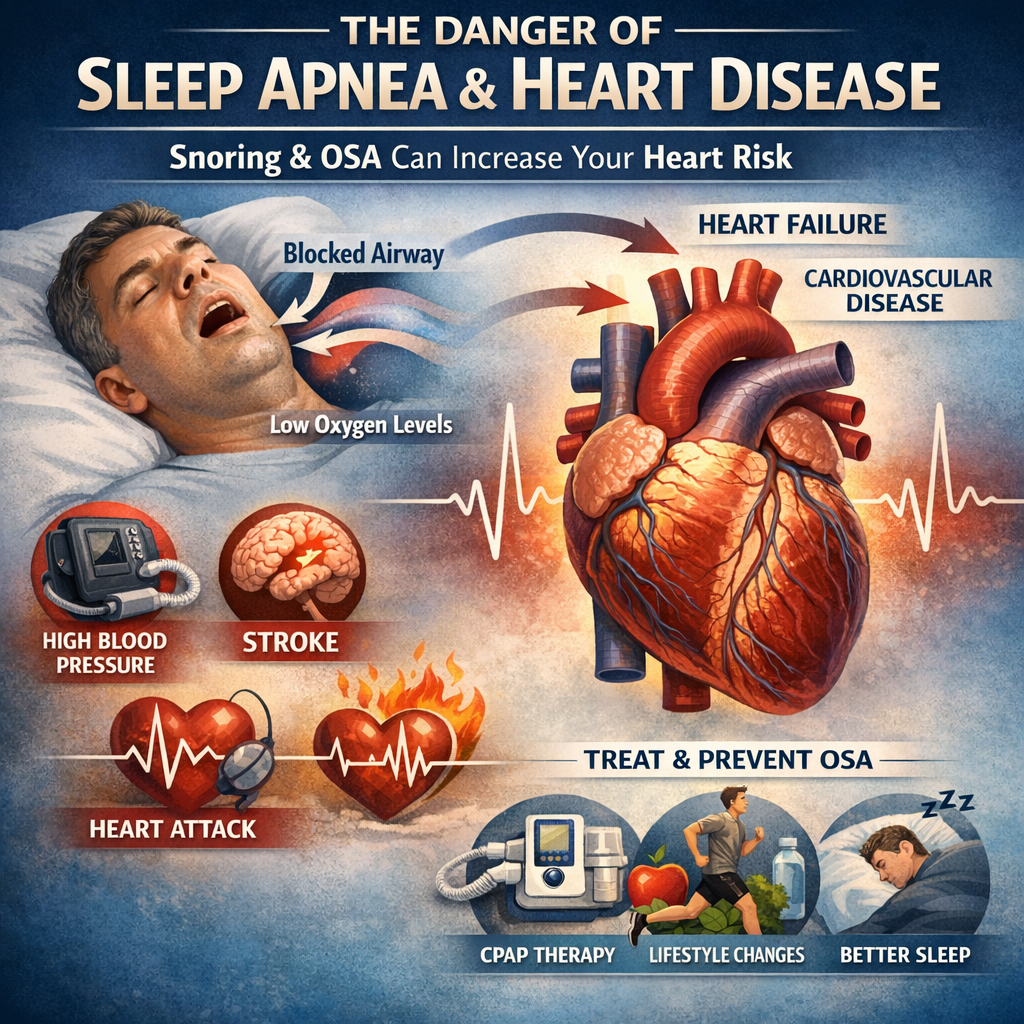
OSA is not just limited to affecting the quality of your sleep; it extends its ramifications into broader health concerns, significantly impacting **cardiovascular health**. When breathing stops during sleep, the oxygen levels in the blood drop, leading to a condition called **hypoxemia**. This drop in oxygen triggers a stress response in the body, culminating in the release of adrenaline and other stress hormones. The consequences can be grave, with long-term adverse effects, such as **high blood pressure**, **arrhythmias**, **heart failure**, **stroke**, and even **heart attacks**.
Research has increasingly shown a link between **sleep apnea** and **cardiovascular disease**, prompting both sleep and health experts to delve into the correlation between these conditions. Despite this compelling evidence, sleep apnea remains underdiagnosed, leaving many individuals unaware of the potential cardiovascular risks they face. Recognizing the importance of addressing OSA cannot be understated, as effective treatments not only improve sleep quality but also play a pivotal role in reducing cardiovascular risk factors.
Understanding the link between sleep apnea and cardiovascular health is essential for those who snore and those around them. Through awareness, screening, and appropriate treatment, the risks associated with this condition can be mitigated, leading to better overall health outcomes. In the following sections, we will explore what the research reveals, how you can recognize the signs of OSA, and the steps you can take to protect your heart health.
Features: Understanding the Research and Findings
In recent years, the medical community has conducted extensive research to uncover the link between **sleep apnea** and **cardiovascular health**. One significant study is the [Sleep Heart Health Study](https://www.nih.gov/news-events/news-releases/sleep-and-heart-health-study), which found that moderate to severe sleep apnea significantly increased the risk of **coronary artery disease**, **heart failure**, and cardiac-related deaths. Participants with severe OSA had an approximately two-to-threefold increased risk of cardiovascular diseases compared to those without sleep apnea. The study underscored the gravity of the relationship between untreated sleep apnea and heart health, highlighting a critical area for medical intervention and patient awareness.
Moreover, a critical study published in the journal [Circulation](https://www.ahajournals.org/doi/full/10.1161/CIRCULATIONAHA.110.977094) found that untreated OSA might lead to **endothelial dysfunction**, a condition wherein the blood vessels cannot dilate properly, increasing the risk of **atherosclerosis**—a major contributor to cardiovascular events such as heart attacks. These findings are echoed by the [American Heart Association](https://www.heart.org/en/health-topics/sleep-disorders/sleep-apnea), which states that sleep apnea increases the risk of **hypertension**, **arrhythmias**, **stroke**, and heart failure. Continuous positive airway pressure (**CPAP**) therapy, a common treatment for sleep apnea, has been shown in research to significantly improve endothelial function and reduce the occurrence of cardiovascular events in patients with OSA.
Additionally, a review published in the [American Journal of Respiratory and Critical Care Medicine](https://www.atsjournals.org/doi/full/10.1164/rccm.200912-1876OC) outlined that the intermittent hypoxia caused by sleep apnea contributes to **oxidative stress** and **inflammation**, further exacerbating cardiovascular risk. The research suggests that managing these stress responses through sleep apnea treatment can mitigate inflammatory and oxidative stress markers, representing a vital strategy for protecting cardiovascular health.
With mounting evidence supporting the link between **sleep apnea** and **heart disease**, healthcare professionals advocate for increased screening and awareness of OSA. This is particularly vital for individuals who snore and exhibit symptoms such as **daytime sleepiness**, **fatigue**, and **frequent nighttime awakenings**. Understanding the potential risks allows for timely diagnosis and intervention, ultimately saving lives by reducing the likelihood of cardiovascular complications.
Conclusion
In conclusion, the relationship between **snoring**, **sleep apnea**, and **cardiovascular health** is both intriguing and alarming. While snoring may appear to be a harmless inconvenience, it can signal the presence of obstructive sleep apnea—a condition linked to severe cardiovascular risks. As research continues to illuminate the profound effects of untreated OSA on heart health, it becomes imperative for individuals to recognize the symptoms and seek medical advice.
Early diagnosis and treatment of sleep apnea can make a significant difference, not just by improving sleep quality, but also by reducing the risks of severe cardiovascular issues such as heart attacks. Treatments like **CPAP therapy** and lifestyle modifications can restore healthy sleep patterns and lower the burden on the heart.
Ultimately, driving awareness and encouraging open conversations about **sleep health** can serve as vital steps in managing and mitigating the risks associated with sleep apnea. By taking proactive measures, individuals can pave the way for a healthier heart and a more restful night’s sleep.
Summary
Snoring can be more than a mere inconvenience; it might indicate obstructive sleep apnea (OSA), a condition with serious cardiovascular risks. OSA disrupts breathing during sleep, reducing blood oxygen and triggering harmful stress responses. Studies show a strong link between untreated OSA and heart diseases like coronary artery disease, hypertension, and heart attacks. Effective treatments, such as CPAP therapy, can improve sleep quality and reduce heart risks. Recognizing symptoms early enables timely intervention, improving overall heart health and quality of life.
References
1. [Sleep Heart Health Study](https://www.nih.gov/news-events/news-releases/sleep-and-heart-health-study)
2. [Circulation Journal Study](https://www.ahajournals.org/doi/full/10.1161/CIRCULATIONAHA.110.977094)
3. [AHA Sleep Apnea Resources](https://www.heart.org/en/health-topics/sleep-disorders/sleep-apnea)
4. [AJRCCM Study Insights](https://www.atsjournals.org/doi/full/10.1164/rccm.200912-1876OC)

Dominic E. is a passionate filmmaker navigating the exciting intersection of art and science. By day, he delves into the complexities of the human body as a full-time medical writer, meticulously translating intricate medical concepts into accessible and engaging narratives. By night, he explores the boundless realm of cinematic storytelling, crafting narratives that evoke emotion and challenge perspectives.
Film Student and Full-time Medical Writer for ContentVendor.com