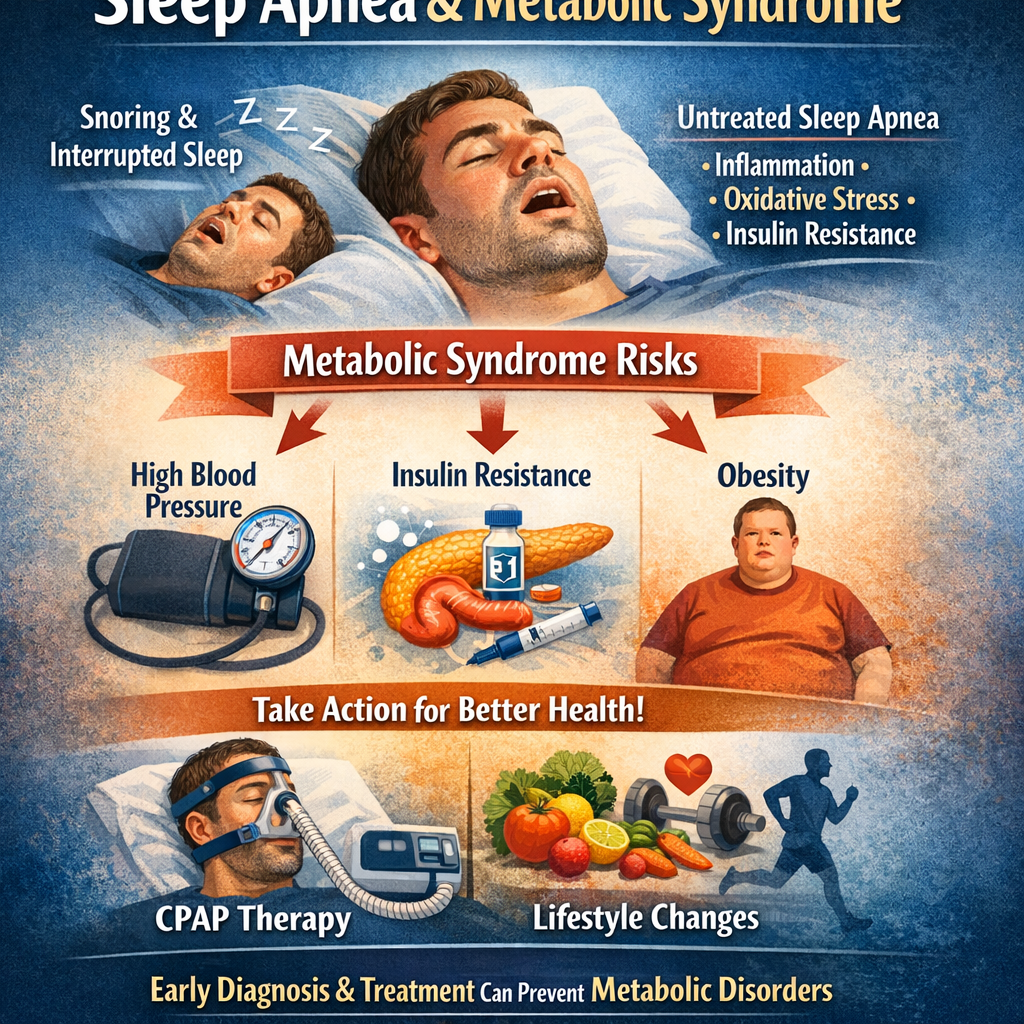
Sleep Apnea as a Predictor for Future Metabolic Syndrome: Unveiling The Silent Health Crisis
**Introduction**
**Sleep apnea** is often thought of as nothing more than an annoying **sleep disorder** characterized by loud snoring and sporadic breathing interruptions during sleep. However, recent studies have shone a light on an alarming correlation between **sleep apnea** and **metabolic syndrome**, posing what could be a significant public health concern. With **sleep apnea** affecting up to 18 million Americans, and **metabolic syndrome**—an amalgamation of conditions like **high blood pressure**, **high blood sugar**, excess body fat around the waist, and abnormal **cholesterol** or **triglyceride** levels—becoming increasingly common, the link between these disorders warrants urgent attention.
When **sleep apnea** occurs, the airway becomes partially or completely blocked, resulting in reduced oxygen levels. This triggers the brain to wake you from deep sleep to reopen the airway. Such disturbances can happen numerous times a night, leaving individuals tired and sleep-deprived. Beyond the obvious fatigue, **sleep apnea** contributes substantially to **systemic inflammation**, **insulin resistance**, and **sympathetic nervous system** overactivity. These are all significant contributors to **metabolic syndrome**.
Furthermore, when **sleep apnea** goes undiagnosed or untreated, the recurrent drops in blood oxygen levels can put strain on the **cardiovascular system**, exacerbating the conditions that lead to **metabolic syndrome**. People with untreated **sleep apnea** can develop **high blood pressure** due to the constant state of unrest during sleep. Over time, this can trigger a cascade of health issues, including **heart disease** and **type 2 diabetes**, maladies often seen in **metabolic syndrome**. This paints a particularly concerning picture as healthcare systems may be burdened with increases in **chronic diseases** associated with both conditions.
**Sleep apnea** is a prevalent but underdiagnosed condition. While snoring is a telltale sign, other subtle hints such as frequent nocturnal awakenings, daytime sleepiness, and morning headaches can be indicative of this disorder. Unfortunately, the lack of **awareness** leads many to tolerate their symptoms or remain oblivious to them entirely, allowing the potential development of **metabolic syndrome** to go unaddressed. Understanding the relationship between **sleep apnea** and **metabolic syndrome** is crucial, as prevention and early intervention could halt the progression of this silent health crisis.
Features
A growing body of research underscores the link between **sleep apnea** and **metabolic syndrome**. A study published in the **American Journal of Respiratory and Critical Care Medicine** found that individuals with untreated **sleep apnea** had a higher risk of developing **metabolic syndrome** than those without. The study highlighted that **sleep apnea** can exacerbate conditions such as **obesity**, **hypertension**, and **insulin resistance**, which are pivotal components of **metabolic syndrome**. [Link to study](https://www.atsjournals.org/journal/ajrccm)
Additionally, a report in the **Journal of Clinical Sleep Medicine** revealed that the severity of **sleep apnea** correlates with the severity of **metabolic syndrome** components. By evaluating patients with varying degrees of sleep apnea, researchers discovered that those with severe cases were more likely to exhibit elevated levels of inflammatory markers, impaired glucose tolerance, and **dyslipidemia**, common indicators of **metabolic syndrome**. The findings suggest that the successful management of **sleep apnea** through treatments such as **continuous positive airway pressure (CPAP)** therapy can mitigate these risks. [Link to study](https://jcsm.aasm.org)
Another study published in **The Lancet Diabetes & Endocrinology** delved into the causal pathways linking **sleep apnea** and **metabolic syndrome**. It posited that intermittent hypoxia and sleep fragmentation from sleep apnea exacerbate **oxidative stress** and **systemic inflammation**, leading to **metabolic dysregulation**. Moreover, the research showed that patients using **CPAP therapy** experienced significant improvements in **insulin sensitivity** and **lipid profiles**, underscoring the importance of addressing **sleep apnea** not just for sleep health but for overall **metabolic health**. [Link to study](https://www.thelancet.com/journals/landia/home)
These studies are pivotal as they not only highlight the potential dangers of untreated **sleep apnea** but also provide evidence that managing this sleep disorder can offer hopeful avenues for combating **metabolic syndrome**.
Conclusion
Understanding **sleep apnea** as a predictor for **metabolic syndrome** is crucial in today’s health landscape. As the prevalence of both **sleep apnea** and **metabolic syndrome** continue to rise, addressing one may bring significant benefits in managing the other. Early diagnosis and intervention are vital. Healthcare professionals should be vigilant in spotting signs of **sleep apnea** and recommend appropriate treatments like **CPAP therapy**, lifestyle modifications, and regular follow-ups. **Awareness campaigns**, patient education, and routine screenings can play a significant role in mitigating the risks associated with this silent health crisis.
In conclusion, **sleep apnea** is more than just a nighttime nuisance. Its implications on **metabolic health** highlight the need for broader public health strategies aimed at awareness and treatment. As we continue to uncover the intricate links between these conditions, a proactive and multi-faceted approach could hold the key to a healthier future, free from the burdens of **metabolic syndrome**.
**Concise Summary**
Recent studies have identified a significant link between **sleep apnea** and **metabolic syndrome**, a condition marked by factors like **high blood pressure**, **blood sugar**, and **cholesterol**. This disorder disrupts sleep and contributes to systemic inflammation, insulin resistance, and cardiovascular stress—all contributors to metabolic syndrome. Research highlights **sleep apnea**’s role in exacerbating these conditions but shows promise of management through **CPAP therapy** and lifestyle changes. Early diagnosis and comprehensive treatment strategies could mitigate the growing public health concern of intertwined **sleep apnea** and **metabolic syndrome**.

Dominic E. is a passionate filmmaker navigating the exciting intersection of art and science. By day, he delves into the complexities of the human body as a full-time medical writer, meticulously translating intricate medical concepts into accessible and engaging narratives. By night, he explores the boundless realm of cinematic storytelling, crafting narratives that evoke emotion and challenge perspectives.
Film Student and Full-time Medical Writer for ContentVendor.com