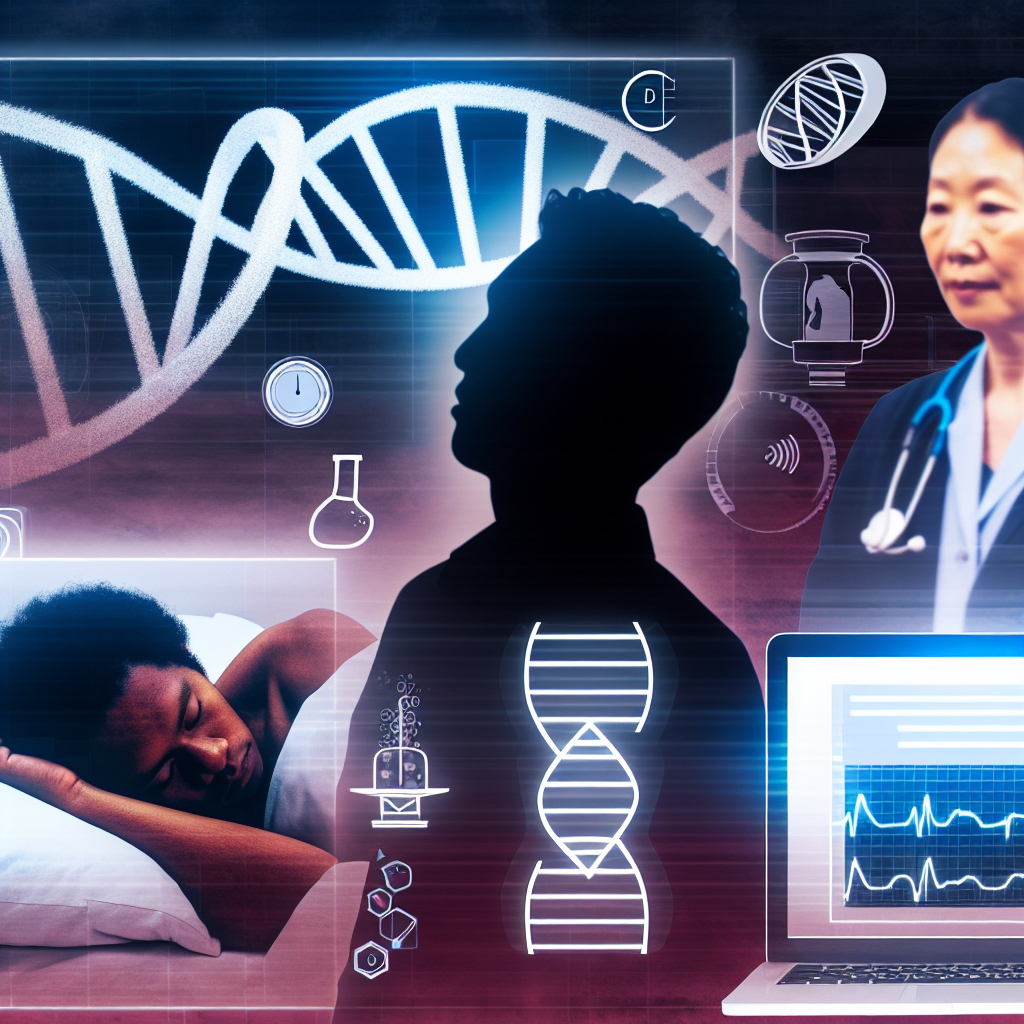
Unlocking the Hidden Connection: How Sleep Apnea Treatment is Pioneering the Future of Personalized Medicine
**Introduction**
**Sleep apnea**, a common but frequently undiagnosed sleep disorder, affects millions globally. It is marked by **interrupted breathing during sleep**, resulting in restless nights and various health issues like **cardiovascular diseases**, **diabetes**, and **mental health disorders**. While traditional interventions involve **CPAP machines** or lifestyle changes, the future of sleep apnea treatment is shifting towards **personalized medicine**. This novel approach optimizes care by considering individual genetics, environmental factors, and lifestyle, minimizing the one-size-fits-all strategy in healthcare.
**Personalized medicine** introduces a paradigm shift by focusing on individual characteristics. For sleep apnea, understanding **genetic bases** and physiological differences can lead to more targeted treatments. Recent advancements in technology and genomics have spearheaded personalized approaches. **Gene editing technologies** like **CRISPR** and comprehensive **genetic profiling** enable the identification of those at risk or likely to benefit from specific treatments by addressing the root cause rather than merely suppressing symptoms.
**Personalized medicine** not only promises better patient outcomes but also reduces healthcare costs due to inefficient generic treatments. By pinpointing specific causes, healthcare providers can offer cost-effective solutions. This innovative approach is set to transform sleep medicine and establish a model for treating other complex diseases with the same level of customization and precision.
Features
Increased interest in **personalized medicine** has been noted, especially in its application in **sleep medicine**. Numerous studies support the potential benefits of this tailored approach for **sleep apnea** patients.
**Research from the journal Sleep** identified significant heterogeneity in **sleep apnea phenotypes** (different disorder types) and emphasized potential targeted therapies. By classifying patients based on clinical data, researchers could more accurately predict treatment responses. Personalized plans improve therapy adherence and outcomes because not all patients respond alike to standard therapies. [Sleep Journal](https://academic.oup.com/sleep).
**Harvard Medical School** conducted a study focusing on the **genetic aspects of sleep apnea**. Their analysis led to identifying specific **genetic markers** associated with the disorder. This breakthrough facilitates developing genetic tests to identify at-risk patients and offers frameworks for early-stage targeted interventions. [Harvard Medical School](https://hms.harvard.edu).
**Stanford University** advanced **wearable devices** that track sleep patterns, offering real-time data. These devices help with initial assessments and ongoing monitoring of sleep apnea, enabling highly personalized treatment strategies when combined with genetic and lifestyle insights. [Stanford University](https://med.stanford.edu).
These studies highlight personalized medicine’s potential to revolutionize **sleep apnea treatment**. By exceeding the limits of traditional therapies, personalized approaches enhance effectiveness and contribute significantly to understanding sleep-related disorders.
Conclusion
Integrating **personalized medicine** into sleep apnea treatment demonstrates a promising future in sleep science and broader healthcare. Through advancements in **genomics**, **phenotype classification**, and data acquisition, medical professionals achieve unprecedented precision and efficacy in **sleep apnea treatment**. This model not only improves patient outcomes but also reduces unwanted side effects and increases treatment adherence.
As global healthcare systems seek efficient, cost-effective solutions, personalized medicine offers a viable path. By centering on each patient’s unique characteristics, resources can be allocated more effectively. The future of **sleep apnea treatment** is promising, with personalized medicine leading this transformation, potentially improving countless lives and setting a new standard for complex health conditions. Ongoing research and technological advancements will continue to refine this approach, making a personalized, patient-centered healthcare future attainable.
Concise Summary
**Personalized medicine** is transforming sleep apnea treatment by focusing on individual genetics and lifestyle factors. Recent advancements in genomics, including **CRISPR** and wearable technology, enable tailored therapies targeting the disorder’s root causes, improving patient outcomes. This approach promises more effective, cost-efficient healthcare by moving away from generic treatments. Studies from prominent institutions like **Harvard Medical School** and **Stanford University** highlight the potential for personalized medicine to revolutionize sleep apnea management. As research advances, the vision for a patient-centered, personalized healthcare future becomes increasingly achievable, with the potential to set new standards for complex conditions.

Dominic E. is a passionate filmmaker navigating the exciting intersection of art and science. By day, he delves into the complexities of the human body as a full-time medical writer, meticulously translating intricate medical concepts into accessible and engaging narratives. By night, he explores the boundless realm of cinematic storytelling, crafting narratives that evoke emotion and challenge perspectives.
Film Student and Full-time Medical Writer for ContentVendor.com