**Breathing as Medicine: How Optimizing Oxygen Intake Can Transform Chronic Disease Management**
Introduction
In recent years, the profound impact of **breathing** on health and wellness has garnered increasing recognition within the medical community. **Breathing**, often taken for granted, serves as a cornerstone of life. It facilitates the essential exchange of **oxygen** and **carbon dioxide**, sustaining cellular functions across every bodily system. However, the importance of correct breathing techniques extends beyond basic physiological necessity—it holds transformative potential in managing **chronic diseases**.
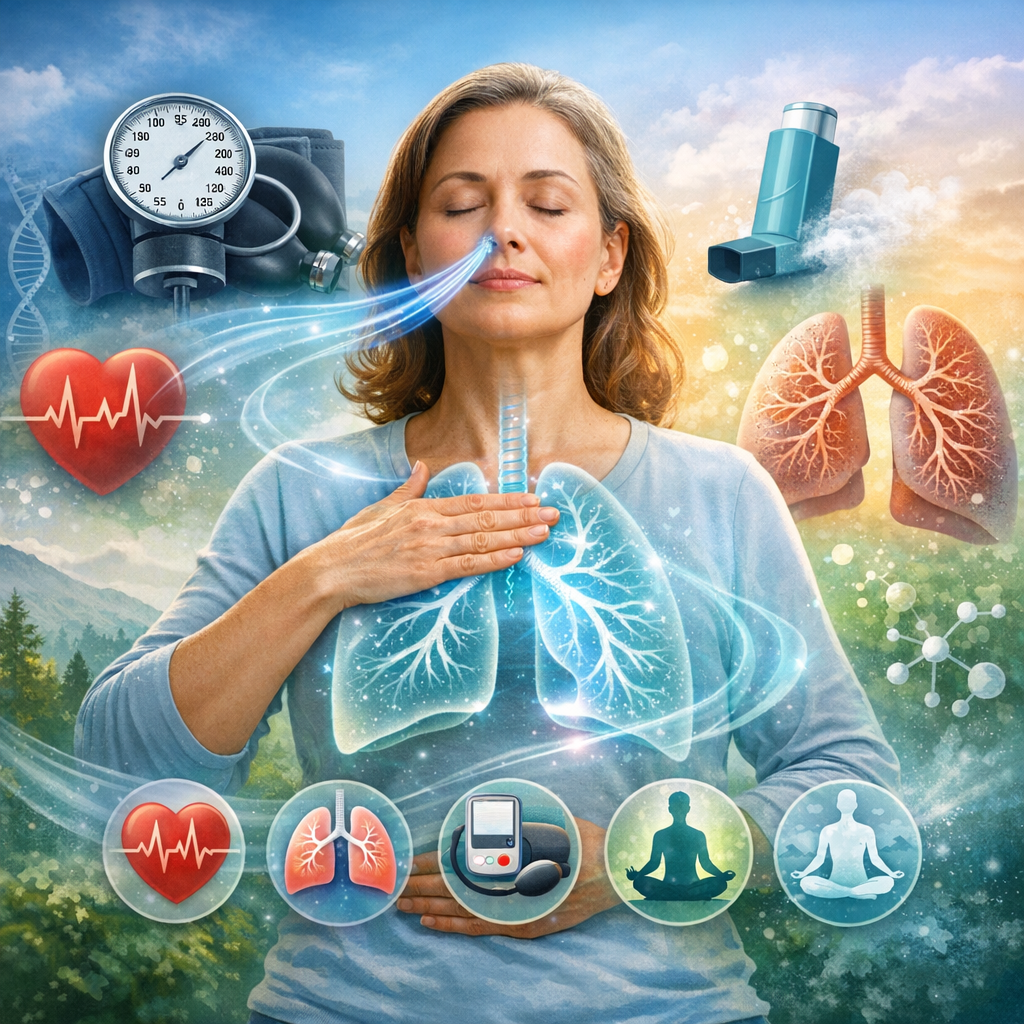
**Chronic conditions** such as **asthma**, **chronic obstructive pulmonary disease (COPD)**, **anxiety disorders**, and **hypertension** exhibit a strong link to suboptimal breathing patterns. In the context of these conditions, inefficient **oxygen exchange** can exacerbate symptoms, increase physical stress, and hinder disease management. The broader impact of improved respiratory function is profound, considering that globally, chronic diseases account for approximately 71% of all deaths, according to the **[World Health Organization](https://www.who.int/news-room/fact-sheets/detail/noncommunicable-diseases)**.
Optimizing **breathing** not only improves **oxygen delivery** but also enhances autonomic function, reduces oxidative stress, and induces a relaxation response that counters chronic inflammation—a common thread in many chronic illnesses. Moreover, heightening awareness around the practice of breath control can lead to more effective disease management, significantly improving patient outcomes and **quality of life**.
Integrating **breathing exercises** and **respiratory therapies** into conventional treatment plans represents a paradigm shift in healthcare. By promoting techniques such as **diaphragmatic breathing**, **nasal breathing**, and other modalities, we can equip patients with tools to actively participate in their health journey. Breath-based interventions serve as accessible, cost-effective solutions with minimal side effects, making them particularly appealing to a broad demographic, including children, adults, and the elderly.
Understanding the science behind proper breathing techniques and their correlation with **chronic disease management** necessitates a deeper exploration. The subsequent sections will delve into professional and medical studies that substantiate breathing’s role as a potent, non-pharmacological intervention, promising a new era in holistic health management.
Features
The intersection of **respiratory science** and **chronic disease management** offers compelling evidence from various medical studies. Research consistently highlights how optimizing oxygen intake through targeted breathing techniques can significantly affect chronic conditions, offering new pathways to managing long-term health challenges.
One groundbreaking study published in the **[Journal of Applied Physiology](https://journals.physiology.org/journal/jappl)** examined the effects of controlled breathing exercises on patients with **hypertension**. Participants who engaged in regular sessions of slow, deep breathing experienced notable reductions in systolic and diastolic blood pressure. This study indicates that activating the **parasympathetic nervous system** through controlled breathing may lead to long-term cardiovascular benefits, reducing reliance on medication in some cases.
Parallel findings appeared in a study focused on asthma patients, documented in the **[American Journal of Respiratory and Critical Care Medicine](https://www.atsjournals.org/loi/ajrccm)**. Here, subjects who incorporated a regimen of diaphragmatic breathing exhibited improved **lung function** and reduced **asthma symptoms** compared to those who relied solely on medication. The study suggests that enhancing respiratory efficiency helps mitigate airway hyper-responsiveness, highlighting breathing techniques as a valuable complementary strategy in asthma management.
Additionally, a notable research effort published in **[Psychosomatic Medicine](https://journals.lww.com/psychosomaticmedicine)** explored the impact of breath control on **anxiety disorders**. Through consistent practice of mindful breathing, participants reported decreased **anxiety levels** and improved stress resilience, underscoring the symbiotic relationship between respiration and **mental health**. This link is crucial, as managing mental health is integral to comprehensive chronic disease care.
Research into **chronic obstructive pulmonary disease (COPD)** also yields promising insights. Published findings in the **[European Respiratory Journal](https://erj.ersjournals.com/)** validate that pulmonary rehab programs incorporating breathing exercises can lead to improved respiratory muscle strength and endurance. Patients engaging in these techniques often report enhanced exercise tolerance and quality of life, illustrating breath’s pivotal role in mitigating COPD’s debilitating effects.
These studies collectively affirm that adopting tailored breathing practices can facilitate better chronic disease outcomes. The potential for breathing techniques to operate alongside pharmacological treatments opens a multidisciplinary avenue for patient care, empowering individuals to regain control over their health through the power of breath.
Conclusion
The evidence is clear: optimizing **oxygen intake** through proper breathing techniques holds transformative potential in the realm of chronic disease management. As we continue to navigate the complexities of healthcare, integrating breathwork into conventional treatment modalities presents a holistic approach to patient care. Breathing exercises offer an accessible, non-invasive, and cost-effective solution, promoting not only respiratory wellness but also enhancing autonomic balance, mental health, and overall life quality.
Encouraging patients to incorporate breath control practices into their daily routines equips them with a proactive tool for managing their health. This participatory approach allows for disease management strategies that are aligned with individual needs and lifestyles, fostering greater patient engagement and satisfaction.
As the medical community continues to unravel the intricate connections between breath and health, it becomes increasingly imperative to embrace these insights. By redefining how we understand and utilize respiration, we can usher in an era where breath truly becomes a healing force, transforming chronic disease management into a deeply personalized and effective experience for individuals worldwide.
References
1. World Health Organization. [Noncommunicable Diseases](https://www.who.int/news-room/fact-sheets/detail/noncommunicable-diseases).
2. Journal of Applied Physiology. [Effects of Controlled Breathing on Blood Pressure](https://journals.physiology.org/journal/jappl).
3. American Journal of Respiratory and Critical Care Medicine. [Diaphragmatic Breathing and Asthma Management](https://www.atsjournals.org/loi/ajrccm).
4. Psychosomatic Medicine. [Impact of Mindful Breathing on Anxiety Disorders](https://journals.lww.com/psychosomaticmedicine).
5. European Respiratory Journal. [Breathing Exercises in Pulmonary Rehab for COPD](https://erj.ersjournals.com/).
**Concise Summary**: Breathing techniques such as diaphragmatic and nasal breathing can transform chronic disease management by improving oxygen delivery and reducing stress, thus aiding conditions like asthma, COPD, anxiety, and hypertension. Studies show significant health benefits, with reductions in blood pressure and anxiety as well as improved lung function and mental resilience. Integrating breathwork into treatment plans offers a non-invasive and cost-effective way to enhance patient health and quality of life, promoting a more active role in managing one’s well-being.

Dominic E. is a passionate filmmaker navigating the exciting intersection of art and science. By day, he delves into the complexities of the human body as a full-time medical writer, meticulously translating intricate medical concepts into accessible and engaging narratives. By night, he explores the boundless realm of cinematic storytelling, crafting narratives that evoke emotion and challenge perspectives.
Film Student and Full-time Medical Writer for ContentVendor.com