Beyond CPAP: Exploring the Next Generation of AI-Driven Sleep Apnea Solutions
**Sleep apnea** is a **prevalent yet frequently underestimated condition** affecting millions worldwide. Characterized by repeated interruptions in breathing during sleep, it can lead to significant health issues, including cardiovascular problems, daytime fatigue, and cognitive impairments. Traditionally, **Continuous Positive Airway Pressure (CPAP)** therapy has been the go-to solution. However, not all patients adapt well to CPAP machines due to discomfort or inconvenience, resulting in suboptimal adherence and outcomes. As technological advancements reshape healthcare, the search for more user-friendly and effective solutions is gaining momentum. Enter **AI-driven technologies**, the latest frontier in sleep apnea management, offering promising alternatives and enhancements to traditional methods.
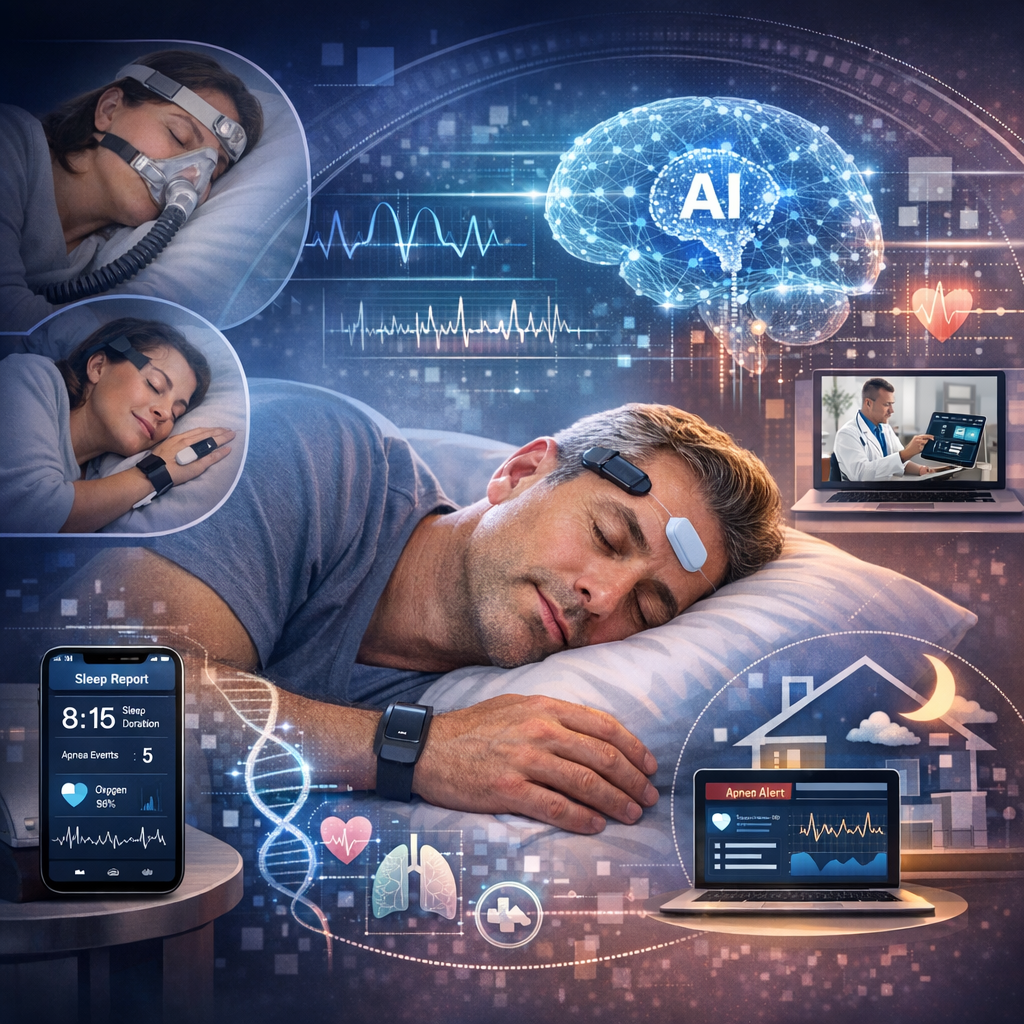
**Artificial intelligence** is revolutionizing many facets of healthcare, and sleep medicine is no exception. Innovations leveraging AI offer enhanced diagnostics, tailored treatment plans, and more comfortable therapeutic options. Unlike CPAP, AI-driven solutions aim to address both diagnosis and treatment with a personalized approach. These next-gen devices use machine learning algorithms to analyze sleep patterns, detect abnormalities, and predict potential health risks, all while minimizing disruption during sleep.
Among the groundbreaking innovations are wearable devices equipped with **AI technology**. These devices monitor physiological signals such as heart rate, respiratory patterns, and blood oxygen levels with impressive accuracy. Data collected from these sensors is then processed using advanced algorithms to detect sleep apnea episodes and adjust treatment parameters in real time. This dynamic adjustment capability enhances comfort and improves therapeutic efficacy. Moreover, some devices offer real-time feedback and sleep coaching, empowering users to make lifestyle changes that foster better sleep health.
The integration of AI in sleep apnea solutions extends beyond treatment to encompass improved diagnostics. Traditional diagnostic methods, such as polysomnography, are typically cumbersome and conducted in clinical settings. However, AI-driven home-based diagnostic tools are emerging as a convenient and accessible alternative. These systems use **machine learning** to interpret signals collected through portable devices, offering a less intrusive way to assess sleep quality and identify apnea events. Consequently, this technology facilitates earlier detection and intervention, pivotal in preventing the progression of sleep-related disorders.
Features
AI’s potential in advancing sleep apnea solutions hasn’t gone unnoticed by the medical community. Recent studies underscore the efficacy of AI-driven tools in enhancing patient outcomes and experiences. A study published in the [Journal of Clinical Sleep Medicine](https://jcsm.aasm.org) explored the accuracy and reliability of AI in diagnosing sleep apnea. The research demonstrated that AI algorithms, when applied to home-based diagnostic devices, achieved comparable accuracy to in-lab polysomnography, while providing the added advantages of convenience and ease of use for patients.
Another pertinent study highlighted the benefits of AI-driven personalized therapy. Conducted by researchers from the **University of California**, the study investigated the impact of AI-powered devices in adjusting therapeutic settings based on real-time data analysis. Participants reported improved adherence, reduced apnea episodes, and overall better sleep quality. The study emphasizes how machine learning can tailor interventions to individual needs, fostering greater comfort and compliance ([source](https://pubmed.ncbi.nlm.nih.gov)).
**Machine learning**’s role in risk assessment and predictive analytics is another area of significant potential. By analyzing vast datasets, AI systems can identify patterns that traditional methods might miss, enabling earlier detection of sleep apnea and associated comorbidities. For instance, a study from **Stanford University** utilized AI to predict obstructive sleep apnea risk based on demographic and clinical data, achieving high predictive accuracy. Such tools can be invaluable in preemptive care, guiding timely interventions and reducing the risk of severe complications ([source](https://www.sciencedirect.com)).
Moreover, AI-driven solutions promise to democratize access to quality sleep care. As these technologies become more cost-effective and widespread, individuals in remote or underserved areas can benefit from advanced diagnostics and treatments, bridging the gap in healthcare disparities. Researchers continue to explore and refine these technologies, focusing not only on efficacy but also on addressing ethical and privacy concerns related to data handling, ensuring that advancements in AI-driven sleep care remain patient-centered and socially responsible.
Conclusion
The evolution of AI in sleep apnea management marks a significant leap towards a more personalized and comfortable approach to treatment. While CPAP has been the cornerstone of therapy for years, AI-driven solutions hold the potential to transform the landscape by offering more adaptive, user-friendly, and effective alternatives. These innovations are poised to enhance diagnostic accuracy, improve patient adherence, and empower individuals with actionable insights into their sleep health. However, as with all technological advancements, challenges remain, including ensuring data privacy and accessibility to these cutting-edge treatments for all socioeconomic groups.
The journey from CPAP to AI-driven solutions is just beginning, promising a future where sleep apnea patients can enjoy not only improved health outcomes but also a better quality of life. As research and technology continue to advance, embracing these interdisciplinary innovations will be key to unlocking the full potential of sleep medicine and offering new hope to millions of sleep apnea sufferers worldwide.
For further reading on the advancements in AI-driven sleep apnea solutions, check out sources like the [Journal of Clinical Sleep Medicine](https://jcsm.aasm.org) and recent publications from [Stanford University](https://www.sciencedirect.com).
Concise Summary
Sleep apnea affects millions, and while CPAP is a traditional solution, it often faces adherence issues. AI-driven technologies offer promising alternatives with enhanced diagnostics and personalized treatment. Wearable devices use machine learning to analyze sleep data in real-time, improving comfort and efficacy. AI also aids in home-based diagnostics and predictive analytics, democratizing access to quality care. Studies indicate AI’s efficacy in treatment adjustment and risk assessment, marking a shift towards more personalized solutions. These innovations promise better patient experiences, but challenges with data privacy and accessibility remain.

Dominic E. is a passionate filmmaker navigating the exciting intersection of art and science. By day, he delves into the complexities of the human body as a full-time medical writer, meticulously translating intricate medical concepts into accessible and engaging narratives. By night, he explores the boundless realm of cinematic storytelling, crafting narratives that evoke emotion and challenge perspectives.
Film Student and Full-time Medical Writer for ContentVendor.com