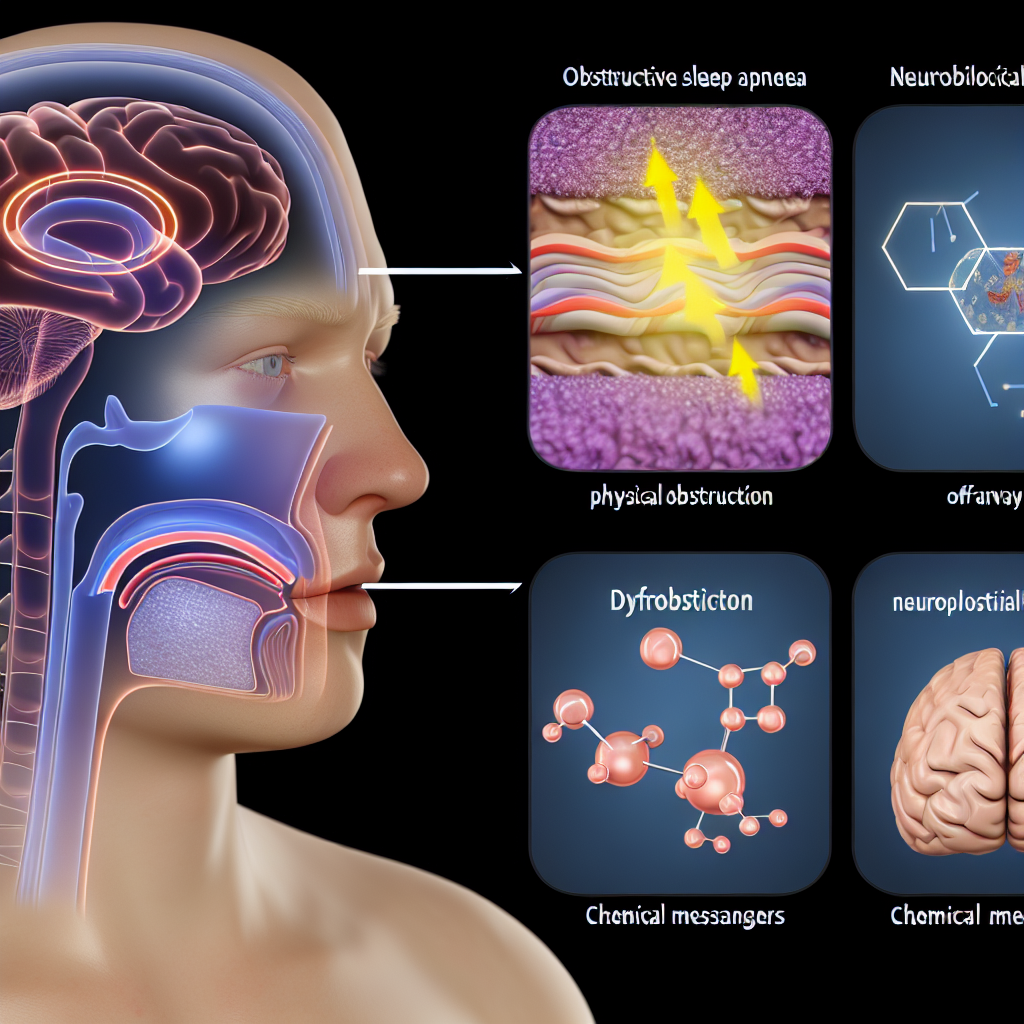
Neurobiology of Sleep Apnea: Unlocking the Brain’s Hidden Role in the Nighttime Airway Battle
Introduction
**Sleep apnea** is a widespread **sleep disorder** affecting millions globally, characterized by repeated interruptions in breathing during sleep. These pauses in breathing—referred to as apneas—can last anywhere from a few seconds to minutes and may occur 30 or more times in an hour. The most common form, **obstructive sleep apnea (OSA)**, typically occurs when the muscles at the back of the throat fail to keep the airway open. But while the physical obstructions are well-documented, there’s a less visible player influencing the severity and frequency of OSA episodes—the **brain**.
While most discussions on sleep apnea tend to focus on the physical elements, such as obesity or anatomical abnormalities, emerging research shifts some focus to the **neurobiological** aspects at play. Indeed, the brain plays an integral role in regulating breathing and maintaining airway patency during sleep. Deep within our nervous system lies a delicate interplay of **brain signals** and reflex mechanisms that are critical in maintaining regular, uninterrupted breathing patterns.
Understanding the neurobiology of sleep apnea unveils important insights. During normal sleep, the brain regulates muscle tone, including the muscles that keep the airway open. However, for those with sleep apnea, this regulation may be compromised. For instance, there’s evidence supporting an abnormal reaction in the brain’s motor cortex, which affects the muscle control responsible for keeping the throat open during sleep.
Moreover, the **central nervous system** may alter its response over time due to repeated exposure to apneic events—a phenomenon known as **neuroplasticity**. This alteration could exacerbate apnea severity or frequency. It is also understood that **neurotransmitter imbalances** can contribute to sleep apnea. The balance or imbalance of chemicals like **serotonin** can profoundly influence the muscle tone of the upper airway.
By shedding light on the brain’s role in OSA, researchers and clinicians can develop more sophisticated interventions not only targeting the physical aspect but also addressing the neurobiological dimensions of this condition. Investigating these connections can pave the way for innovative treatments that could improve the **quality of life** tremendously for those affected.
Features
Recent scientific studies have provided compelling insights into how the brain’s role affects the pathophysiology of sleep apnea. In a study conducted by researchers from the [University of California, San Diego](https://pubmed.ncbi.nlm.nih.gov/), scientists used functional magnetic resonance imaging (fMRI) to observe brain activity in individuals with sleep apnea. They discovered significant alterations in the brain’s structure and function, particularly in areas linked to mood regulation and motor control. This suggests that sleep apnea is not merely a result of airway obstruction, but may be influenced by broader neurological issues as well.
A different study by the [National Institutes of Health](https://pubmed.ncbi.nlm.nih.gov/) explored the relationship between sleep apnea and neurotransmitter levels—specifically serotonergic and adrenergic influences in the brain. Researchers found that imbalances in these chemical messengers could affect brain signaling, thereby impacting the muscle tone required to keep the airway open. These neurotransmitters are vital for the modulation of breathing patterns during sleep, highlighting the intricate neurochemical processes involved in sleep apnea.
The Stroke and Neurovascular Regulation Laboratory at [Harvard Medical School](https://pubmed.ncbi.nlm.nih.gov/) conducted research focused on the effects of repeated apneas on brain plasticity. Their findings suggest that the brain adapts through neuroplastic changes after prolonged exposure to apneic events, possibly worsening sleep apnea symptoms over time. This adaptation might explain why some individuals experience worsening of symptoms as the condition progresses.
Additionally, researchers from the [Toronto Rehabilitation Institute](https://pubmed.ncbi.nlm.nih.gov/) investigated the role of cortical excitability and its contribution to OSA. They noted that altered cortical responsiveness may adversely affect motor output to the pharyngeal airway, reinforcing the concept of the brain’s complex involvement in this sleep disorder.
Conclusion
The exploration of sleep apnea through the lens of neurobiology presents both challenges and opportunities for the medical community. While traditional treatments like CPAP machines and lifestyle changes remain effective for many, acknowledging the brain’s role in this condition opens up new avenues for more comprehensive, tailored approaches. Neurobiological insights reveal the profound impact of central nervous system dysfunctions on the mechanics of sleep apnea, pointing to potential interventions that target the brain as part of treatment strategies.
Future research will need to delve deeper into the brain’s involvement in sleep apnea, focusing on both preventative and therapeutic measures that address these complex neurobiological mechanisms. With continued study, the dream of relieving the millions who suffer from this silent nighttime battle may very well become a reality, enhancing their overall health and quality of life.
**Concise Summary**
Sleep apnea, particularly obstructive sleep apnea (OSA), is marked by repeated breathing interruptions during sleep. While physical factors have been the main focus, emerging research highlights the brain’s crucial role in this disorder. Neurobiological aspects such as brain signals, neurotransmitter imbalances, and neuroplasticity are critical in maintaining regular breathing. Studies reveal alterations in brain function and structure in sleep apnea patients, suggesting that neurological factors may exacerbate apnea severity. Acknowledging the brain’s role offers new treatment avenues, promising improved therapies and enhanced quality of life for those affected.

Dominic E. is a passionate filmmaker navigating the exciting intersection of art and science. By day, he delves into the complexities of the human body as a full-time medical writer, meticulously translating intricate medical concepts into accessible and engaging narratives. By night, he explores the boundless realm of cinematic storytelling, crafting narratives that evoke emotion and challenge perspectives.
Film Student and Full-time Medical Writer for ContentVendor.com