Revamping Sleep Apnea Treatment: How AI is Reshaping Precision Medicine for Better Night’s Rest
Introduction to Sleep Apnea
**Sleep apnea**, a common yet serious sleep disorder, disrupts breathing patterns during sleep, leading to fragmented rest and other health complications. Affecting millions worldwide, **untreated sleep apnea** increases the risk of cardiovascular problems, hypertension, metabolic disorders, and even impacts mental health. Traditionally, the standard treatment options have centered around **Continuous Positive Airway Pressure (CPAP) devices**, lifestyle changes, and surgical interventions. However, these treatments often take a one-size-fits-all approach, neglecting the individual differences among patients.
AI in Sleep Apnea Treatment
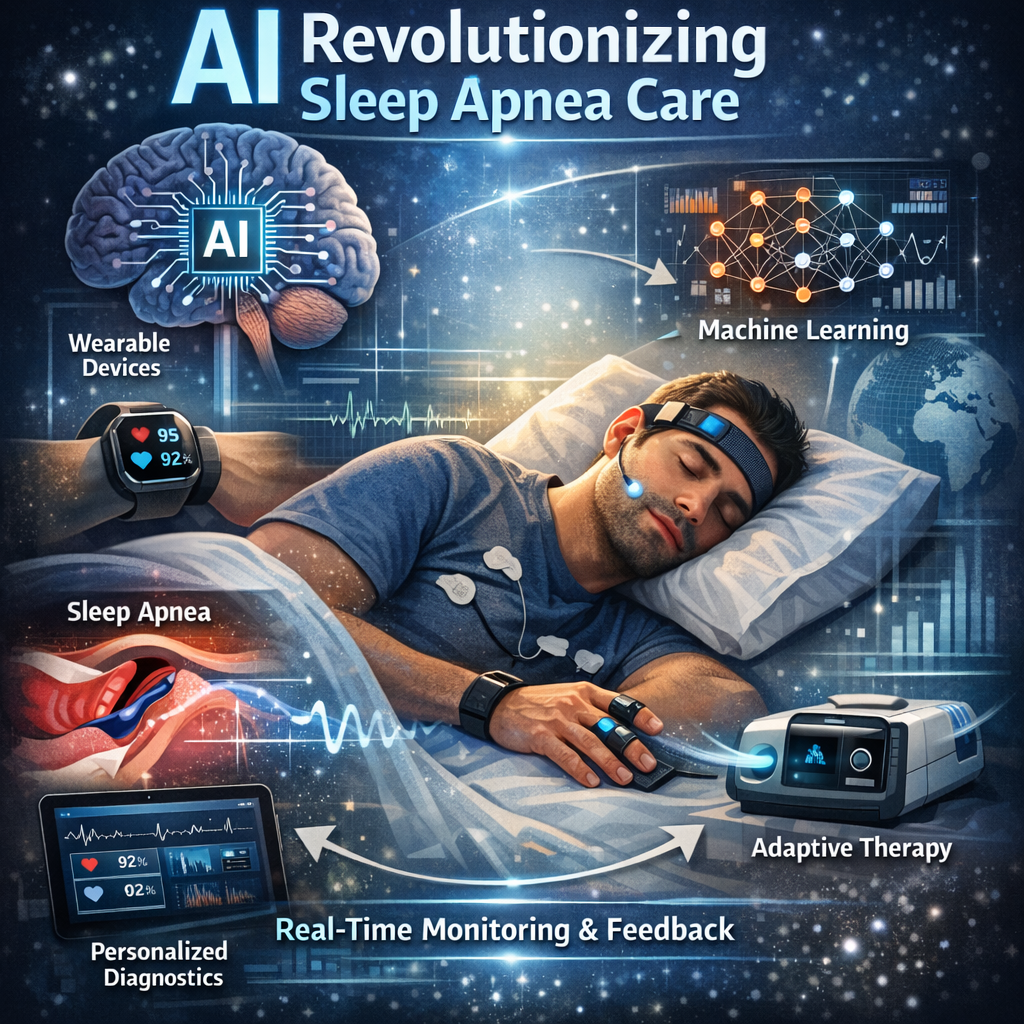
Recent advancements in **artificial intelligence (AI)** are now offering promising avenues for personalizing **sleep apnea** treatment, reshaping **precision medicine**, and improving patients’ quality of life. AI technologies, through their ability to process vast sets of data swiftly, can analyze and identify patterns that human observation alone might miss. This capacity paves the way for customized treatment plans tailored to the individual’s physiological attributes and specific needs.
AI in Diagnosis
AI’s role in sleep medicine begins with diagnosis. Traditional methods involve overnight **polysomnography** in sleep centers, which can be expensive and inconvenient. AI-driven diagnostic tools, like **wearable devices** and smartphone applications, provide cost-effective, comfortable, and consistent monitoring of sleep parameters in real-life settings. These tools not only make diagnosis more accessible but also help in tracking the effectiveness of treatments over time.
Precision Medicine with AI
Once diagnosed, AI facilitates **precision medicine** by assisting healthcare providers in determining the most effective treatment strategies. Through **machine learning algorithms**, AI can predict a patient’s response to different treatment modalities, thereby optimizing the selection process. It can account for variables such as genetic predisposition, lifestyle factors, and comorbidities to devise treatment plans that maximize efficacy while minimizing side effects.
Enhancing Treatment Adherence
Moreover, AI enhances treatment adherence. Many patients struggle with adhering to **CPAP therapy** due to discomfort or inconvenience. AI can predict adherence patterns and suggest interventions to improve compliance, such as device modifications or personalized education programs. Real-time feedback offered by **smart devices** can also encourage patient engagement, transforming sleep apnea management into a more interactive experience.
Features: AI in Sleep Medicine Studies
The integration of AI into sleep apnea treatment is substantiated by numerous studies highlighting its potential. For example, a study published in the journal [Nature and Science of Sleep](https://www.dovepress.com/artificial-intelligence-for-analyzing-sleep-studies-peer-reviewed-fulltext-article-NSS) explored the use of AI algorithms to analyze **polysomnographic data** for more accurate sleep apnea diagnostics. The researchers found that AI could effectively classify sleep stages and detect apneic events with a high degree of accuracy compared to traditional manual scoring methods, proving its efficacy in clinical settings.
Another pivotal study emphasized AI’s ability to personalize **CPAP therapy**. Conducted by [MIT researchers](https://news.mit.edu/2020/ai-cpap-therapy-0708), the study involved creating machine-learning models capable of predicting optimal therapeutic pressures for individual patients. The AI-based approach demonstrated a significant improvement in treatment outcomes compared to standard CPAP settings, underscoring the value of precision medicine approaches in treating sleep apnea.
Furthermore, AI’s application extends to predicting **cardiovascular risks** associated with sleep apnea. A European study used AI to analyze ECG data from sleep studies, successfully identifying patients at higher risk for cardiovascular events. This capability allows for proactive risk management and targeted interventions, thereby enhancing the overall care strategy for sleep apnea patients. [European AI Study on Sleep Apnea](https://www.ahajournals.org/doi/full/10.1161/JAHA.120.016449).
These studies reflect a growing body of evidence supporting AI’s role in refining sleep medicine. By leveraging these technologies, clinicians can develop more effective, nuanced treatment plans that address the complex, multifaceted nature of sleep apnea.
Conclusion
AI stands at the forefront of transforming **sleep apnea** treatment, promising to revolutionize how we approach this common disorder. By offering precise diagnostics, personalized treatment plans, and improved adherence strategies, AI integration into **sleep medicine** enhances patient care and outcomes significantly. As research continues to evolve, we can expect an expansion in AI applications, further bridging the gap between cutting-edge technology and everyday healthcare practices.
While challenges remain, such as ensuring **data privacy** and navigating the integration of AI in everyday clinical workflows, the potential benefits far outweigh the hurdles. Emphasizing collaboration between technologists, healthcare providers, and patients will be key to unlocking AI’s full potential in sleep medicine. By doing so, we are not only improving sleep health but also paving the way for future innovations in medical practice.
With AI leading the charge, the future of sleep apnea treatment looks promising, offering hope for better, more restful nights to millions struggling with this pervasive disorder.
**Concise Summary**
The integration of **artificial intelligence (AI)** in treating **sleep apnea** is revolutionizing precision medicine, enabling customized and effective patient care. By utilizing AI for diagnosis, healthcare providers can use cost-effective, user-friendly tools for more accurate assessments. AI also aids in tailoring treatment plans through machine learning, predicting patient responses, and optimizing therapeutic approaches. It even improves adherence to **Continuous Positive Airway Pressure (CPAP)** therapy by suggesting adaptable strategies and encouraging active engagement. Despite potential challenges like ensuring **data privacy**, AI’s promising advancements pave the way for improved sleep health and future innovations in **medical practice**.

Dominic E. is a passionate filmmaker navigating the exciting intersection of art and science. By day, he delves into the complexities of the human body as a full-time medical writer, meticulously translating intricate medical concepts into accessible and engaging narratives. By night, he explores the boundless realm of cinematic storytelling, crafting narratives that evoke emotion and challenge perspectives.
Film Student and Full-time Medical Writer for ContentVendor.com