Revolutionizing Sleep Diagnostics: AI and Genomics Combine for a New Era in Sleep Apnea Detection
Introduction
**Sleep apnea**, characterized by repeated interruptions in breathing during sleep, affects millions worldwide, leading to serious health complications such as **cardiovascular disease**, **type 2 diabetes**, and **cognitive impairment**. Traditionally, diagnosing this common disorder relies on overnight **polysomnography** (**sleep studies**), a method that, while accurate, is costly and inconvenient for patients. However, recent advancements integrating **Artificial Intelligence (AI)** and **genomics** are poised to transform the landscape of sleep diagnostics, making it more accessible, efficient, and personalized.
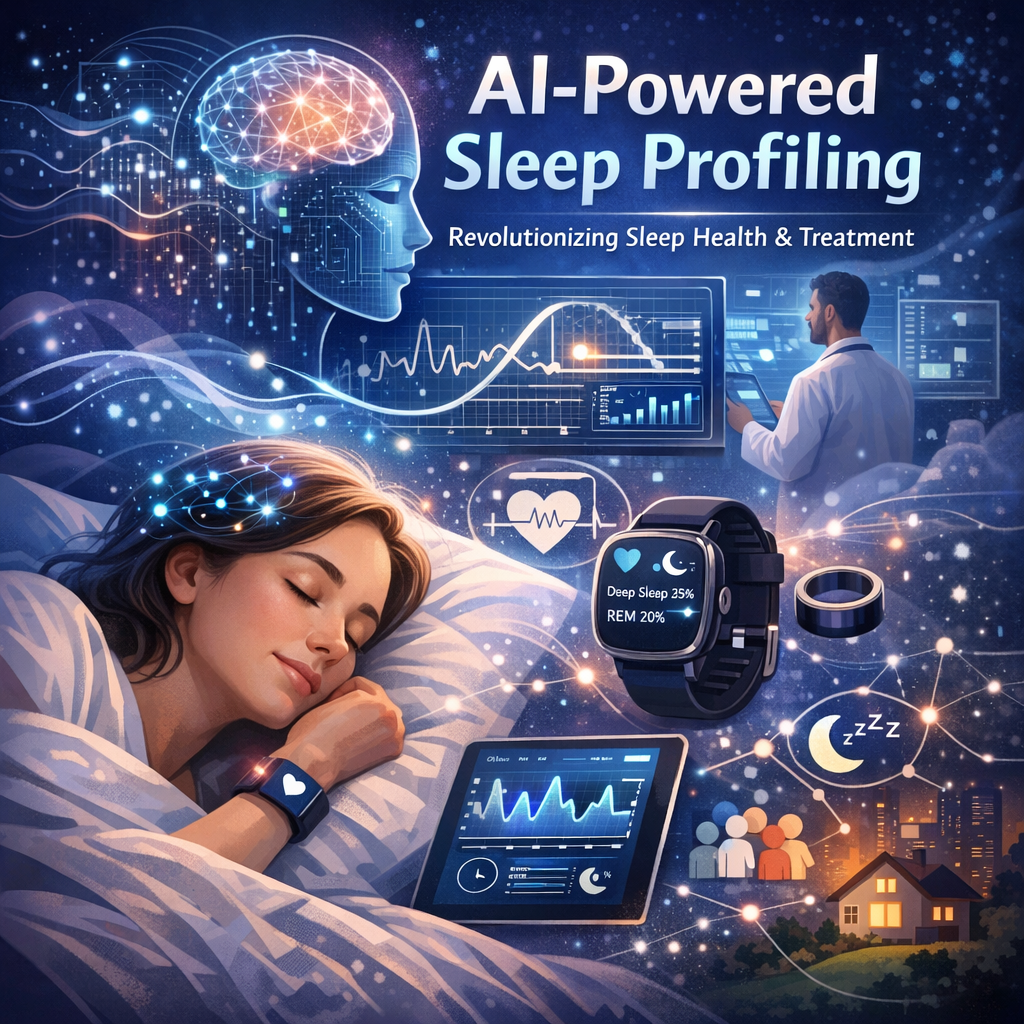
AI, with its capacity to analyze vast datasets, is reshaping numerous fields including healthcare. In sleep diagnostics, **AI algorithms** can process and interpret complex sleep data far quicker than human technicians, identifying patterns indicative of sleep apnea with remarkable accuracy. A significant advantage of AI-based diagnostics is its ability to function with simplified data inputs, such as information collected through wearable technology, eliminating the need for intrusive and uncomfortable overnight stays at sleep clinics.
Simultaneously, the burgeoning field of genomics provides profound insights into our **genetic predispositions** toward various health conditions, including sleep disorders. By analyzing specific genetic markers known to influence sleep patterns and respiratory function, genomics offers a complementary avenue for understanding and potentially predicting sleep apnea risk.
The convergence of AI and genomics in sleep diagnostics is ushering in a new era where each patient receives a personalized evaluation that accounts for both genetic predisposition and current physiological data. This not only enhances detection accuracy but also facilitates tailored treatment strategies, optimizing patient outcomes.
With AI algorithms already proving effective in interpreting **polysomnography data**, recent studies are exploring their capabilities in expanding the range of data inputs, such as home-based sleep tests and even entirely novel methods like smartphone apps. These technological innovations promise to democratize access to diagnostic resources, providing wider-reaching solutions for those suffering from undiagnosed or unmanaged sleep apnea. Moreover, as genomic research advances, it could fortify these AI systems further, empowering them to identify at-risk individuals before symptoms escalate, thereby paving the way for preventive interventions.
Features
Several professional and medical studies underscore the profound impact that AI and genomics are having on the detection of sleep apnea. A groundbreaking study published in the journal “Nature and Science of Sleep” demonstrated the efficacy of AI algorithms in interpreting polygraphic data from sleep studies. The study revealed that AI could accurately identify apneic events with a sensitivity and specificity comparable to, if not exceeding, human specialists. This not only highlights the potential for AI to streamline and enhance sleep study analysis but also suggests a future where AI-led diagnostics might replace traditional methods, offering quicker and more cost-effective solutions.
Additionally, research from the “Journal of Clinical Sleep Medicine” has focused on integrating wearable technology with AI systems. These studies showcase how data collected from devices such as smartwatches or fitness trackers can be used by AI to monitor sleep patterns in real-time, detecting disturbances that may indicate sleep apnea. Such innovations not only improve accessibility but also empower individuals to self-monitor their condition, promoting proactive health management.
On the genomics front, a study in “The Lancet Respiratory Medicine” explored the role of specific gene variants associated with sleep apnea, suggesting that genomic screening could soon become a vital component of the diagnostic process. By identifying individuals with genetic predispositions to sleep-disordered breathing, healthcare providers could offer preemptive advice and interventions, reducing the long-term risk of complications.
These advancements are not standalone achievements; rather, they are being synergized into holistic diagnostic strategies that amalgamate AI processing power with genetic insights. For instance, recent collaborative research endeavors between technology firms and medical institutions are exploring the integration of AI and genomic datasets to predict sleep apnea with unprecedented accuracy, tailoring individualized treatment plans post-diagnosis.
Conclusion
As AI and genomics continue to advance and integrate within sleep medicine, we stand on the brink of a revolutionary shift in how we diagnose and manage sleep apnea. With AI offering rapid, precise data interpretation and genomics providing insight into genetic predispositions, the prospects for personalized and preventive sleep health care are expanding. This intersection not only promises to enhance the accuracy and accessibility of sleep apnea diagnostics but also to forge new pathways toward customized treatment that caters to individual needs and risks. The marriage of these cutting-edge technologies signifies a promising future where sleep apnea detection and treatment become more efficient, personalized, and effective, offering unprecedented hope to those affected by this prevalent sleep disorder.
Concise Summary
The integration of Artificial Intelligence (AI) and genomics is transforming sleep apnea diagnostics, making it more accurate and personalized. AI algorithms can quickly analyze sleep data, identifying apnea patterns efficiently. When incorporated with wearable technology, these AI systems enable convenient self-monitoring. Genomic insights further enhance diagnostics by revealing genetic predispositions, allowing for targeted interventions before symptoms worsen. This innovative approach not only democratizes access to sleep health resources but also advances preventative care and individualized treatment strategies, heralding a new era in managing this widespread disorder.

Dominic E. is a passionate filmmaker navigating the exciting intersection of art and science. By day, he delves into the complexities of the human body as a full-time medical writer, meticulously translating intricate medical concepts into accessible and engaging narratives. By night, he explores the boundless realm of cinematic storytelling, crafting narratives that evoke emotion and challenge perspectives.
Film Student and Full-time Medical Writer for ContentVendor.com