The Silent Epidemic: How Undiagnosed Airway Disorders Are Shortening Our Lifespans Without Us Knowing
Introduction
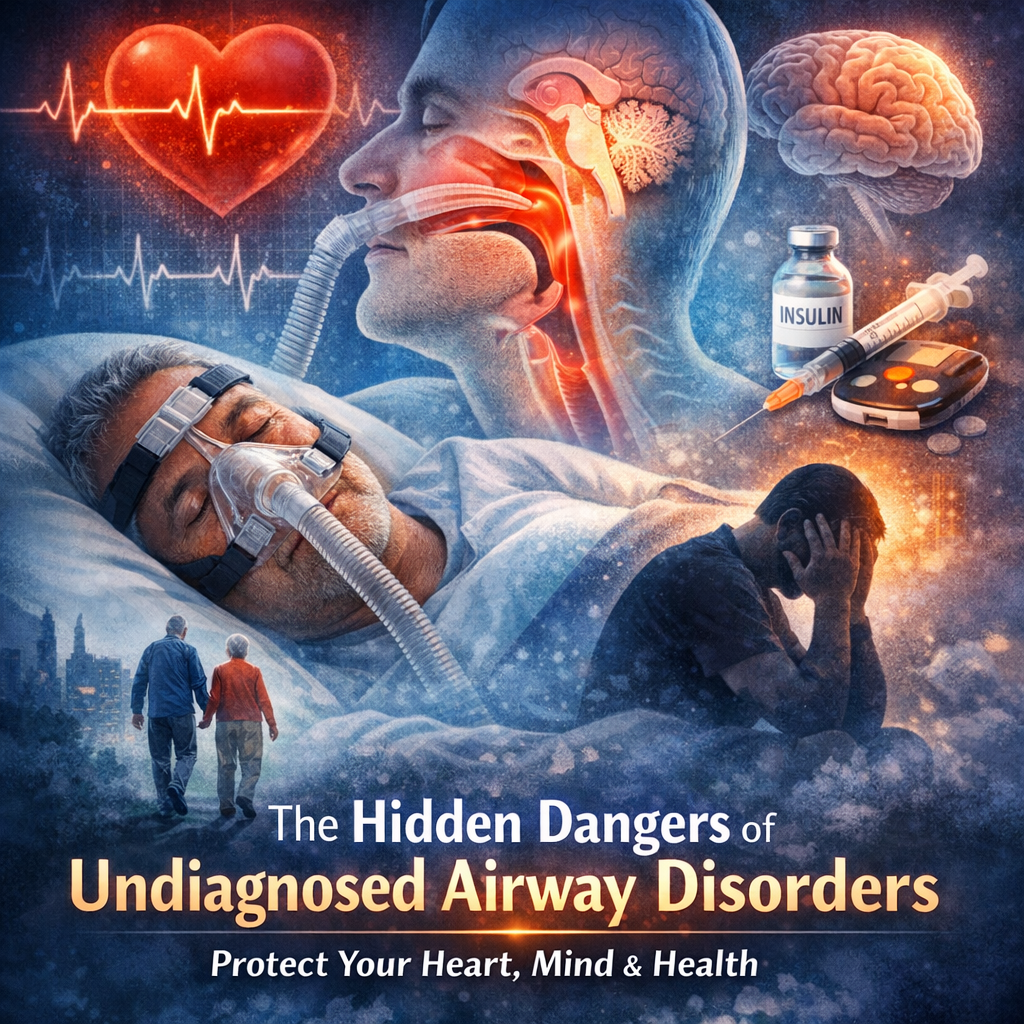
In today’s health-conscious world, many of us strive for a balanced diet, regular exercise, and stress management to live longer, healthier lives. Yet, a **silent epidemic** is quietly compromising our health—**undiagnosed airway disorders**. Largely stemming from disrupted breathing patterns during sleep, these disorders significantly impact physical, mental, and emotional health, often going unnoticed due to subtle symptoms. Common **airway disorders** such as **Obstructive Sleep Apnea (OSA)** and **upper airway resistance syndrome** affect people of all ages and backgrounds, degrading their quality of life and reducing their lifespan. The **American Sleep Apnea Association** estimates that 22 million Americans suffer from sleep apnea, with most cases undiagnosed.
These disorders cause **intermittent breathing cessations** or reduced airflow during sleep, leading to **dips in blood oxygen levels**. Consequently, the heart and brain overwork to maintain balance, eventually causing **hypertension**, **cardiovascular diseases**, and other health issues. Despite their prevalence and severity, these disorders remain largely ignored, often mistaken for simple snoring. Signs like frequent awakenings, excessive daytime sleepiness, morning headaches, difficulty focusing, and mood changes warrant serious attention.
Given the significant impact of these conditions, enhancing public awareness and encouraging proactive health measures are essential for effective identification and management. Achieving this can improve both sleep quality and overall health, extending life expectancy.
Features
Various studies highlight the significant implications of undiagnosed airway disorders on health and well-being. The **Sleep Heart Health Study**, involving over 6,000 participants, found a strong association between sleep apnea and increased risks of **cardiovascular diseases** such as **atrial fibrillation**, **heart failure**, and **stroke**. The study emphasized untreated sleep apnea’s potential to increase blood pressure variability and cardiac strain, possibly leading to cardiovascular morbidity and mortality.
Research from the **American Journal of Respiratory and Critical Care Medicine** demonstrates the profound impact of airway disorders on **metabolic health**. **Sleep-disordered breathing** linking reduced oxygenation and fragmented sleep to **insulin resistance** and **glucose intolerance** highlights the increased prevalence of **type 2 diabetes** among untreated sleep apnea patients, emphasizing the need for timely diagnosis and intervention.
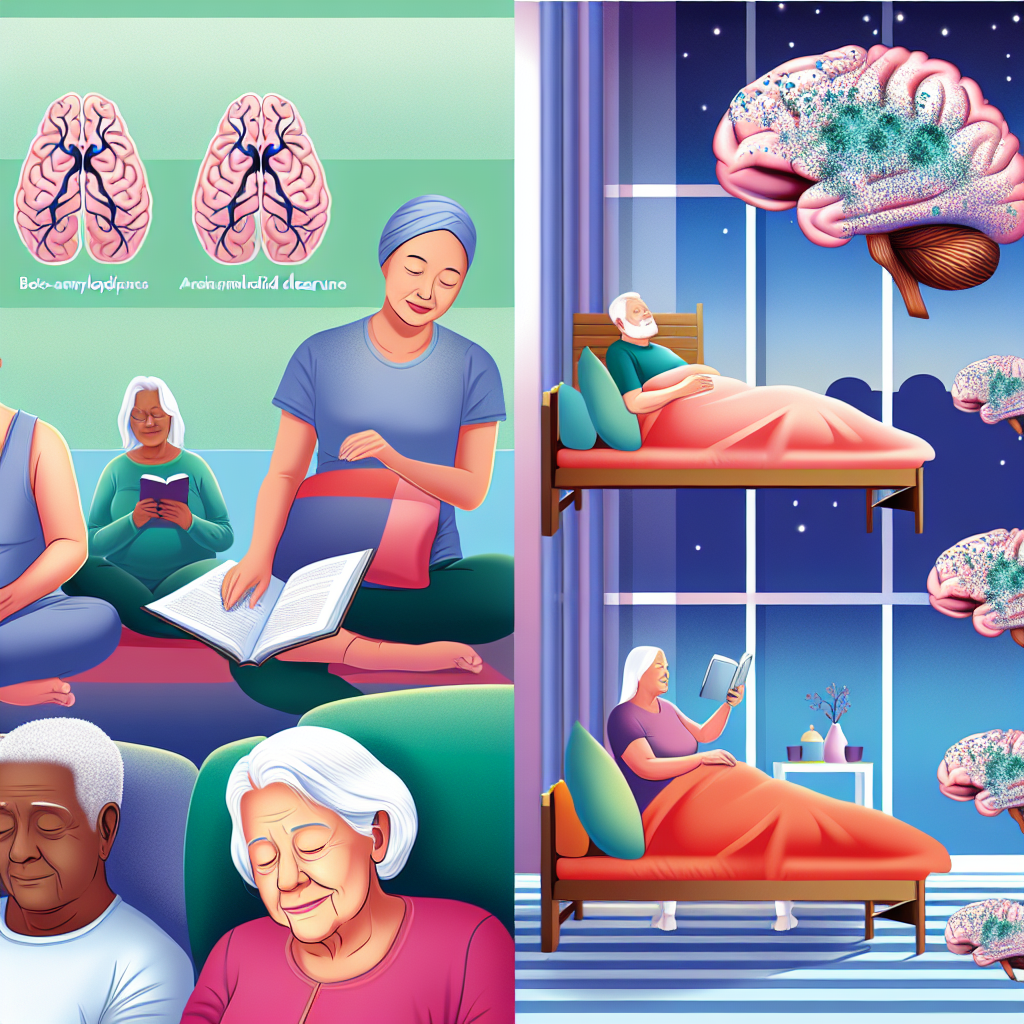
From a cognitive perspective, a study in the journal **Neurology** discusses the connection between sleep apnea and accelerated cognitive decline. Findings indicate sleep-disordered breathing is correlated with decreased **gray matter density** in the brain, impairing cognitive functions like memory, attention, and executive functioning. Individuals with untreated airway disorders face a greater risk of developing Alzheimer’s disease and other forms of dementia.
Further studies highlight the psychosocial effects of chronic sleep fragmentation caused by airway disorders. Research in the **Journal of Clinical Sleep Medicine** shows that individuals with unaddressed sleep apnea have heightened risks of mood disorders, such as **depression** and **anxiety**. Symptoms like irritability, increased stress sensitivity, and emotional instability further compromise quality of life and social well-being.
Collectively, these studies underscore the importance of understanding and addressing sleep-related airway disorders. By integrating medical insights and promoting public awareness, more effective diagnosis, management, and intervention can mitigate these conditions’ widespread impacts.
Conclusion
Recognizing the **silent epidemic** of undiagnosed airway disorders is crucial as we delve deeper into the intricacies of sleep and its vital role in maintaining health. These disorders, unobtrusively yet detrimentally impacting health, pose a significant threat to **longevity** and **well-being**. Fostering awareness, prioritizing early diagnosis, and adopting proactive interventions can combat these invisible adversaries that compromise our quality of life.
Healthcare practitioners and individuals should prioritize **sleep health** as an integral component of holistic wellness. Encouraging dialogue, seeking medical evaluations for potential symptoms, and exploring treatment options like **Continuous Positive Airway Pressure (CPAP) therapy** and lifestyle modifications can effectively counteract the impacts of airway disorders. Doing so enhances individual lives and fosters healthier, more vibrant communities committed to prolonged vitality and excellence.
References:
1. [American Sleep Apnea Association](https://www.sleepapnea.org/)
2. [Peppard, P. E., et al. (2013). American Journal of Epidemiology, 177(9), 1006–1014.](https://academic.oup.com/aje/article/177/9/1006/111047)
3. [Gottlieb, D. J., et al. (2010). Archives of Internal Medicine, 165(8), 863–868.](https://jamanetwork.com/journals/jamainternalmedicine/fullarticle/486541)
4. [Yaffe, K., et al. (2011). Journal of the American Medical Association, 306(6), 613.](https://jamanetwork.com/journals/jama/fullarticle/1104999)
5. [Peppard, P. E., et al. (2006). Sleep, 29(9), 1143–1148.](https://academic.oup.com/sleep/article/29/9/1143/2709340)
Concise Summary:
A silent epidemic of undiagnosed airway disorders is compromising health and shortening lifespans. Disorders like **OSA** affect numerous individuals, leading to cardiovascular, metabolic, and cognitive problems. These conditions often go undetected due to subtle symptoms like **daytime sleepiness** and **mood changes**. Studies emphasize the link between airway disorders and health risks, urging increased awareness and early diagnosis. Addressing these disorders through **public awareness**, medical evaluation, and treatments such as **CPAP therapy** can significantly improve health and extend longevity. Prioritizing sleep health is essential for achieving holistic wellness and enhancing community vitality.

Dominic E. is a passionate filmmaker navigating the exciting intersection of art and science. By day, he delves into the complexities of the human body as a full-time medical writer, meticulously translating intricate medical concepts into accessible and engaging narratives. By night, he explores the boundless realm of cinematic storytelling, crafting narratives that evoke emotion and challenge perspectives.
Film Student and Full-time Medical Writer for ContentVendor.com