Unlocking the Future of Sleep: AI-Powered Diagnostics that Predict Lifelong Health Outcomes
Introduction
In today’s fast-paced world, where **technology** permeates nearly every aspect of our lives, the once traditional view of **sleep** as merely a period of rest is undergoing a revolutionary change. Sleep is now recognized as a complex biological process intricately linked to overall health and well-being. A fascinating innovation driving this transformation is the application of **artificial intelligence (AI)** in sleep diagnostics. AI, with its ability to analyze and interpret vast amounts of data rapidly, is increasingly being leveraged to predict **lifelong health outcomes** based on sleep patterns. This transformative approach promises to unlock new frontiers in *personal health management*.
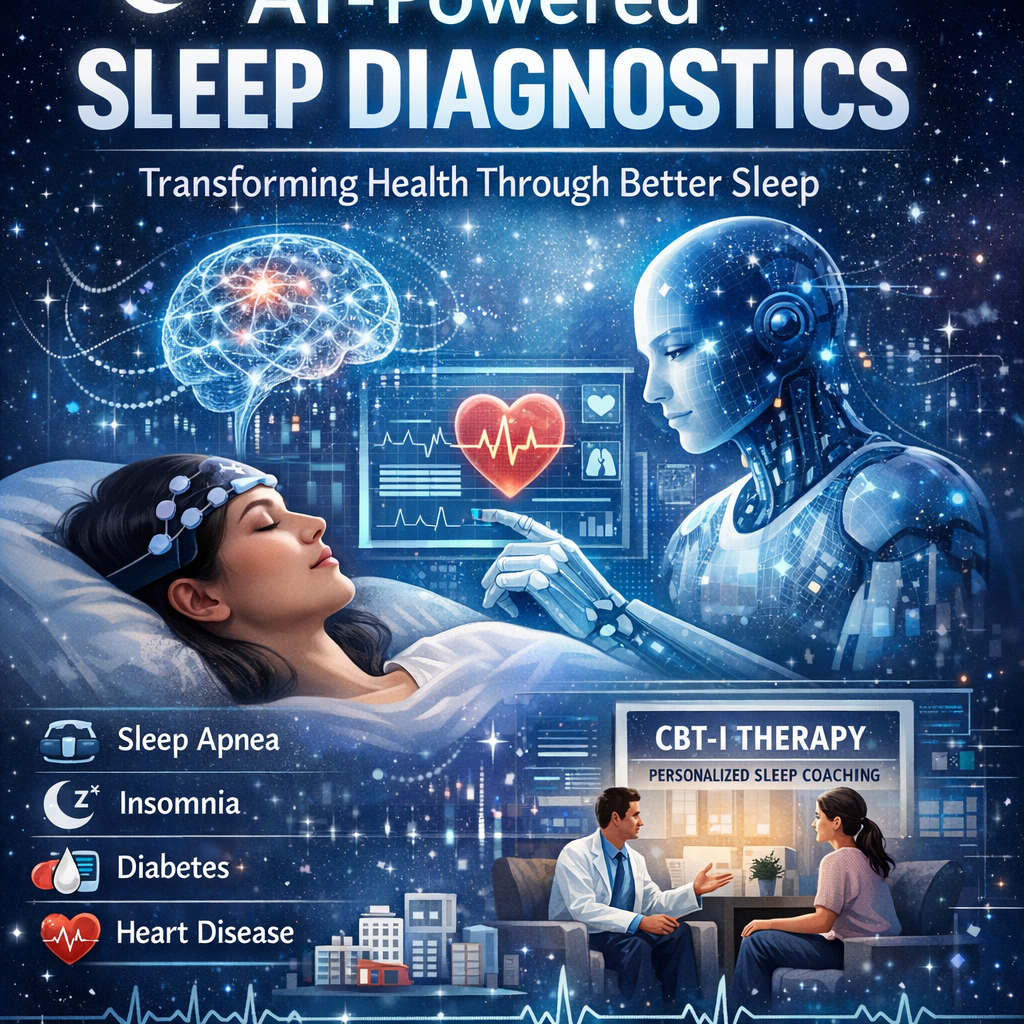
Recent advancements have enabled AI to analyze complex sleep data, captured through devices like **smartwatches** and **sleep monitors**, to generate insights that were unimaginable a decade ago. By examining sleep cycles, interruptions, heart rate variability, and other metrics, AI systems can identify sleep disorders like **insomnia**, **sleep apnea**, or **restless leg syndrome**. More importantly, they can correlate these disorders with potential health risks such as **cardiovascular diseases**, **diabetes**, and **mental health** issues. Such correlations are crucial as they empower both individuals and healthcare providers to intervene early, potentially mitigating serious health concerns later in life.
The implications of AI-powered sleep diagnostics are profound, bridging the gap between sleep research and practical healthcare applications. Imagine a world where AI can provide personalized **sleep recommendations**, much like a tailored fitness regimen, aimed not just at improving sleep quality but also at enhancing overall quality of life. This not only enhances immediate well-being but also significantly impacts long-term health trajectories. AI stands at the forefront, offering tools and insights that are reshaping how we understand and approach sleep.
Features
Recent studies have underscored the immense potential of AI in transforming **sleep diagnostics** and subsequent health outcomes. A landmark study published in [Nature and Science of Sleep](https://www.dovepress.com/nature-and-science-of-sleep-journal) highlights how **machine learning algorithms** are capable of identifying patterns in sleep data that human analysis might overlook. By analyzing datasets from thousands of individuals, AI can predict the onset of sleep disorders and other health issues with remarkable accuracy, demonstrating sensitivity and specificity that rival traditional diagnostic methods.
For instance, research conducted by the [Massachusetts Institute of Technology (MIT)](http://news.mit.edu) utilized AI algorithms to sift through **polysomnographic data**—comprehensive sleep studies that are typically analyzed manually by clinicians. The AI was able to match human levels of accuracy in identifying various sleep stages and disorders like sleep apnea, while processing the data much faster. This reduces the workload for clinicians and opens avenues for real-time monitoring and immediate interventions.
Moreover, a study from the [University of Copenhagen](https://www.sciencedaily.com/related_university_copenhagen_sleeps_study) highlighted the potential of AI in predicting long-term outcomes. By cross-referencing sleep patterns with health records over several years, researchers found that AI could predict the likelihood of developing chronic conditions such as **hypertension** and **type 2 diabetes**. This is groundbreaking as it provides a proactive approach to health management, allowing for lifestyle adjustments and medical interventions before conditions become severe.
Additionally, AI’s role is rapidly expanding beyond diagnostics to include personalized therapeutics. Applications such as AI-driven **cognitive behavioral therapy for insomnia (CBT-I)** are being developed, offering an alternative or complement to medication by customizing treatment plans based on individual sleep pattern analysis. This innovation enhances the efficacy of treatment and reduces the potential side effects associated with pharmaceutical interventions.
Conclusion
As technology continues to evolve, the integration of AI into sleep diagnostics heralds a new era in healthcare. By providing deep insights into sleep patterns and their implications for long-term health, AI empowers individuals to take proactive measures toward better health. The shift toward predictive and personalized healthcare could significantly reduce the prevalence of sleep-related disorders and their associated health risks, improving life quality for millions. As we embrace this future, collaboration between technology developers, healthcare professionals, and researchers is crucial to ensure these tools are accessible, ethical, and effective. Ultimately, AI’s role in sleep health exemplifies how innovation can profoundly impact well-being, paving the way for a healthier, well-rested society.
**References**
– [Nature and Science of Sleep](https://www.dovepress.com/nature-and-science-of-sleep-journal): “Machine learning applications in sleep medicine”
– [MIT News](http://news.mit.edu): “AI predicts sleep patterns as accurately as experts”
– [University of Copenhagen](https://www.sciencedaily.com/related_university_copenhagen_sleeps_study): “Long-term health outcomes via AI in sleep study”
– [Cognitive Behavioral Therapy for Insomnia (CBT-I)](https://www.sleepfoundation.org/articles/cognitive-behavioral-therapy-for-insomnia): “National Sleep Foundation on Sleep Therapy”
**Concise Summary**
AI is revolutionizing sleep diagnostics by analyzing complex sleep data to predict lifelong health outcomes. Utilizing data from devices like smartwatches, AI identifies sleep disorders and correlates them with risks like cardiovascular issues and diabetes, enabling early interventions. Studies demonstrate AI’s accuracy in diagnosing sleep stages and disorders and predicting chronic conditions. Beyond diagnostics, AI aids in personalized therapies like cognitive behavioral therapy for insomnia. This integration heralds a new healthcare era, reducing disorder prevalence and enhancing well-being, emphasizing a collaborative approach for accessible, ethical, and effective healthcare innovations.

Dominic E. is a passionate filmmaker navigating the exciting intersection of art and science. By day, he delves into the complexities of the human body as a full-time medical writer, meticulously translating intricate medical concepts into accessible and engaging narratives. By night, he explores the boundless realm of cinematic storytelling, crafting narratives that evoke emotion and challenge perspectives.
Film Student and Full-time Medical Writer for ContentVendor.com