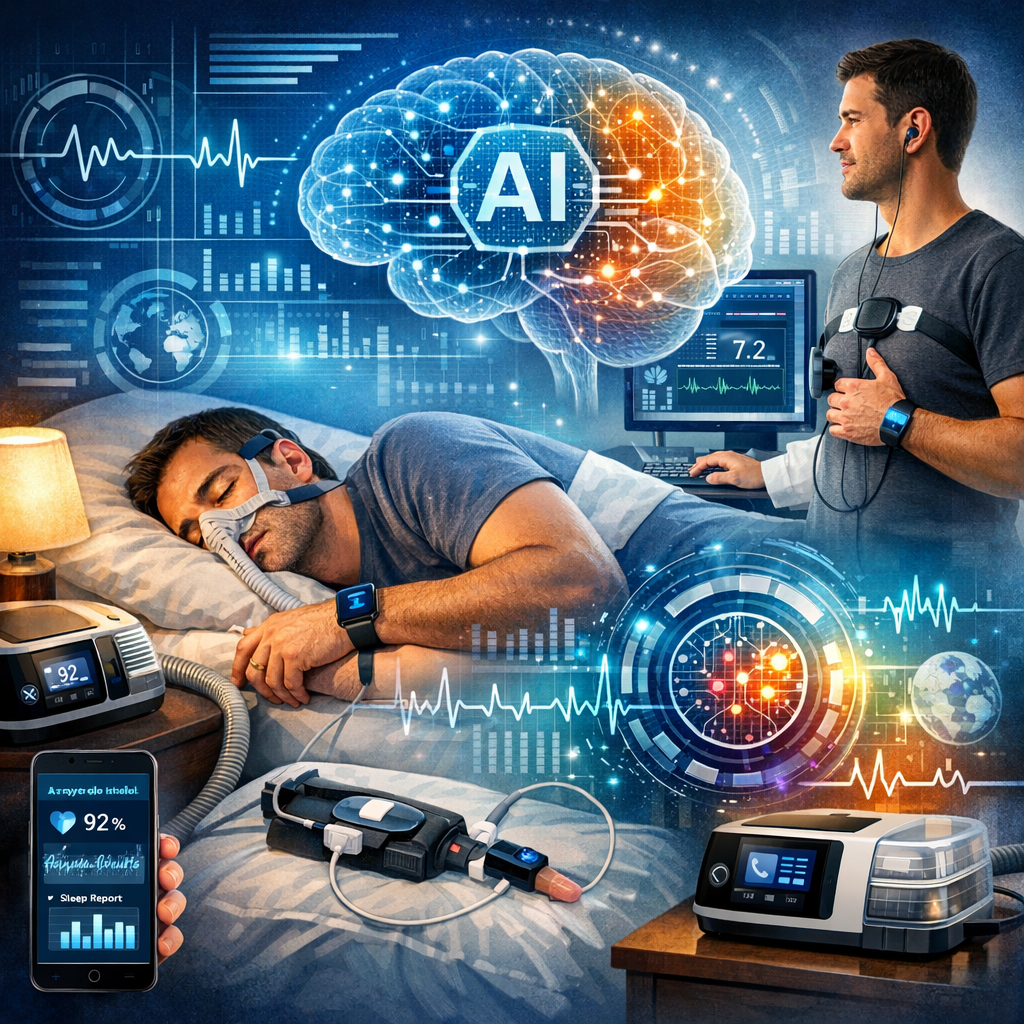
How AI and Machine Learning Are Revolutionizing Sleep Apnea Diagnostics and Treatment
Introduction
**Sleep apnea** is a common yet often underdiagnosed sleep disorder affecting millions globally. Characterized by repeated interruptions in breathing during sleep, it can lead to various health issues like **daytime fatigue**, **cardiovascular problems**, and **metabolic disorders** if left untreated. Traditionally, diagnosing sleep apnea has required cumbersome and costly processes such as **overnight polysomnography (PSG)** in specialized labs. However, the advent of **artificial intelligence (AI)** and **machine learning (ML)** is transforming the landscape of sleep apnea diagnostics and treatment, making it faster, cheaper, and more accessible.
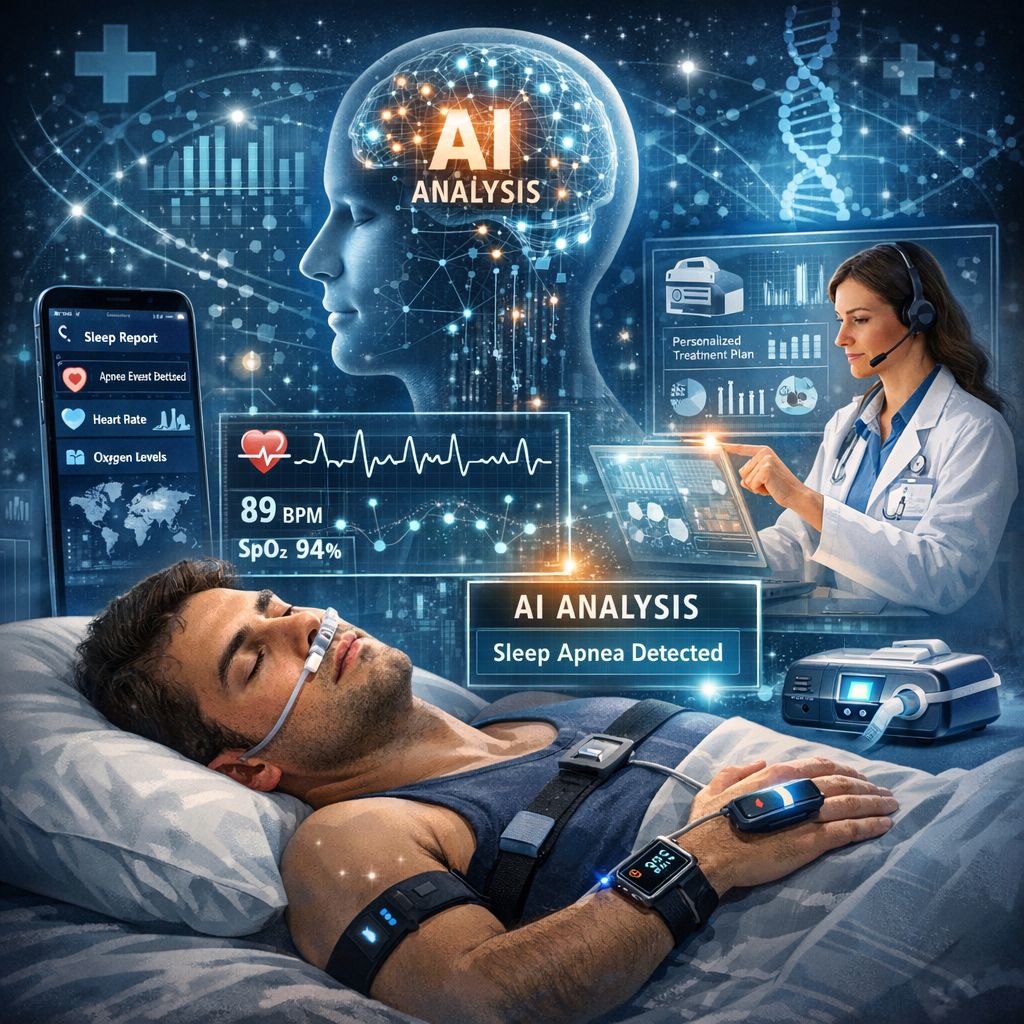
With AI and ML, large datasets from sources like **wearables**, **mobile health apps**, and **electronic health records** can be analyzed more efficiently than ever before. These technologies can identify patterns and predict outcomes that human analysts simply cannot. AI algorithms have already demonstrated promise in improving the accuracy of sleep apnea diagnoses by analyzing data from simple devices like **smartwatches** and **home sleep tests**. This shift from traditional methods to AI-driven diagnostics is not only about reducing costs and waiting times but also about enhancing patient outcomes by enabling earlier and more accurate detection.
Moreover, AI plays a crucial role in treating sleep apnea. Machine learning models can personalize treatment plans by predicting which therapies are most likely effective for specific patients based on their unique data profiles. **Continuous Positive Airway Pressure (CPAP)** devices, commonly used to treat sleep apnea, are becoming smarter with AI-enabled features that adjust pressure settings in real-time for optimal patient comfort and efficacy. This personalized approach enhances treatment adherence and significantly improves clinical outcomes.
As we stand on the brink of this technological revolution, it’s vital to explore the significant impact of AI and machine learning on this field. By doing so, we can better comprehend the potential benefits for patients struggling with sleep apnea and the healthcare professionals striving to improve their quality of life.
Features
Recent studies provide compelling evidence of the **effectiveness of AI and ML** in diagnosing and treating sleep apnea. A study published in **Nature** highlights machine learning algorithms that can accurately identify sleep apnea with just a few minutes of **wristband photoplethysmography (PPG)** data, offering a non-invasive, cost-effective alternative to overnight sleep studies.
Another research paper published in the **Journal of Clinical Sleep Medicine** explores the use of **convolutional neural networks (CNNs)** in diagnosing sleep apnea from audio data. These networks recognize specific breathing patterns associated with the disorder, allowing for non-intrusive, home-based diagnostics. This research underlines AI’s potential to transform sleep apnea detection, making it accessible to a broader population without the need for costly and inconvenient lab visits.
In terms of treatment, AI-enhanced CPAP machines are gaining traction. A study in the **American Journal of Respiratory and Critical Care Medicine** highlights improved adherence to CPAP therapy when devices are outfitted with machine learning algorithms. These algorithms enable the machines to adjust air pressure in real-time based on patient feedback and physiological data, resulting in increased comfort and better treatment efficacy.
Moreover, wearable technology integrated with AI shows promise in monitoring sleep apnea severity and treatment response over time. Devices like **Fitbit** and **Apple Watch** now collect and analyze sleep-related data to provide insights into the effectiveness of interventions and guide adjustments to treatment plans. This continuous monitoring capability transforms sleep apnea management from a static to a dynamic process, allowing for real-time, data-driven decision-making.
These studies, among others, clearly indicate that integrating AI and machine learning into sleep apnea care is not simply an incremental improvement but a transformative shift. By leveraging these technologies, healthcare providers can offer more precise, personalized, and effective care, ultimately leading to better health outcomes for patients worldwide.
Conclusion
The incorporation of AI and **machine learning** into sleep apnea diagnostics and treatment is proving revolutionary. These technologies enhance diagnostic accuracy and accessibility while transforming treatment strategies to be more personalized and effective. By leveraging vast datasets and predictive algorithms, healthcare professionals can tail treatment plans that adapt to individual patient needs, significantly improving adherence and outcomes. As AI evolves, it holds the promise of more breakthroughs providing precise, efficient, and patient-centered care to those suffering from sleep apnea. Staying at the forefront of these advancements ensures more people experience the life-changing benefits of optimal sleep.
References:
1. [Nature article on sleep apnea diagnostic advancements](https://www.nature.com/articles/s41591-019-0728-3)
2. [Journal of Clinical Sleep Medicine on CNNs for sleep apnea detection](https://jcsm.aasm.org/articles/jcsm.39.1.00f5.html)
3. [American Journal of Respiratory and Critical Care Medicine on AI-enhanced CPAP](https://www.atsjournals.org/doi/full/10.1164/rccm.202001-0202LE)
**Concise Summary:**
AI and machine learning are transforming **sleep apnea** diagnostics and treatments by utilizing data from wearables and health records. Innovative algorithms improve diagnosis precision and enable personalized treatment plans. AI-driven CPAP devices adjust settings in real-time, enhancing patient comfort and adherence. Continuous monitoring via AI-integrated wearables like **Fitbit** and **Apple Watch** helps dynamically manage sleep apnea. This technological shift offers more accessible, affordable, and effective care, promising significant improvements in patient outcomes.

Dominic E. is a passionate filmmaker navigating the exciting intersection of art and science. By day, he delves into the complexities of the human body as a full-time medical writer, meticulously translating intricate medical concepts into accessible and engaging narratives. By night, he explores the boundless realm of cinematic storytelling, crafting narratives that evoke emotion and challenge perspectives.
Film Student and Full-time Medical Writer for ContentVendor.com