AI-Enhanced Breath Training: Revolutionizing Apnea Treatment with Real-Time Neural Feedback
**Introduction**
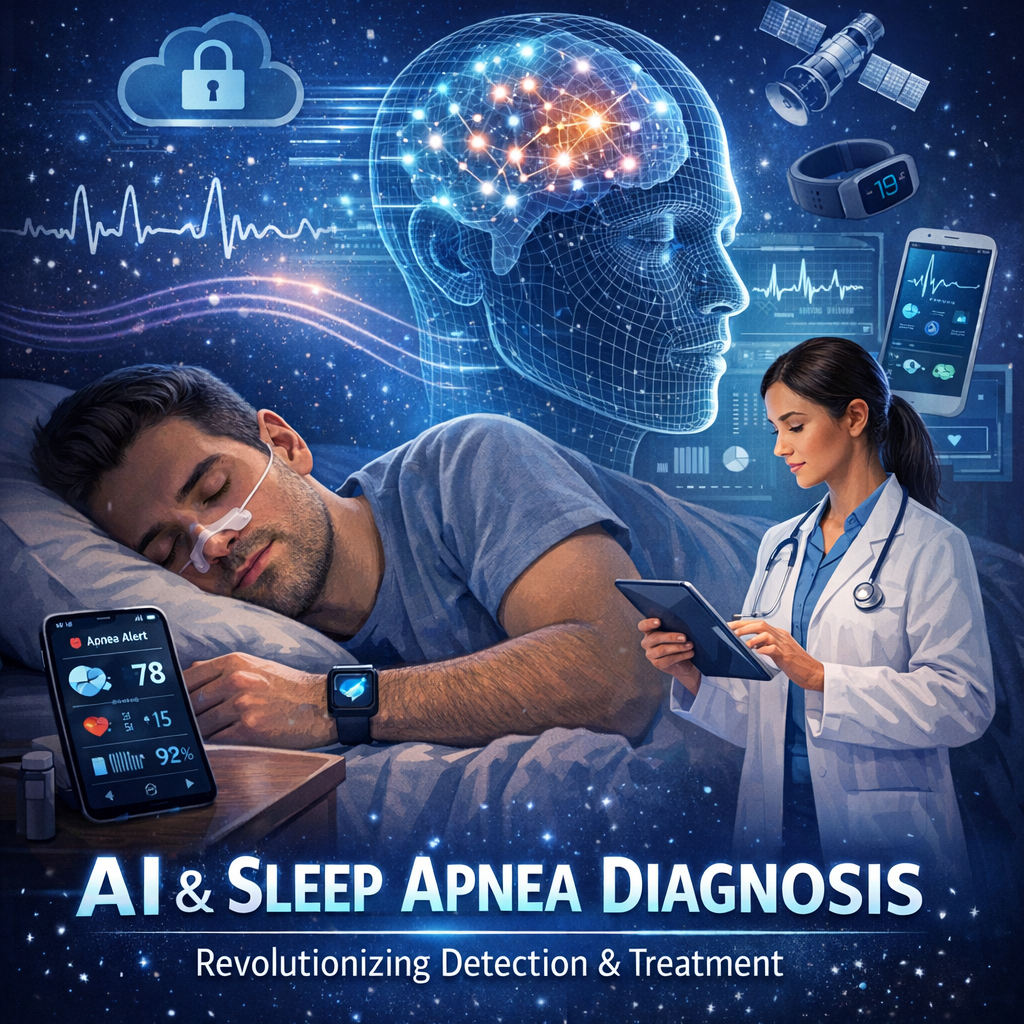
In recent years, the field of **sleep medicine** has been transformed by the advent of **artificial intelligence (AI)**, reshaping our approach to various **sleep disorders**, especially **obstructive sleep apnea (OSA)**. OSA, a prevalent condition, causes repeated interruptions in breathing during sleep, resulting in fragmented sleep and numerous health issues. Traditional treatments include lifestyle changes, **continuous positive airway pressure (CPAP) therapy**, and sometimes surgery, which can be invasive, uncomfortable, or inconsistent.
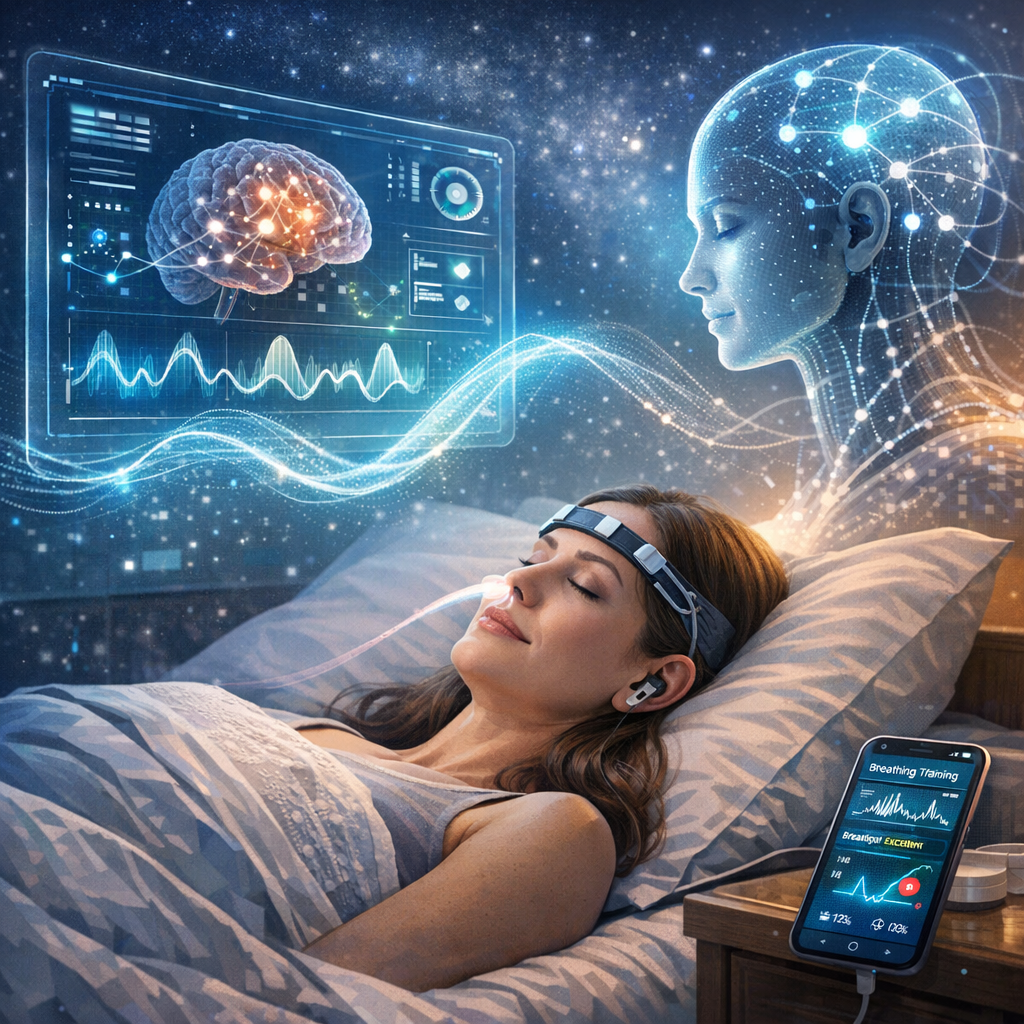
A new and groundbreaking approach—**AI-enhanced breath training**—provides a promising alternative by leveraging technology to deliver **real-time neural feedback**. By analyzing **breathing patterns** and **neurological responses**, AI systems optimize breathing techniques, improving sleep quality. This innovation marks a shift from conventional one-size-fits-all solutions, offering a more **personalized approach** to managing OSA.
The integration of AI in breath training involves sophisticated algorithms that interpret various data points, including **respiratory rate**, **airflow**, and even **brain activity**, captured through non-invasive sensors. This data, analyzed in real time, provides immediate feedback, empowering patients to adjust their breathing techniques. This adjustment alleviates symptoms and fosters patient engagement and treatment adherence.
A compelling aspect of AI-driven breath training is its potential to tackle apnea’s root cause by teaching patients to modify their breathing patterns, minimizing airway collapse during sleep. This approach targets symptoms and aims to foster long-term behavioral changes, leading to sustainable sleep health improvements. As the technology evolves, its potential applications in healthcare, particularly in **sleep medicine**, are limitless.
AI breath training seamlessly integrates into patients’ lives through user-friendly devices and applications, making it a cornerstone of apnea management. This aligns with a broader movement toward **precision medicine** and personalized care. As research and development progress, AI’s potential to transform sleep health grows increasingly apparent.
Features
Studies underscore the efficacy and practicality of AI-enhanced breath training in transforming OSA treatment. A study in the Journal of Clinical Sleep Medicine demonstrated that AI systems could accurately predict apnea events by analyzing complex physiological signals during sleep, leading to timely interventions preventing airway collapse. This capability tailors breath training programs to adapt to patients’ dynamic needs in real time, ensuring optimal outcomes.
Research by the National Center for Biotechnology Information explored AI in monitoring and modulating respiratory patterns. Their study highlighted that AI algorithms could learn individual breathing patterns and detect deviations that often precede apnea events. By doing so, AI alerts patients to correct their breathing, preventing apnea episodes. This study emphasized AI’s potential as a non-invasive, continuous monitoring solution, enhancing traditional therapies’ effectiveness.
At Stanford University School of Medicine, researchers examined integrating neural feedback into breath training. AI systems equipped with **machine learning** capabilities interpreted neural signals associated with respiratory control, providing patients with reinforced feedback to enhance their breathing techniques. This feedback loop empowers patients to gain an intuitive understanding of their respiratory function, improving adherence and health outcomes.
Clinical trials show promising results regarding patient satisfaction and adherence. Participants in AI-enhanced breath training programs reported greater ease of use and comfort compared to traditional CPAP therapy. The non-invasive nature of the training, combined with immediate feedback, allows for seamless integration into patients’ lives, encouraging long-term therapy commitment and behavioral change.
These studies suggest that AI-enhanced breath training represents a convergence of technology and medicine, offering a customized approach to managing sleep apnea. By harnessing AI’s power, healthcare providers can deliver highly specific, data-driven care that meets each patient’s unique needs, leading to better health outcomes and quality of life.
Conclusion
AI-enhanced breath training marks a transformative development in treating obstructive sleep apnea, offering a personalized, non-invasive, and effective alternative to conventional therapies. By utilizing real-time neural feedback, AI systems enable patients to modify their breathing patterns, reducing apnea events and improving sleep quality. The integration of AI enhances treatment efficacy, fosters greater patient engagement, and increases adherence—essential for achieving long-term health benefits.
As research advances, the potential applications of AI in breathing training and beyond appear boundless. The shift toward personalized medicine, powered by AI, signifies a broader transition in healthcare toward individually tailored solutions. This shift holds great promise for the future, where AI will play an increasingly central role in delivering precise and effective healthcare solutions.
**Concise Summary**
AI-enhanced breath training offers a groundbreaking approach to treating obstructive sleep apnea (OSA) by utilizing real-time neural feedback. This technology allows personalized adjustments to breathing patterns, minimizing airway collapse during sleep and improving sleep quality. By integrating sophisticated AI algorithms to analyze respiratory and neurological data, this method offers a non-invasive alternative to traditional treatments like CPAP therapy. Studies highlight its efficacy, showing improved patient adherence and satisfaction. As research progresses, AI’s role in delivering personalized healthcare solutions grows, marking a significant advancement in the field of sleep medicine.

Dominic E. is a passionate filmmaker navigating the exciting intersection of art and science. By day, he delves into the complexities of the human body as a full-time medical writer, meticulously translating intricate medical concepts into accessible and engaging narratives. By night, he explores the boundless realm of cinematic storytelling, crafting narratives that evoke emotion and challenge perspectives.
Film Student and Full-time Medical Writer for ContentVendor.com