Beyond White Noise – Curated Soundscapes Engineered for Specific Sleep Architecture Enhancement
**Introduction**
In the quest for better sleep, many have turned to **white noise** to mask disruptive sounds. While effective to some degree, static white noise may not actively support the natural sleep process. **Sleep architecture** is defined by cycles through **light sleep, deep sleep**, and **REM sleep**, each fulfilling crucial roles in overall rest. Emerging science suggests that specifically curated **soundscapes**, with elements designed to coincide with sleep stages, hold promise for enhancing sleep quality beyond traditional methods.
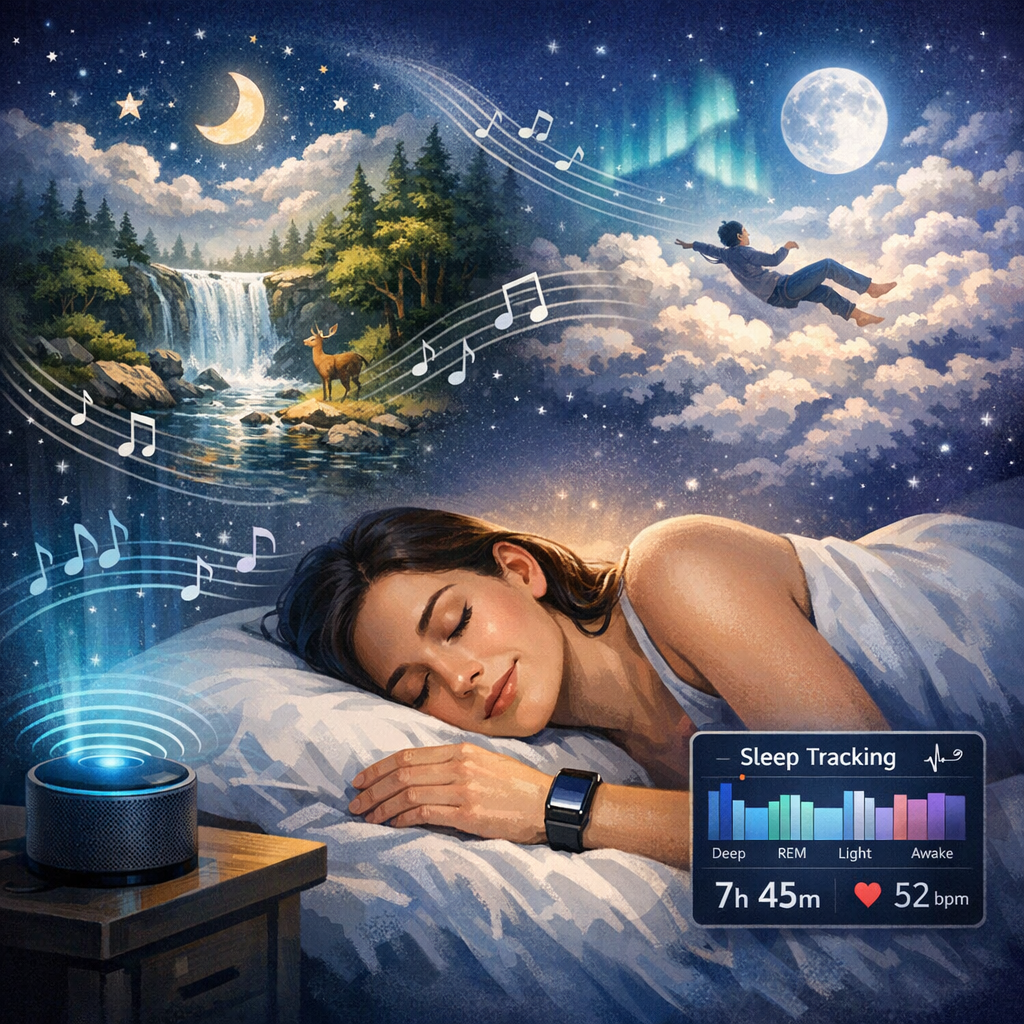
**Soundscapes** utilize a blend of **natural sounds, music**, and **ambient noise** to dynamically align with a sleeper’s natural cycles. Recent advancements empower soundscapes to reflect an individual’s unique patterns, facilitating a personalized experience through **wearable devices** and apps. These innovations are setting a new standard in sleep medicine by reimagining what we hear in our sleep environment.
Features
Several studies underscore the impact of sound on sleep. The University of Pennsylvania identified that **soundscapes** with natural elements like **ocean waves** can enhance sleep depth. By aligning with our brain’s response to calming auditory cues, soundscapes reduce the time required to fall asleep.
Harvard University’s research highlighted personalized soundscapes’ role during REM sleep, where soft melodies preserve the flow of dreams. They found that lower frequencies during deep sleep can aid in recovery and memory consolidation, emphasizing tailored soundscapes’ potential.
Modern devices like the **Oura Ring** and **Fitbit** provide detailed insights into sleep, adjusting soundscapes in real-time to promote desired sleep stages. This marks a leap in personalized sleep solutions, illustrating curated soundscapes’ potential in clinical settings for treating chronic insomnia and reducing anxiety.
Conclusion
The realm of sleep health is advancing beyond traditional solutions like **white noise** into a period of meticulously designed **soundscapes** tailored to individual needs. Backed by extensive research and integrated technology, these soundscapes offer a future where sleep quality and wellbeing can be significantly optimized. By aligning sound patterns with complex sleep stages, we could unlock new levels of restorative rest and dreamful awareness.
For further information, visit [University of Pennsylvania’s Research](https://www.upenn.edu), [Sleep Medicine at Harvard](https://sleep.hms.harvard.edu), and platforms like [Oura Ring](https://ouraring.com) and [Fitbit](https://www.fitbit.com) for soundscape technology.
**Concise Summary**
Curated soundscapes, crafted to align dynamically with an individual’s sleep architecture, provide a promising alternative to traditional white noise. These soundscapes, which integrate natural sounds, music, and ambient noise, are personalized through modern sleep technology like wearable devices. Studies highlight their potential to enhance sleep depth, reduce time to fall asleep, and foster particular sleep stages’ restorative properties, such as deep or REM sleep. This innovative approach suggests a new era in sleep health, where sound complements the natural rhythms of rest for optimal sleep quality and wellbeing.

Dominic E. is a passionate filmmaker navigating the exciting intersection of art and science. By day, he delves into the complexities of the human body as a full-time medical writer, meticulously translating intricate medical concepts into accessible and engaging narratives. By night, he explores the boundless realm of cinematic storytelling, crafting narratives that evoke emotion and challenge perspectives.
Film Student and Full-time Medical Writer for ContentVendor.com