Debunking Sleep Myths: Why More Oxygen Isn’t Always Better for Sleep Apnea Treatment
Introduction
**Sleep apnea** is a common disorder characterized by interrupted breathing during sleep, leading to poor rest and a range of health problems. Given its prevalence, many myths surround its treatment, particularly concerning the use of supplemental **oxygen**. A long-held belief is that providing more oxygen can alleviate the symptoms of sleep apnea effectively. While this assumption might seem logical, the reality is far more complex.
To understand why more oxygen isn’t always better, it’s crucial to delve into what sleep apnea entails. **Obstructive Sleep Apnea (OSA)**, the most common form, occurs when the throat muscles intermittently relax and block the airway during sleep. This blockage results in reduced oxygen levels, frequent awakenings, and fragmented sleep. **Central Sleep Apnea**, less common but equally serious, involves the brain failing to send appropriate signals to the muscles that control breathing.
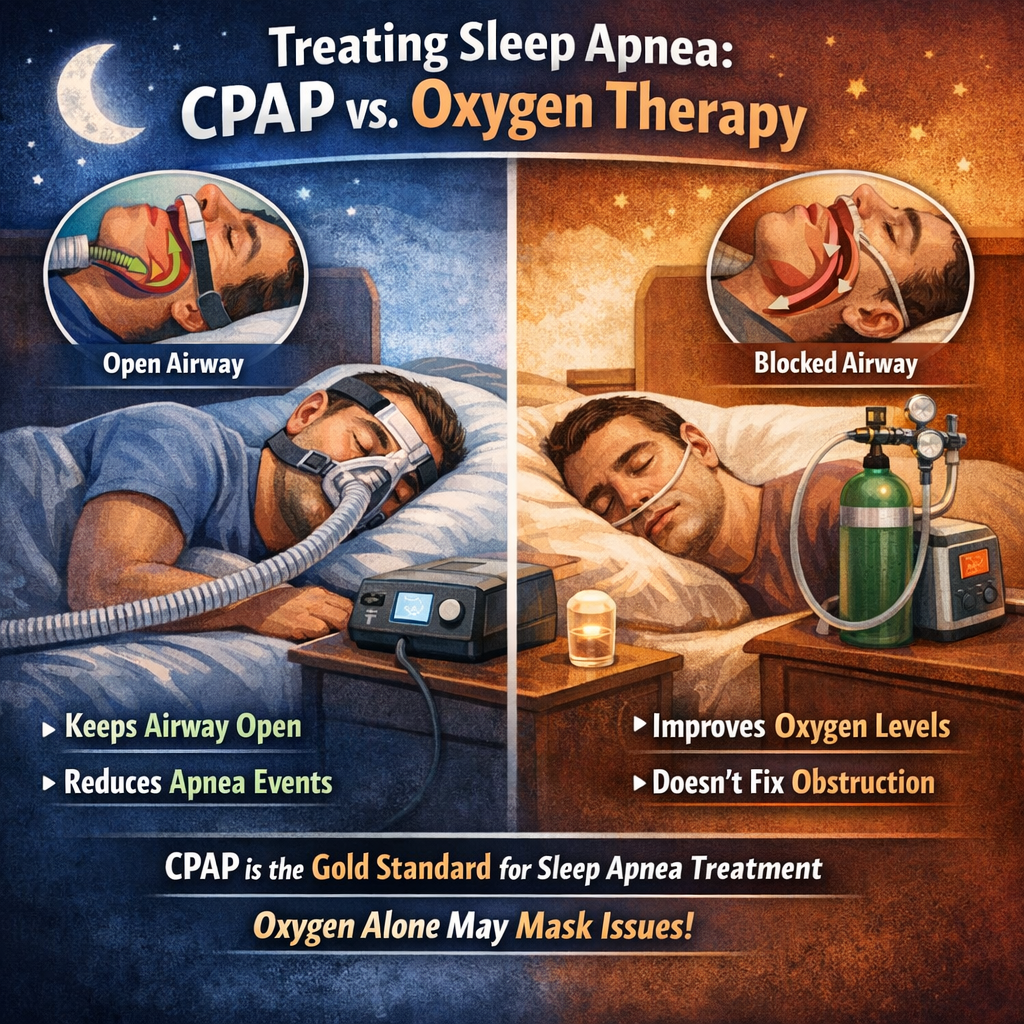
Supplemental oxygen is often seen as a straightforward solution; after all, if the problem is reduced oxygen levels, why not just add more? However, this simplistic view ignores the nuanced functioning of our respiratory system and the multifaceted nature of sleep apnea. The primary issue in sleep apnea is not just about oxygen deficiency, but the repeated interruption of sleep and the physiological stress it incurs. Injecting additional oxygen doesn’t necessarily prevent the airway from collapsing during sleep, meaning the root cause—a blocked airway—remains unaddressed.
Research acknowledges that while oxygen can help maintain better overall oxygen levels in the blood, it doesn’t resolve the underlying disruptions in breathing patterns. Adding more oxygen could even **mask symptoms of sleep apnea**, leading to a false sense of improvement while the disorder continues to exacerbate. Moreover, improperly administered supplemental **oxygen** might lead to suppressed respiratory drive, complicating the overall treatment strategy.
In light of these insights, it’s evident that sleep apnea treatment should focus on maintaining an open airway, such as using **Continuous Positive Airway Pressure (CPAP)** devices, lifestyle changes, or surgery. Only when prescribed appropriately, under medical supervision, should oxygen supplementation be considered as part of a broader treatment plan. Let’s explore further into medical studies that showcase why more oxygen isn’t always better.
Features
Scientific studies provide critical insights into why more oxygen isn’t necessarily the right approach for treating sleep apnea. Research published in the “American Journal of Respiratory and Critical Care Medicine” highlights that while oxygen therapy can improve **oxygen saturation levels**, it does not address the apneas or hypopneas (periods of shallow breathing or pauses in breathing) themselves. A study demonstrated that patients using supplemental oxygen alone did not show significant improvement in apnea events compared to those using CPAP therapy, which physically maintains an open airway by delivering pressurized air through a mask.
Another significant piece of evidence comes from a study in “The Lancet Respiratory Medicine,” which examined the effectiveness of supplemental oxygen versus CPAP therapy. While CPAP significantly reduced the number of apnea and hypopnea events per hour, oxygen therapy did not. The findings showed that CPAP therapy led to better sleep quality and reduced daytime sleepiness, outcomes that were not mirrored in the oxygen therapy group.
Furthermore, a study published by the “Journal of Clinical Sleep Medicine” discussed how inappropriate oxygen therapy could potentially result in **oxygen-induced hypercapnia**—a condition where carbon dioxide accumulates in the bloodstream, leading to confusion, headache, and even respiratory failure. This risk arises because oxygen therapy in high amounts can suppress the respiratory drive in some patients, especially in those with **chronic obstructive pulmonary disease (COPD)**.
These studies underscore the importance of a tailored approach in managing sleep apnea. Effective treatment isn’t just about increasing oxygen intake, but addressing airway obstructions directly. Oxygen can play a supportive role, but its application should be strategically integrated based on individual needs and under medical guidance.
Conclusion
In conclusion, while supplemental oxygen can enhance overall blood oxygen levels, it’s not a standalone solution for sleep apnea. The condition’s complexity demands a comprehensive treatment plan aimed at ensuring the airway remains clear during sleep. **CPAP therapy**, along with lifestyle modifications, remains the gold standard, providing symptomatic relief by preventing airway collapse. Oxygen therapy may complement these treatments in specific cases, but it requires careful medical supervision to avoid adverse effects and ensure that it doesn’t disguise untreated sleep apnea symptoms.
For individuals grappling with sleep apnea, the key takeaway is to seek a thorough evaluation from a sleep specialist, who can recommend the most appropriate treatment options. Relying solely on oxygen supplementation without addressing the structural aspects of the disorder may not provide the relief desired and can potentially lead to other complications. Remember, effective sleep apnea management is multifaceted, focusing on sustainable solutions rather than temporary or simplistic fixes.
References
1. American Journal of Respiratory and Critical Care Medicine
2. The Lancet Respiratory Medicine
3. Journal of Clinical Sleep Medicine
**Concise Summary**
Sleep apnea is a disorder characterized by disrupted breathing during sleep. While supplemental oxygen may seem a straightforward solution, it doesn’t address the underlying causes, such as airway blockages. Studies emphasize that **CPAP therapy** is more effective, as it keeps airways open, improving sleep quality and reducing symptoms. Oxygen therapy can inadvertently mask symptoms or even worsen the condition if not managed well. A personalized treatment plan under medical guidance is essential for effective management, ensuring that both oxygen levels and airway obstructions are adequately addressed.

Dominic E. is a passionate filmmaker navigating the exciting intersection of art and science. By day, he delves into the complexities of the human body as a full-time medical writer, meticulously translating intricate medical concepts into accessible and engaging narratives. By night, he explores the boundless realm of cinematic storytelling, crafting narratives that evoke emotion and challenge perspectives.
Film Student and Full-time Medical Writer for ContentVendor.com