Revolutionizing Sleep Diagnostics: AI’s Role in Early Detection and Treatment of Sleep Apnea
Introduction
**Sleep apnea**, a common but frequently undiagnosed condition, impacts millions globally, leading to disrupted sleep and elevated health risks, including cardiovascular disease and **diabetes**. Traditionally diagnosed using **polysomnography** in **sleep labs**, this method is hindered by high costs and limited access. Enter **artificial intelligence (AI)**, poised to reshape sleep diagnostics by swiftly and accurately analyzing vast amounts of data. AI identifies patterns and anomalies in **sleep data**, providing an accessible, cost-effective alternative to traditional methods, thereby democratizing the field and reaching more individuals, even in remote areas.
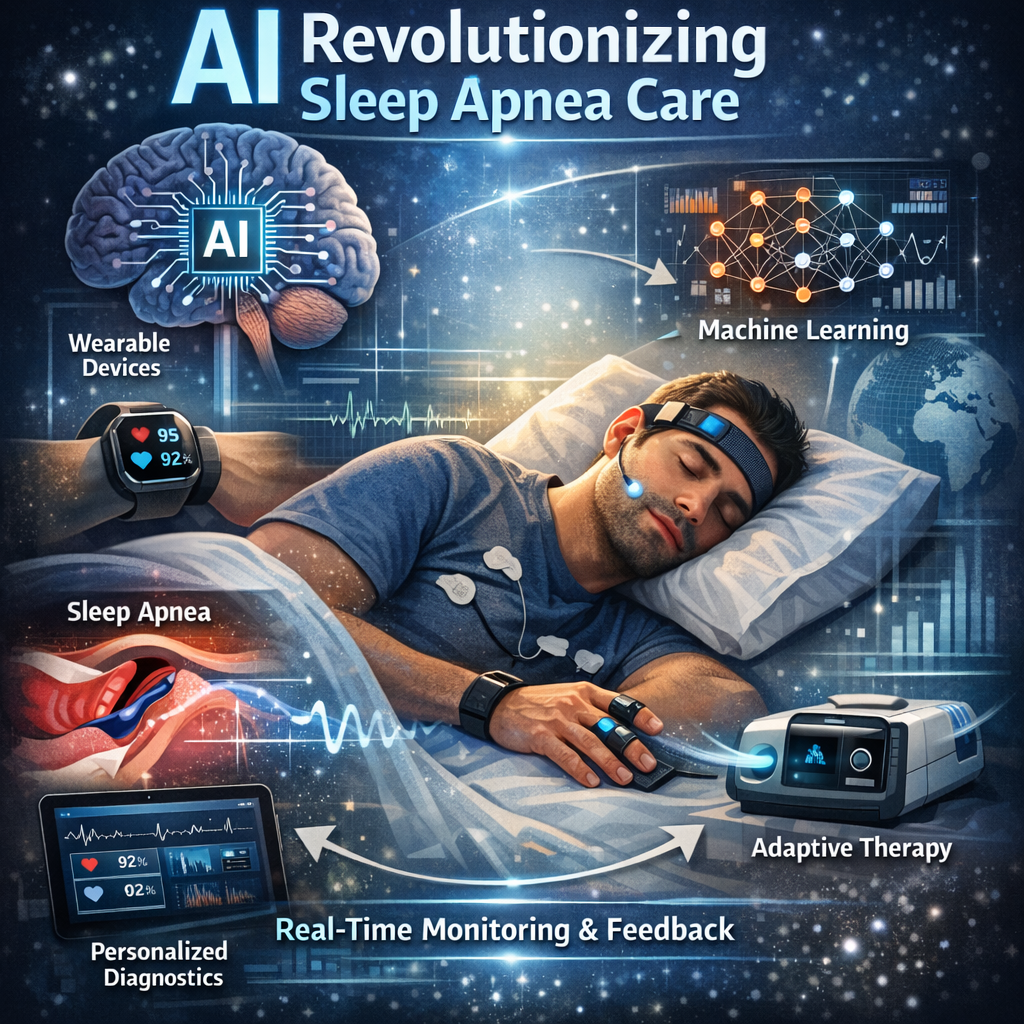
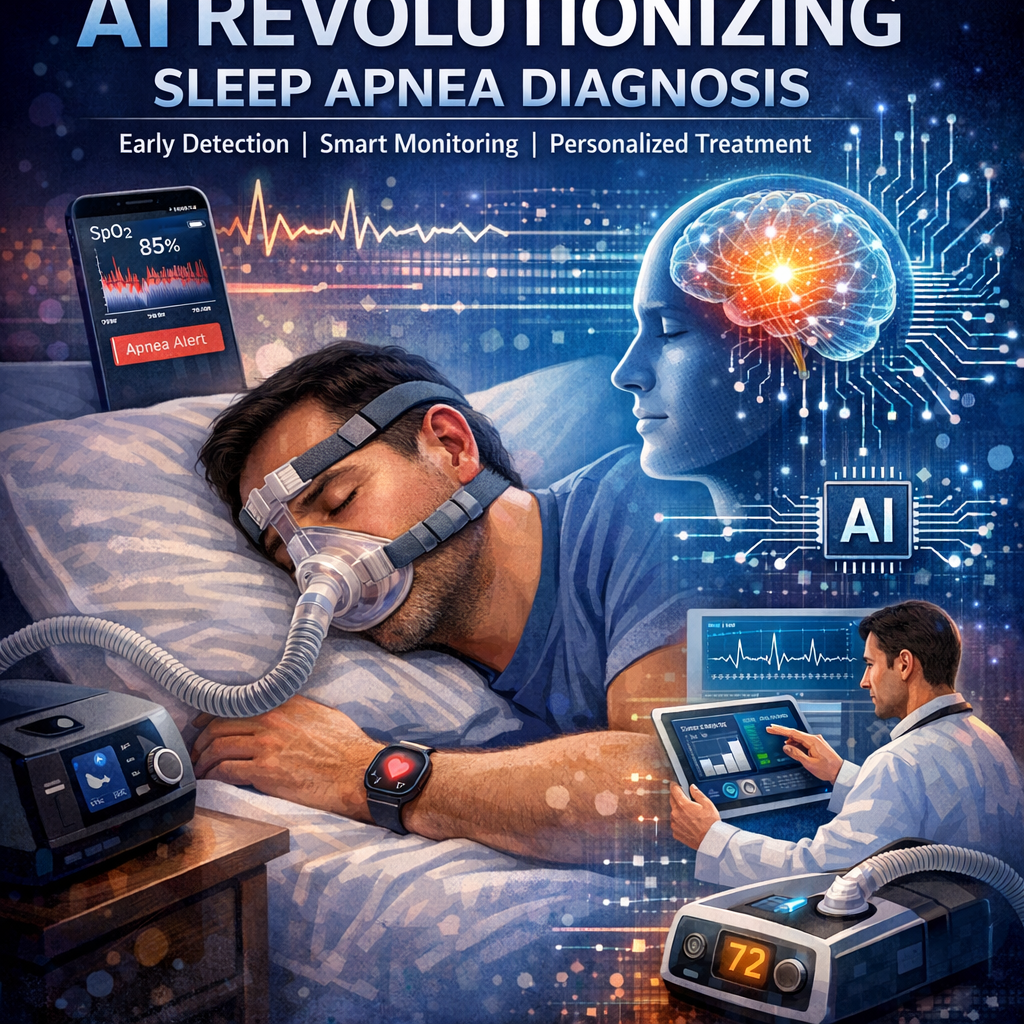
AI algorithms process data from **wearable devices** that track heart rate, oxygen levels, and breathing patterns, reducing the dependency on overnight sleep studies. These devices offer continuous, real-time monitoring, giving a comprehensive view of an individual’s sleep health. Furthermore, AI extends beyond detection by tailoring treatments, predicting responses to therapies, and optimizing settings for devices like **continuous positive airway pressure (CPAP)** machines.
Features
Recent studies highlight AI’s transformative potential in sleep diagnostics. A study in [Nature and Science of Sleep](https://www.dovepress.com/) showed AI’s efficacy in analyzing sleep study data, with algorithms matching or surpassing traditional methods in accuracy. Similarly, research in the [Journal of Clinical Sleep Medicine](https://jcsm.aasm.org/) used AI for interpreting home sleep apnea tests (HSATs), demonstrating improved diagnostic accuracy over manual interpretations. A [PLOS ONE](https://journals.plos.org/plosone/) study explored AI-driven apps in detecting sleep apnea using **smartphone** microphones to analyze snoring and breathing, offering a user-friendly preliminary diagnosis solution.
AI also revolutionizes treatment personalization. At the [University of Edinburgh](https://www.ed.ac.uk/), researchers utilized AI to optimize CPAP therapy, predicting individual responses and enhancing comfort and compliance through personalized settings.
Conclusion
AI’s integration into sleep diagnostics represents a paradigm shift, offering new tools for early detection and personalized treatment of sleep apnea. By providing accessible, cost-effective, and reliable solutions, AI bridges the gap for those previously unable to access traditional diagnostics. Personalized treatments improve health outcomes, patient satisfaction, and therapy adherence. As AI technology advances, its role in revolutionizing sleep healthcare will likely expand, improving quality of life globally. However, ethical use, patient privacy, and security must be prioritized in this transformative journey, as AI continues to revolutionize healthcare for equitable outcomes.
Concise Summary
Artificial intelligence is transforming sleep diagnostics, particularly in detecting and treating sleep apnea. By analyzing data from wearable devices, AI offers an accessible and cost-effective alternative to traditional sleep studies. This technology enhances early detection, providing real-time monitoring and comprehensive sleep health insights. Furthermore, AI personalizes treatments, optimizing therapies like CPAP to boost patient comfort and adherence. As AI continues to evolve, its integration into sleep healthcare promises improved diagnostics and personalized treatments, enhancing life quality while addressing privacy and ethical considerations in its broader application to healthcare solutions.

Dominic E. is a passionate filmmaker navigating the exciting intersection of art and science. By day, he delves into the complexities of the human body as a full-time medical writer, meticulously translating intricate medical concepts into accessible and engaging narratives. By night, he explores the boundless realm of cinematic storytelling, crafting narratives that evoke emotion and challenge perspectives.
Film Student and Full-time Medical Writer for ContentVendor.com