The Dark Side of Sleep Aids: How Over-the-Counter Solutions May Be Worsening Your Sleep Disorders
In today’s fast-paced world, where **screens** monopolize our attention and **stress** levels are perpetually high, achieving a **good night’s sleep** has become increasingly elusive. Many individuals gravitate towards **over-the-counter (OTC) sleep aids** in hopes of a quick fix for their sleepless nights. These products are alluring—available without a **prescription** and promising to deliver uninterrupted **slumber**. However, the convenient façade of OTC sleep aids often masks their darker side, which can aggravate existing **sleep disorders** rather than alleviate them.
The widespread reliance on sleep aids reflects the magnitude of sleep issues affecting people worldwide. **Insomnia** alone plagues up to 30% of adults occasionally, with 10% reporting chronic problems. Given these numbers, it’s no surprise that the market for sleep aids is robust, projected to reach $84.9 billion globally by 2027. Despite their alluring promise, sleep aids often come with a host of caveats.
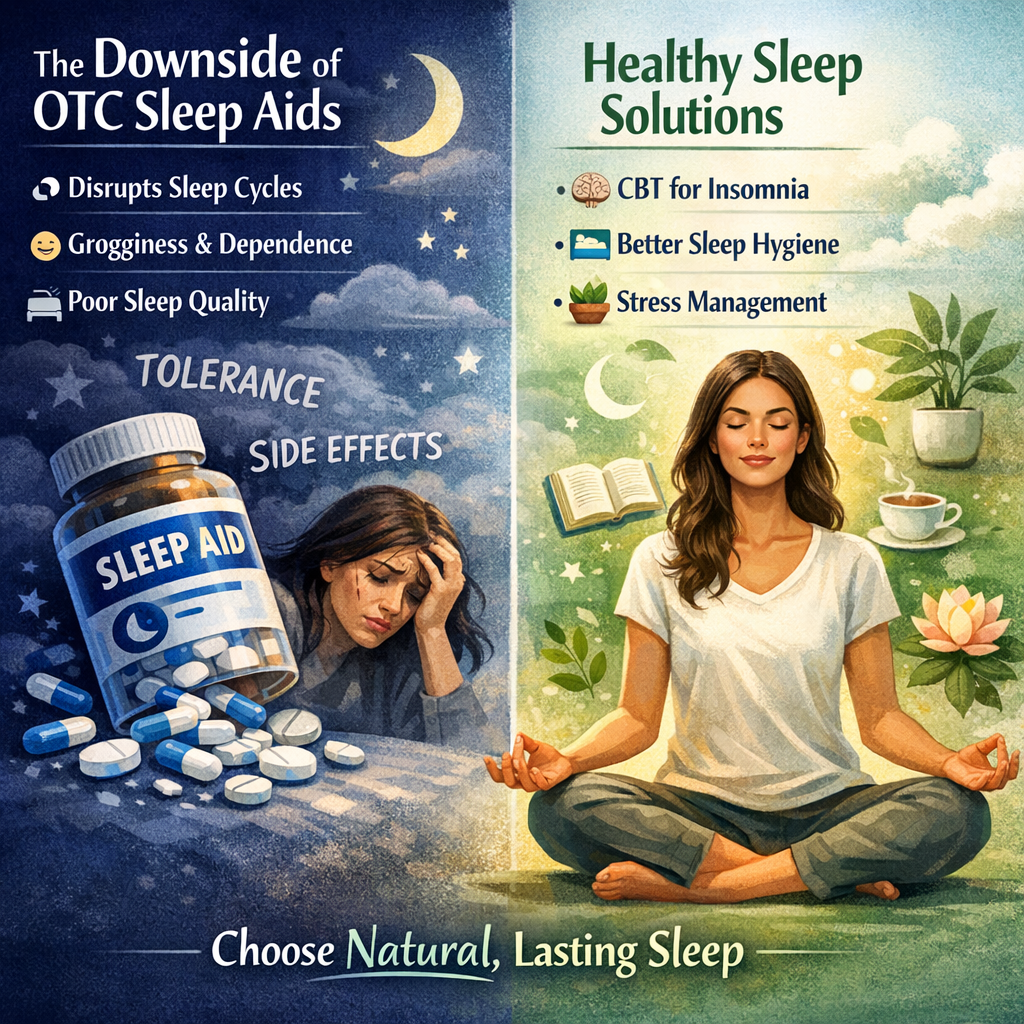
OTC sleep aids typically contain **antihistamines** such as **diphenhydramine** or **doxylamine**. While these ingredients can induce drowsiness, they were originally formulated to treat **allergies**, not insomnia. Consequently, regular use of these substances for sleep carries unintended consequences. Users often experience a “hangover” effect, characterized by grogginess and slow **cognition** the next day. Moreover, the temporary relief these aids offer frequently leads to **tolerance**, requiring increased doses to achieve the same effect. This cycle can foster dependency and ultimately exacerbate sleep health problems.
Furthermore, sleep is a finely tuned process, governed by our **circadian rhythm** and **sleep-wake cycles**. OTC sleep aids can disrupt these biological processes, stripping sleep of its restorative quality. When sleep architecture is altered, users may spend less time in essential deep sleep or **REM sleep** stages, leading to unrefreshing sleep despite a full eight hours in bed.
**Physicians** and **sleep specialists** express concerns about the unregulated use of OTC sleep aids, emphasizing that they should not be the first line of defense against sleep disorders. Instead, they advocate for a comprehensive approach that targets the root causes of sleep disturbances rather than merely addressing the symptoms. This call for caution is supported by a growing body of research highlighting the limited efficacy and potential harm linked to these readily available sleep remedies.
Features:
Recent studies underline the risks and limited benefits associated with OTC sleep aids. A pivotal study published in the journal BMJ Open highlighted that regular use of sleeping pills, including antihistamines, was linked to an increased risk of adverse events such as cognitive decline and falls, particularly in older populations. The study’s findings suggest that these medications may disrupt neurotransmitter systems in the brain, altering cognitive function over time.
Moreover, a review in the American Journal of Geriatric Psychiatry emphasized that elderly patients using OTC sleep aids experienced a decline in overall health markers and quality of life. These medications can exacerbate **restless leg syndrome**, **sleep apnea**, or other underlying sleep disorders by interfering with natural sleep cycles.
The dependence factor is another critical issue amplified by medical studies. Research conducted by the American Academy of Sleep Medicine highlights the development of tolerance, where users often find that the initial dosage becomes less effective over time, prompting increased consumption for the same effect. This pattern can lead to **psychological dependence**, making it challenging to discontinue use without experiencing withdrawal symptoms or rebound insomnia.
Experts advocate for non-pharmacological treatments as a more sustainable approach to managing sleep disorders. **Cognitive Behavioral Therapy for Insomnia (CBT-I)** has been shown to be particularly effective, addressing the behavioral and psychological components underlying sleep disturbances. Furthermore, emphasis on **sleep hygiene**—such as maintaining a consistent sleep schedule, reducing screen time before bed, and creating a calming bedtime routine—has been proven to enhance sleep quality without reliance on medication.
Conclusion:
While the allure of over-the-counter sleep aids is undeniable, it’s crucial to acknowledge their potential drawbacks and limited efficacy in addressing the complexities of sleep disorders. Relying on these medications not only risks exacerbating sleep issues but also overlooks underlying contributory factors that need to be addressed for genuine sleep restoration. A holistic approach, prioritizing lifestyle modifications and therapeutic interventions, promises more lasting results and a healthier sleep cycle.
Therefore, if you find yourself reaching for an OTC sleep aid, it might be time to reconsider and seek comprehensive solutions tailored to your specific sleep needs. By doing so, you can safeguard your cognitive health, enhance your overall well-being, and, most importantly, enjoy the genuine rest and **rejuvenation** that a good night’s sleep should offer.
**References:**
1. [BMJ Open: The association between sleep aid use and health outcomes in older adults](https://bmjopen.bmj.com/)
2. [American Journal of Geriatric Psychiatry: The impact of sleep medications on older adults](https://ajgponline.org/)
3. [American Academy of Sleep Medicine: Tolerance and dependence in sleep aid usage](https://aasm.org/)
4. [Cognitive Behavioral Therapy for Insomnia (CBT-I) effectiveness](https://www.sleepfoundation.org/)
**Concise Summary:**
The widespread use of over-the-counter sleep aids, commonly containing **antihistamines** like **diphenhydramine**, could be worsening existing **sleep disorders** rather than alleviating them. These aids often induce a “hangover” effect and lead to medication tolerance. Disrupting the natural **sleep-wake cycle**, they diminish sleep’s restorative quality, exacerbating issues like **cognition** decline and dependency. Experts suggest alternatives such as **Cognitive Behavioral Therapy for Insomnia (CBT-I)** and good sleep hygiene practices as more sustainable solutions. A holistic approach to sleep health prioritizes uncovering underlying causes rather than relying on potentially harmful quick fixes.

Dominic E. is a passionate filmmaker navigating the exciting intersection of art and science. By day, he delves into the complexities of the human body as a full-time medical writer, meticulously translating intricate medical concepts into accessible and engaging narratives. By night, he explores the boundless realm of cinematic storytelling, crafting narratives that evoke emotion and challenge perspectives.
Film Student and Full-time Medical Writer for ContentVendor.com