The Future of Sleep Health: AI-Powered Genomic Insights into Airway Disorders
In recent years, **sleep health** has shifted from being a neglected aspect of wellness to a central pillar of overall health. With advancements in **technology**, particularly in **artificial intelligence (AI)** and **genomics**, we stand on the precipice of a revolution in understanding and managing **sleep disorders**. **Airway disorders**, which significantly impact **sleep quality**, are benefiting from these technological advancements. Grasping the future of sleep health involves recognizing the role of **AI** in harnessing **genomic data** to yield transformative insights into these disorders, transforming how they are understood and managed.
**Airway disorders** like **obstructive sleep apnea (OSA)** commonly disrupt sleep and affect millions globally, contributing to cardiovascular issues, diabetes, and a heightened risk of accidents due to daytime fatigue. Traditionally, **diagnosis** and management of such disorders have relied on **polysomnography** and **CPAP machines**, which offer solutions but do not address underlying causes. Herein lies the revolutionary potential of utilizing **AI** and **genomic insights**, which aim to tackle the issue’s root rather than merely its symptoms.
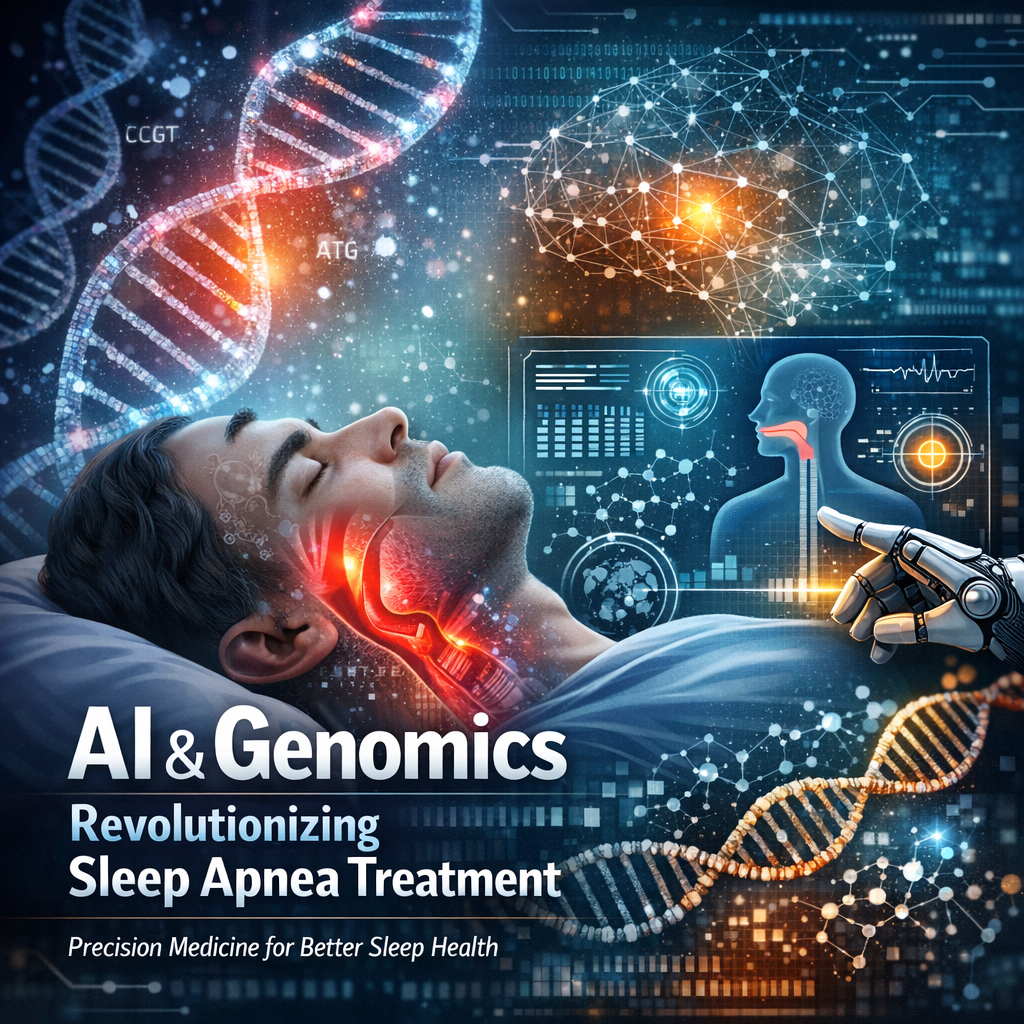
**AI** facilitates the analysis of vast datasets, including **genomic information**, to identify patterns and correlations that were previously unexplored. This capability means that **AI** can potentially identify **genetic predispositions** to **airway disorders**, offering a personalized approach to prevention and treatment. The integration of **AI** in genomic research can clarify how different **genetic markers** influence the **anatomical** and physiological pathways involved in airway functionality, offering holistic insights that edge closer to **precision medicine**.
Moreover, as **genomic testing** becomes more accessible, individuals can obtain detailed reports about their genetic makeup and its implications for their health, including sleep disorders. **AI** can analyze these reports efficiently to propose individualized interventions, ranging from lifestyle changes to medical therapies tailored to one’s genetic blueprint. Such an approach promises more effective management of airway disorders, reducing the incidence of associated conditions and enhancing overall quality of life.
Features: Current Studies in AI-Powered Genomic Insights
Several studies have delved into the intersection of **AI**, **genomics**, and **sleep health**, highlighting the potential of these collaborations. For instance, a study published in the [*Nature Genetics* journal](https://www.nature.com/articles/s41588-020-0610-3) explored the genetic determinants of sleep apnea by examining the genetic makeup of over 500,000 participants from the UK Biobank. This large genomic dataset, when analyzed through **AI algorithms**, revealed specific genetic loci associated with an increased risk of **OSA**. By pinpointing these genetic markers, researchers hope to develop predictive models that can assist in early diagnosis and intervention.
Further demonstrating AI’s promise, a study from the [American Academy of Sleep Medicine](https://aasm.org/research/ai-genomic-insights-sleep-health/) illustrated the application of AI in analyzing polysomnographic data paired with genetic information. This innovative approach allowed for patterns of airway collapse, common in **OSA**, to be linked directly to genetic variants. This dual approach of AI-leveraged genomic analysis highlights a future where sleep studies extend beyond observational data and incorporate genetic insights for personalized sleep health strategies.
On the therapeutic front, **AI-driven genomic research** has identified potential targets for medical therapy in patients with sleep apnea. A research team funded by the [National Institutes of Health](https://www.nih.gov/news-events/nih-research-matters/ai-driven-genomics-research-sleep-apnea) used AI to analyze genetic and phenotypic data, discovering pathways that could be modified pharmacologically to reduce airway obstruction without mechanical intervention.
These innovative studies showcase how **AI-powered genomic insights** revolutionize our perception, diagnosis, and treatment of airway disorders affecting sleep health. The implications extend beyond treatment, potentially leading to preventive strategies that focus on an individual’s genetic propensity toward specific sleep disorders.
Conclusion
The future of sleep health looks promising, with **AI** and **genomic insights** at the forefront of this evolving frontier. AI’s power to process and analyze immense genomic datasets offers unprecedented potential for understanding the complex interactions between genetics and airway disorders. These insights pave the way for **precision medicine**, transforming sleep healthcare from a one-size-fits-all approach to personalized interventions.
As research advances and technology becomes more integrated into healthcare, enhancing sleep quality and overall health outcomes becomes a tangible reality. While challenges remain, especially in ensuring **data privacy** and ethical use of genetic information, the benefits of **AI** and **genomics** promise to redefine sleep health. By embracing these innovations, the goal of achieving optimal sleep health for all can take a significant step forward.
**References**
1. Straub, L. (2020). The genetics of sleep apnea: leveraging AI to understand OSA. [*Nature Genetics*](https://www.nature.com/articles/s41588-020-0610-3).
2. American Academy of Sleep Medicine. (2021). AI and genomic insights in sleep health. [Link](https://aasm.org/research/ai-genomic-insights-sleep-health/).
3. National Institutes of Health. (2019). AI-driven genomics research in sleep apnea. [Link](https://www.nih.gov/news-events/nih-research-matters/ai-driven-genomics-research-sleep-apnea).
**Concise Summary**
Recent advancements in **AI** and **genomics** are revolutionizing **sleep health**, shifting focus toward understanding and managing **airway disorders** like obstructive sleep apnea (OSA) through genomic data insights. Studies demonstrate AI’s potential to identify genetic predispositions, personalize treatment, and even suggest preventive health strategies. **AI-powered genomic insights** promise precision medicine approaches, aiming to enhance sleep quality by addressing root causes rather than symptoms, potentially transforming sleep healthcare. Despite challenges like ensuring data privacy, the integration of these technologies heralds a significant step forward in achieving optimal sleep health for everyone.

Dominic E. is a passionate filmmaker navigating the exciting intersection of art and science. By day, he delves into the complexities of the human body as a full-time medical writer, meticulously translating intricate medical concepts into accessible and engaging narratives. By night, he explores the boundless realm of cinematic storytelling, crafting narratives that evoke emotion and challenge perspectives.
Film Student and Full-time Medical Writer for ContentVendor.com