The Future of Sleep: How AI-Powered Biomarker Mapping is Revolutionizing Sleep Apnea Diagnosis
In the realm of **sleep health**, disorders such as **sleep apnea** represent significant challenges, affecting millions worldwide and leading to serious health complications like **cardiovascular disease**, **diabetes**, and **cognitive impairments**. Traditionally, diagnosing sleep apnea involves overnight **polysomnography**—a complex, expensive, and often inaccessible procedure for many. However, the advent of **artificial intelligence (AI)** and **biomarker mapping** is reshaping how we approach sleep apnea diagnosis. This transformative technology promises not only to make diagnosing sleep apnea more efficient and accessible but also to improve the precision and treatment of this pervasive condition.
**Artificial Intelligence**, particularly **machine learning**, is at the forefront of this transformation. By analyzing vast quantities of sleep data, AI can identify patterns and anomalies faster and more accurately than traditional methods. One of the key innovations in this area is **biomarker mapping**. **Biomarkers** are measurable substances in the body that can indicate the presence of certain diseases. In sleep apnea, specific biomarkers could include **oxygen saturation levels**, **heart rate variability**, and specific **neural patterns**.
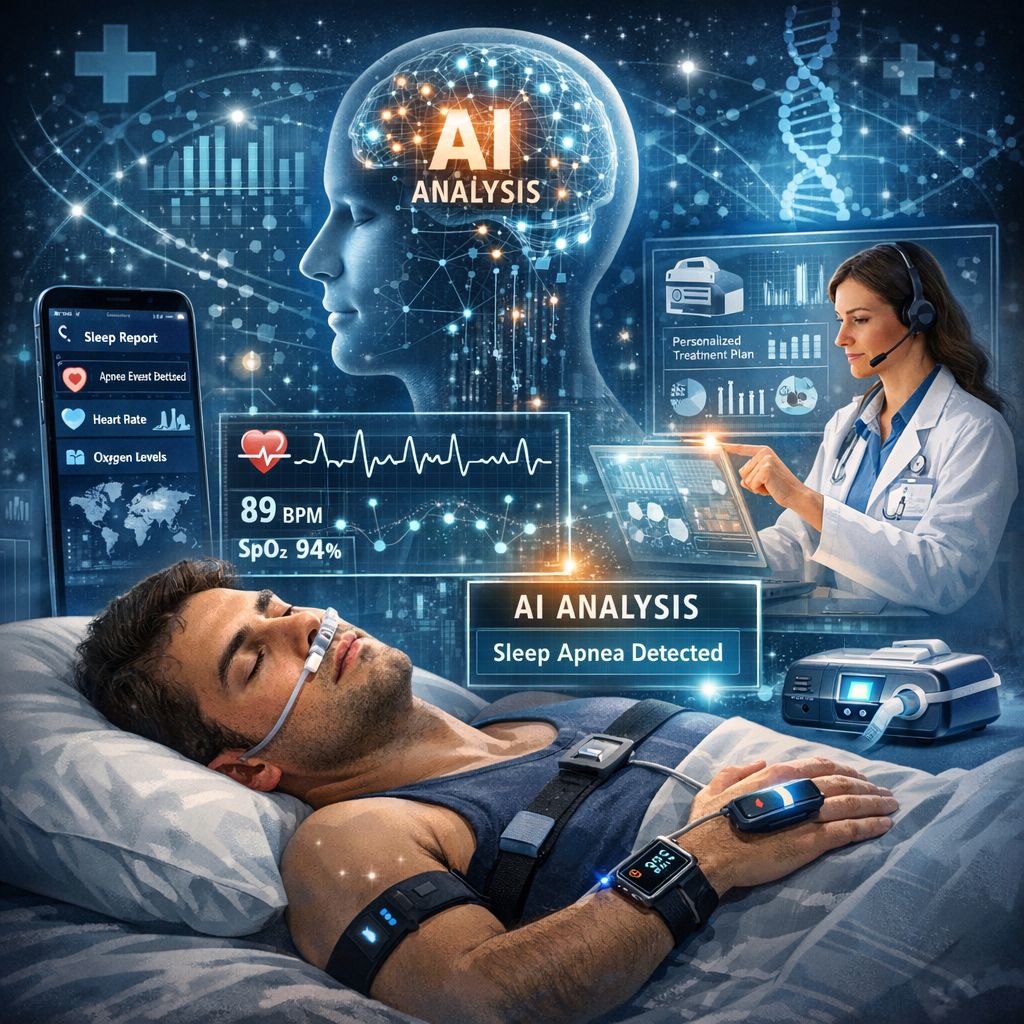
AI-powered biomarker mapping involves collecting data from wearable devices that monitor these physiological parameters. These devices, such as advanced **fitness trackers** or specialized **medical wearables**, feed data into AI algorithms that can map and interpret biomarkers associated with sleep apnea. This process enables the detection of subtle changes in sleep patterns and physiological responses that might indicate the presence of apnea more rapidly and accurately than ever before.
The applications of AI in sleep medicine extend beyond mere diagnosis. AI-driven tools can customize treatment plans based on individual biomarker profiles, ensuring that patients receive the most effective therapies tailored to their unique needs. This personalization of care could significantly enhance treatment outcomes and patient satisfaction, reducing the burden of sleep apnea.
Features
Recent studies underscore the effectiveness of AI-powered biomarker mapping in revolutionizing sleep apnea diagnosis. A pivotal study published in the Journal of Clinical Sleep Medicine explored the application of AI in analyzing sleep data from wearable devices. Researchers found that AI algorithms could predict obstructive sleep apnea with a high degree of accuracy, rivaling traditional polysomnography, and providing a non-intrusive, cost-effective solution for patients.
Furthermore, a study conducted by the Sleep Research Society demonstrated the potential of AI in personalizing treatment protocols. By leveraging machine learning algorithms, researchers could fine-tune continuous positive airway pressure (CPAP) therapy settings based on individual sleep patterns and biomarker data, enhancing treatment adherence and effectiveness.
The University of California recently undertook a study focusing on **heart rate variability** as a key biomarker for sleep apnea detection. With AI algorithms, they mapped heart rate fluctuations during sleep, achieving early and accurate identification of apnea episodes across diverse populations. This study highlighted not only the effectiveness of AI in detecting sleep apnea but also its applicability in a wide range of demographic settings ([source](https://journals.physiology.org/doi/full/10.1152/japplphysiol.00845.2018)).
These studies and innovations collectively represent a significant leap forward in sleep medicine, showcasing the potential for improved diagnostic accuracy, patient comfort, and overall healthcare outcomes with AI-powered biomarker mapping. As these technologies continue to evolve, they promise to make sleep apnea diagnosis more accessible to global populations, ultimately reducing the health burden associated with untreated sleep disorders.
Conclusion
The integration of AI-powered biomarker mapping into sleep medicine signifies a promising paradigm shift in diagnosing and treating sleep apnea. With faster, more accurate, and less invasive diagnostic processes, patients are poised to benefit from improved health outcomes and a better understanding of their sleep health. By harnessing the power of AI, healthcare providers can offer personalized care that is sensitive to the unique needs of each individual, thereby enhancing treatment adherence and effectiveness. As research in this field progresses, these technologies will undoubtedly play a crucial role in addressing sleep health challenges globally. Embracing AI technology not only paves the way for better diagnostic tools and treatment strategies but also marks a pivotal step toward healthier sleep for all.
By continuing to explore and develop these cutting-edge technologies, we stand on the brink of a new era in sleep health—one where AI not only supports but revolutionizes the way we diagnose, manage, and ultimately conquer sleep disorders like sleep apnea. This progress underscores the importance of innovation in healthcare, charting a course toward more effective and accessible solutions to the sleep challenges that impact millions worldwide.
Summary
In the evolving landscape of sleep medicine, the application of AI-powered biomarker mapping is set to revolutionize the diagnosis and treatment of **sleep apnea**. This innovative technology offers a precise, cost-effective, and less invasive alternative to traditional diagnostic methods. By utilizing data from wearable devices, AI algorithms efficiently detect and interpret biomarkers related to sleep apnea, enhancing both diagnosis and treatment personalization. As research and technologies advance, these developments promise to make sleep apnea diagnosis more accessible and effective globally, significantly improving health outcomes for millions affected by this disorder.

Dominic E. is a passionate filmmaker navigating the exciting intersection of art and science. By day, he delves into the complexities of the human body as a full-time medical writer, meticulously translating intricate medical concepts into accessible and engaging narratives. By night, he explores the boundless realm of cinematic storytelling, crafting narratives that evoke emotion and challenge perspectives.
Film Student and Full-time Medical Writer for ContentVendor.com