“`html
The Silent Productivity Killer: How Undiagnosed Sleep Disorders Could Be Draining Your Company’s Bottom Line
Introduction
In today’s fast-paced corporate world, **productivity** is often heralded as the cornerstone of business success. Companies expend countless resources on improving workflows, training employees, and utilizing the latest technology, all to gain a competitive edge. However, there’s a silent threat lurking beneath the surface that many companies overlook—**sleep disorders**. These disorders are not only detrimental to individual health but can also stealthily erode a company’s bottom line.
**Sleep** is a fundamental need, as vital as **food** and **water**, yet it remains one of the most neglected aspects of modern life. The Centers for Disease Control and Prevention (CDC) reports that approximately one-third of the U.S. adult population does not get the recommended seven hours of sleep per night. While a variety of issues can contribute to poor sleep, undiagnosed sleep disorders are a critical factor that goes unaddressed in corporate health strategies. Some common sleep disorders include **insomnia**, **sleep apnea**, **restless legs syndrome**, and **narcolepsy**, each with unique manifestations and impacts.
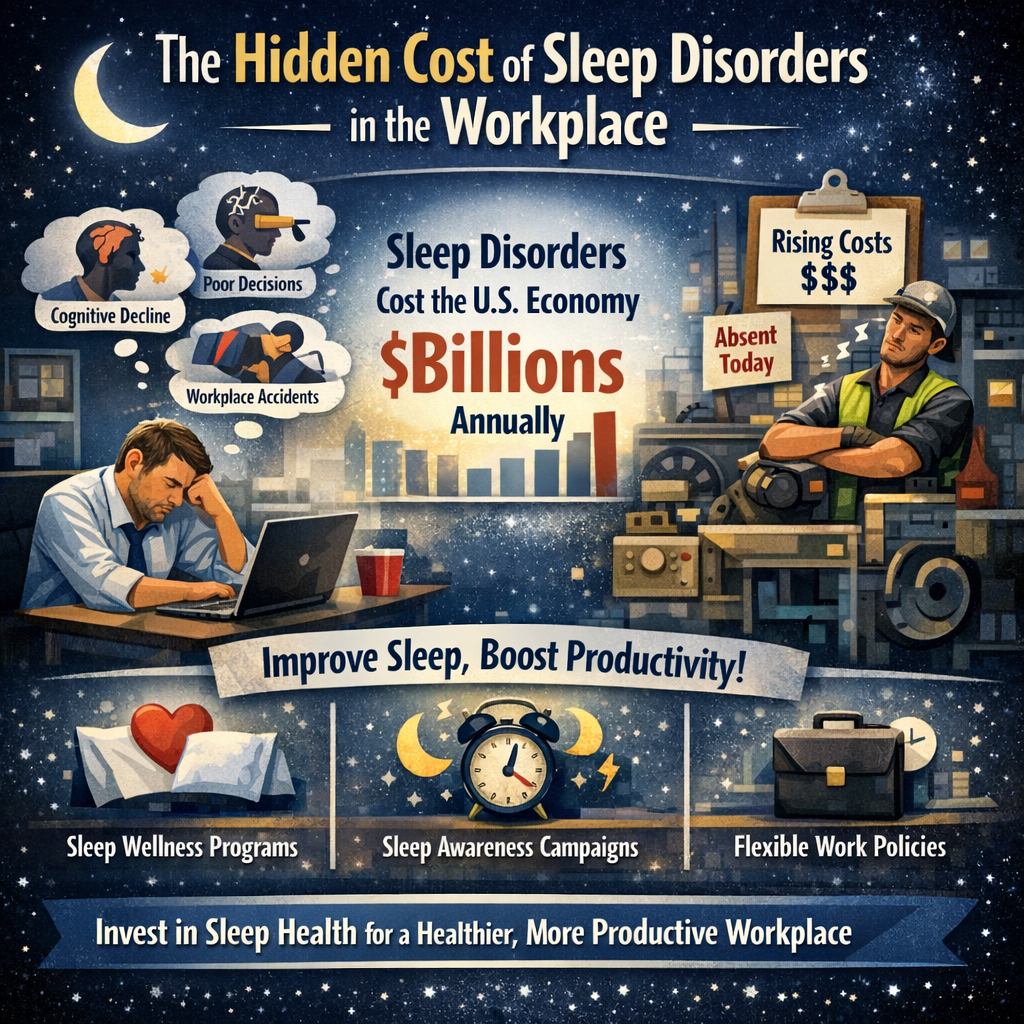
Sleep disorders can lead to impaired cognitive function, reduced concentration, poor memory retention, and decreased decision-making ability, all of which can significantly affect workplace productivity. Employees suffering from these disorders may find themselves struggling to keep up with tasks, more prone to errors, and may even have an increased risk of workplace accidents. This not only affects the individual’s performance but could also lead to costly ramifications for the company, including lower overall output and even potential legal liabilities.
Moreover, the impact of untreated sleep disorders extends beyond the workplace. Affected employees often experience mood disturbances, increased stress levels, and a general decline in quality of life, which can further exacerbate absenteeism and turnover rates. This results in a hidden financial drain on companies due to increased healthcare costs, loss of experienced workers, and the expense of hiring and training new employees.
Features
A number of medical studies underscore the link between **sleep disorders** and decreased workplace productivity, emphasizing the importance of addressing this **silent threat**. According to the **American Academy of Sleep Medicine**, sleep disorders cost the U.S. economy upwards of $411 billion annually in direct and indirect costs. This staggering figure highlights the urgency of identifying and managing sleep issues within corporate environments.
One landmark study published in the journal *Sleep* explored the impact of sleep disorders on workplace performance. It was found that employees with untreated insomnia reported lower job satisfaction and higher rates of absenteeism, while those with untreated sleep apnea exhibited decreased productivity levels due to daytime fatigue and cognitive impairment.
Similarly, research from the **RAND Corporation** emphasized that workers who consistently failed to obtain sufficient sleep are less productive and have a higher likelihood of missing work due to illness. The study estimated that American corporations could save up to $1.13 billion annually simply by encouraging employees to receive adequate rest each night.
Additionally, data from the **National Safety Council** reveals that fatigue-related productivity losses cost employers about $1,200 to $3,100 per employee annually. The interaction between sleep and productivity is multifaceted; a consistently sleep-deprived workforce is one operating at a suboptimal level, inevitably hampering overall business performance.
Given these findings, it is crucial for businesses to take proactive steps in addressing and mitigating the impact of sleep disorders. Initiatives such as workplace wellness programs, sleep health awareness campaigns, and partnerships with sleep specialists can be instrumental in helping employees obtain a proper diagnosis and receive necessary treatment.
Conclusion
The economic and human toll of undiagnosed sleep disorders is significant and should not be underestimated. The ramifications extend far beyond decreased productivity and increased absenteeism—**sleep disorders** can undermine employee morale, increase healthcare costs, and ultimately weaken a company’s competitive standing. To combat these challenges, companies must prioritize employees’ sleep health as part of their overall wellness strategies.
Encouraging a culture that values rest and recognizes the importance of treating sleep disorders is essential. Businesses can implement flexible work hours, create nap-friendly environments, and offer access to healthcare services that specialize in sleep issues. By taking these proactive measures, companies invest not just in their employees’ well-being but also in their long-term success. Through awareness and intervention, the silent drain of undiagnosed sleep disorders can be curtailed, ensuring a happier, healthier, and more productive workforce.
References
– Centers for Disease Control and Prevention (CDC): [CDC Sleep Statistics](https://www.cdc.gov/sleep/data_statistics.html)
– American Academy of Sleep Medicine: [Economic Impact of Sleep Disorders](https://aasm.org/advocacy/economic-impact/)
– RAND Corporation: [Lack of Sleep Costs U.S. Billions](https://www.rand.org/pubs/research_briefs/RB9941.html)
– National Safety Council: [Fatigue in the Workplace](https://www.nsc.org/work-safety/safety-topics/fatigue)
Concise Summary
In the relentless pursuit of maximizing business productivity, undiagnosed **sleep disorders** often go unnoticed, yet they are a significant drain on company resources. These disorders can lead to impaired cognitive function, increased absenteeism, and reduced workplace performance, collectively costing U.S. businesses hundreds of billions annually. By implementing workplace wellness programs and encouraging sleep health awareness, companies can address these issues, leading to improved employee well-being and potentially saving billions in lost productivity. The onus is on businesses to create a culture that prioritizes adequate rest and recognizes the importance of treating sleep disorders.
“`

Dominic E. is a passionate filmmaker navigating the exciting intersection of art and science. By day, he delves into the complexities of the human body as a full-time medical writer, meticulously translating intricate medical concepts into accessible and engaging narratives. By night, he explores the boundless realm of cinematic storytelling, crafting narratives that evoke emotion and challenge perspectives.
Film Student and Full-time Medical Writer for ContentVendor.com