The Unseen Toll: How Sleep Apnea Fuels Anxiety and Depression in High-Performing Professionals
In today’s fast-paced, high-demand world, **high-performing professionals** such as **executives**, **medical practitioners**, and **creative directors** are often celebrated for efficiently handling multiple responsibilities. However, beneath their achievements often lies an unseen struggle—one that severely impacts their mental health and overall well-being. **Sleep apnea**, a condition characterized by repeated interruptions in breathing during sleep, is an underrecognized adversary that can significantly elevate **anxiety** and **depression** levels.
Sleep apnea does not discriminate; it can affect anyone regardless of age or lifestyle. However, among high-performing professionals who struggle with work pressures, the condition exacerbates their vulnerability to mental health challenges. These individuals might often dismiss fragmented sleep as a mere occupational hazard or a byproduct of stress. Yet, the fatigue masks serious issues that affect more than just physical health.
The prevalence of sleep apnea is alarming. According to the **American Sleep Apnea Association**, an estimated 22 million Americans suffer from the disorder, with 80% of moderate and severe obstructive sleep apnea cases going undiagnosed. Busy individuals often prioritize work over medical advice and may not realize that the quality of their sleep directly affects mental clarity, mood stability, and emotional resilience.
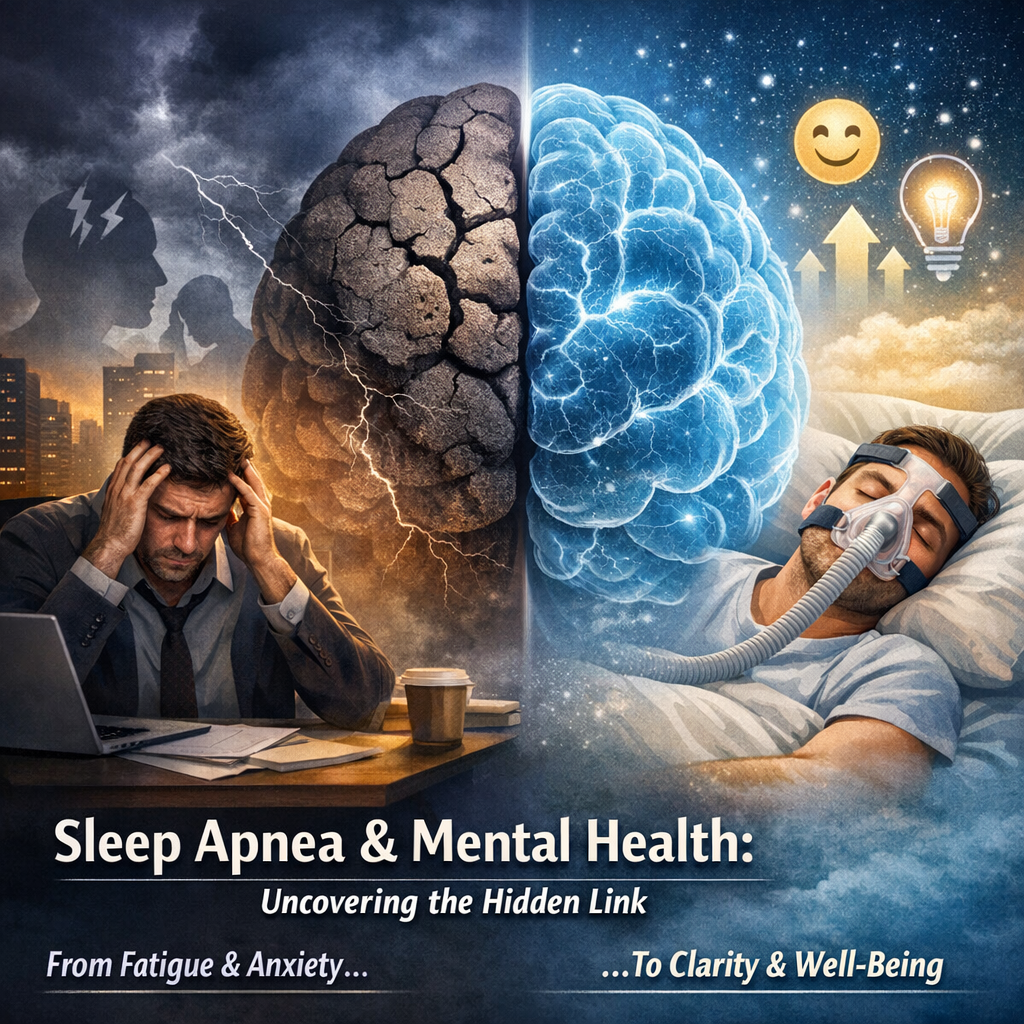
Research shows that poor sleep due to apnea can cause neurochemical imbalances, a root cause of anxiety and depression. The disorder deprives the brain of sufficient oxygen, impairing its ability to regulate emotions. High-performers who once navigated stress easily may find themselves irritably anxious as sleepless nights continue.
This article explores the connection between sleep apnea and its detrimental effects on mental health, especially among high-functioning individuals who are perceived as invincible. Current medical studies underscore this link, emphasizing the importance of recognizing and managing sleep apnea to preserve mental wellness and life quality.
Features
A growing body of research underscores the relationship between sleep apnea and mental health issues, particularly anxiety and depression. A seminal study published in the [Journal of Clinical Sleep Medicine](https://jcsm.aasm.org/) examined the psychological effects of sleep-disordered breathing. The study revealed that individuals with sleep apnea were five times more likely to suffer from clinical depression and twice as likely to experience significant anxiety symptoms.
Moreover, a study from the [American Journal of Respiratory and Critical Care Medicine](https://ajrccm.atsjournals.org/) investigated the effects of sleep apnea treatment on patients’ mental health. Patients who received Continuous Positive Airway Pressure (CPAP) therapy showed a significant reduction in depressive symptoms and anxiety levels, suggesting that addressing sleep apnea at its source can concurrently improve mental health conditions.
Neuroimaging studies published in the [Neuropsychiatric Disease and Treatment](https://www.dovepress.com/neuropsychiatric-disease-and-treatment-journal) journal reveal how sleep apnea affects brain function. Researchers observed structural changes in brain areas linked to mood regulation, such as the prefrontal cortex and amygdala, in individuals with untreated sleep apnea, contributing to emotional dysregulation.
High-performing professionals may underestimate the impacts of untreated sleep apnea on their mental health. Occupational burnout and stress complicate the picture, making it imperative for this demographic to recognize sleep apnea’s signs.
These findings underscore the critical need for increased awareness and proactive management of sleep apnea, especially among people in high-pressure careers. Routine screenings and therapeutic interventions could enhance not just physical health, but mental resilience and workplace productivity.
Conclusion
Addressing sleep apnea is vital to improving mental health and overall quality of life for high-performing individuals steering today’s bustling industries. Despite being treatable, sleep apnea remains underdiagnosed, allowing mental health problems to fester. Recognizing the interplay between sleep disorders and mental health helps those impacted take informed treatment steps, such as CPAP therapy, lifestyle changes, and cognitive behavioral therapy. Managing sleep apnea not only alleviates anxiety and depression but also empowers professionals to excel without sacrificing well-being. As a society, fostering understanding encourages sufferers to prioritize health alongside professional pursuits.
Summary
Sleep apnea, particularly common among high-performing professionals, exacerbates anxiety and depression. Many suffer unknowingly, dismissing poor sleep as mere stress or work-related exhaustion. Research highlights that untreated apnea leads to neurochemical imbalances, worsening mental health. Important studies indicate that treatments like CPAP therapy significantly mitigate depressive and anxiety symptoms by enhancing sleep quality. Recognizing sleep apnea’s clinical and mental health impacts is crucial, especially for busy professionals. Routine screenings and treatment interventions can bolster mental resilience and productivity, allowing individuals to thrive in demanding jobs without compromising their overall well-being.

Dominic E. is a passionate filmmaker navigating the exciting intersection of art and science. By day, he delves into the complexities of the human body as a full-time medical writer, meticulously translating intricate medical concepts into accessible and engaging narratives. By night, he explores the boundless realm of cinematic storytelling, crafting narratives that evoke emotion and challenge perspectives.
Film Student and Full-time Medical Writer for ContentVendor.com