The Sleep-Breathing Paradox: How Understanding Airway Geometry Can Revolutionize Treatment in Sleep Medicine
Introduction
In the complex world of **sleep medicine**, the connection between **breathing** and **sleep quality** is a cornerstone of comprehensive healthcare. While it may seem intuitive that poor breathing disrupts sleep, the intricacies of **airway geometry** present a paradox: sometimes the structure meant to facilitate breathing can become the very barrier to restful sleep. This intriguing intersection between **anatomy** and **respiratory function** forms the crux of the **sleep-breathing paradox**.
Airway Geometry and Sleep Quality
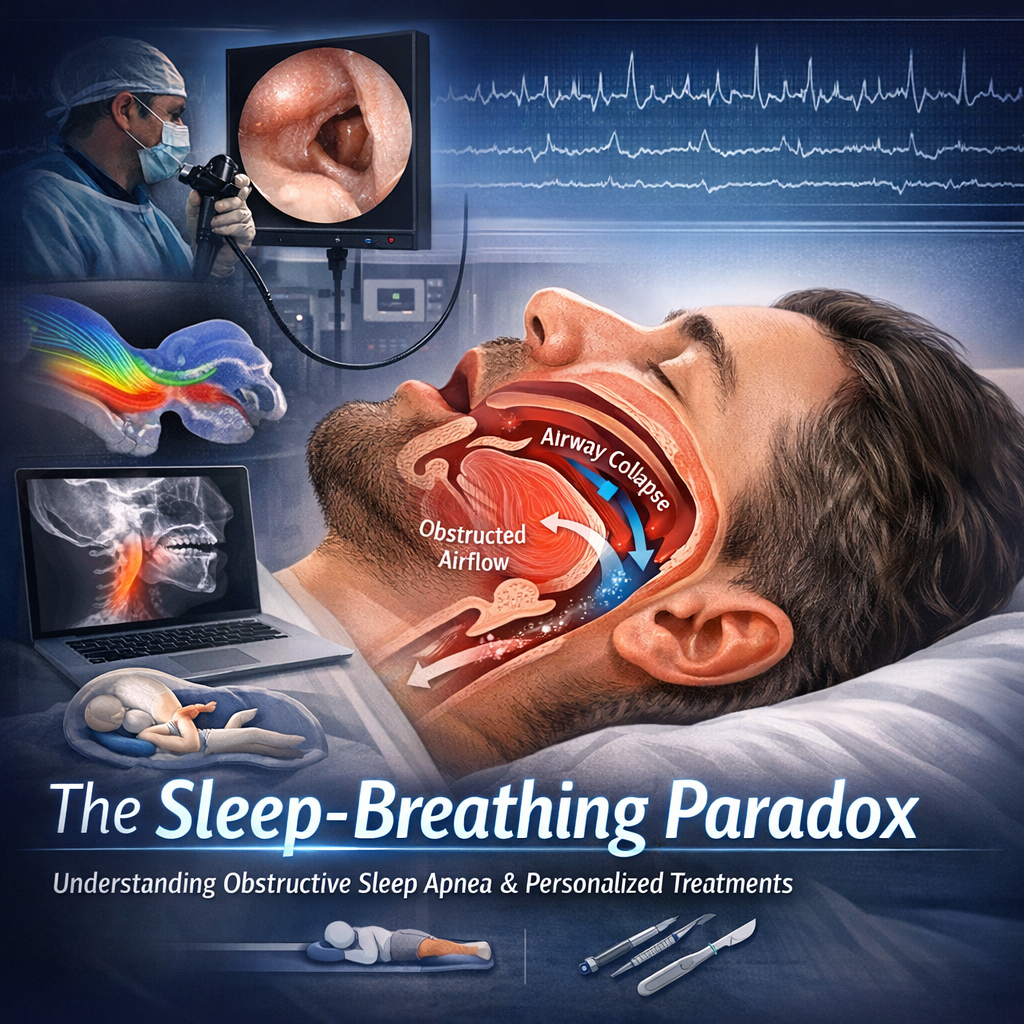
**Airway geometry** refers to the structural characteristics of the airways, including size, shape, and the intricate layout of the nasal, oral, and pharyngeal passages. These features determine how easily air travels through the respiratory system during sleep. However, conditions such as **obstructive sleep apnea (OSA)** highlight a confounding element. Despite having generally unobstructed airways while awake, some individuals experience critical airway collapses during sleep, leading to fragmented rest and impaired health.
Obstructive Sleep Apnea
OSA affects millions worldwide and is characterized by repeated episodes of partial or complete obstruction of the upper airway during sleep, leading to breathing pauses and **oxygen desaturation**. The anatomical susceptibility of the upper airways plays a pivotal role. Studies have revealed that even subtle variations in airway size and structure can significantly impact one’s likelihood of experiencing breathing disruptions during sleep. Interestingly, individuals with similar airway geometries may display varying symptoms, emphasizing the paradoxical nature of this relationship and the necessity to comprehend these dynamics fully.
Advancements in Diagnostic Technologies
Advancements in diagnostic technologies, such as **dynamic airway imaging** and **computational modeling**, reveal the complexities of airway geometry and its influence on sleep-related breathing disorders. By closely examining these relationships, healthcare providers can develop targeted interventions that consider individual anatomical variances, heralding a new era in tailored **sleep medicine** treatments. This article will delve into the current understanding of the sleep-breathing paradox, explore recent research efforts in this domain, and discuss how these insights are poised to revolutionize sleep medicine.
Features
Medical research has increasingly focused on the role of airway geometry in sleep-breathing disorders. A landmark study conducted by the University of Pennsylvania employed advanced imaging techniques to map the upper airway structures of individuals with **OSA**, comparing them to non-affected individuals. The findings showcased that anatomical features such as a narrower pharyngeal airway and increased lateral pharyngeal wall thickness were prevalent in patients diagnosed with OSA. This study underscored the importance of anatomical assessment in predicting and diagnosing sleep-disordered breathing conditions. [Reference](https://www.ncbi.nlm.nih.gov/pmc/articles/PMC2814845/)
Moreover, research from Stanford University’s Sleep Medicine Center used **computational fluid dynamics (CFD)** to model airflow through the upper airways. This innovative approach provided insights into how different anatomical configurations influence airflow patterns and susceptibility to collapse during sleep. The study suggested that tailored interventions, such as **positional therapy**, **mandibular advancement devices**, or surgical modifications, could effectively alleviate symptoms in patients whose OSA is primarily due to predisposed anatomical features. [Reference](https://journals.sagepub.com/doi/10.1177/1094716017739058)
Additionally, newer approaches like **drug-induced sleep endoscopy (DISE)** have emerged as valuable tools to directly visualize airway behavior during sleep in real time. This method offers detailed insights into specific sites and mechanisms of airway obstruction, empowering clinicians to devise personalized treatment plans. A comprehensive study published in the journal “Chest” demonstrated that DISE-guided interventions led to significantly improved outcomes for patients with OSA compared to conventional strategies. [Reference](https://journal.chestnet.org/article/S0012-3692(15)52568-8/fulltext)
These studies collectively highlight the paradigm shift towards a more precise understanding of how individual airway geometry influences sleep-breathing disorders. By bridging this knowledge gap, sleep medicine is moving away from a one-size-fits-all approach toward more nuanced, patient-specific treatments.
Conclusion
Understanding airway geometry’s pivotal role in sleep-breathing disorders marks a turning point in sleep medicine. The paradoxical relationship, where structural features designed to aid breathing can also obstruct it, underscores the complexity of the human body and challenges faced in treatment. As research continues to unravel the mysteries of airway dynamics, it offers the promise of more precise and individualized approaches in managing **sleep disorders**. This paradigm shift emphasizes personalized care, aiming not just to alleviate symptoms but to address root anatomical causes, thereby revolutionizing treatment effectiveness and patient outcomes. By embracing these insights, sleep medicine can significantly enhance the quality of life for those affected by sleep-breathing disorders, paving the way for a future where restful sleep is an attainable reality for all.
**Concise Summary:**
This article explores the paradox in **sleep medicine** where airway anatomy, meant to facilitate breathing, can actually obstruct it, particularly in conditions like **obstructive sleep apnea (OSA)**. It highlights the role of advanced diagnostic technologies in understanding this phenomenon and emphasizes the shift from a one-size-fits-all treatment approach to more personalized, anatomically informed interventions. By delving into recent research efforts involving imaging, computational modeling, and drug-induced sleep endoscopy, the article underscores a promising future for tailored treatments that can fundamentally improve sleep disorder management and patient well-being.

Dominic E. is a passionate filmmaker navigating the exciting intersection of art and science. By day, he delves into the complexities of the human body as a full-time medical writer, meticulously translating intricate medical concepts into accessible and engaging narratives. By night, he explores the boundless realm of cinematic storytelling, crafting narratives that evoke emotion and challenge perspectives.
Film Student and Full-time Medical Writer for ContentVendor.com