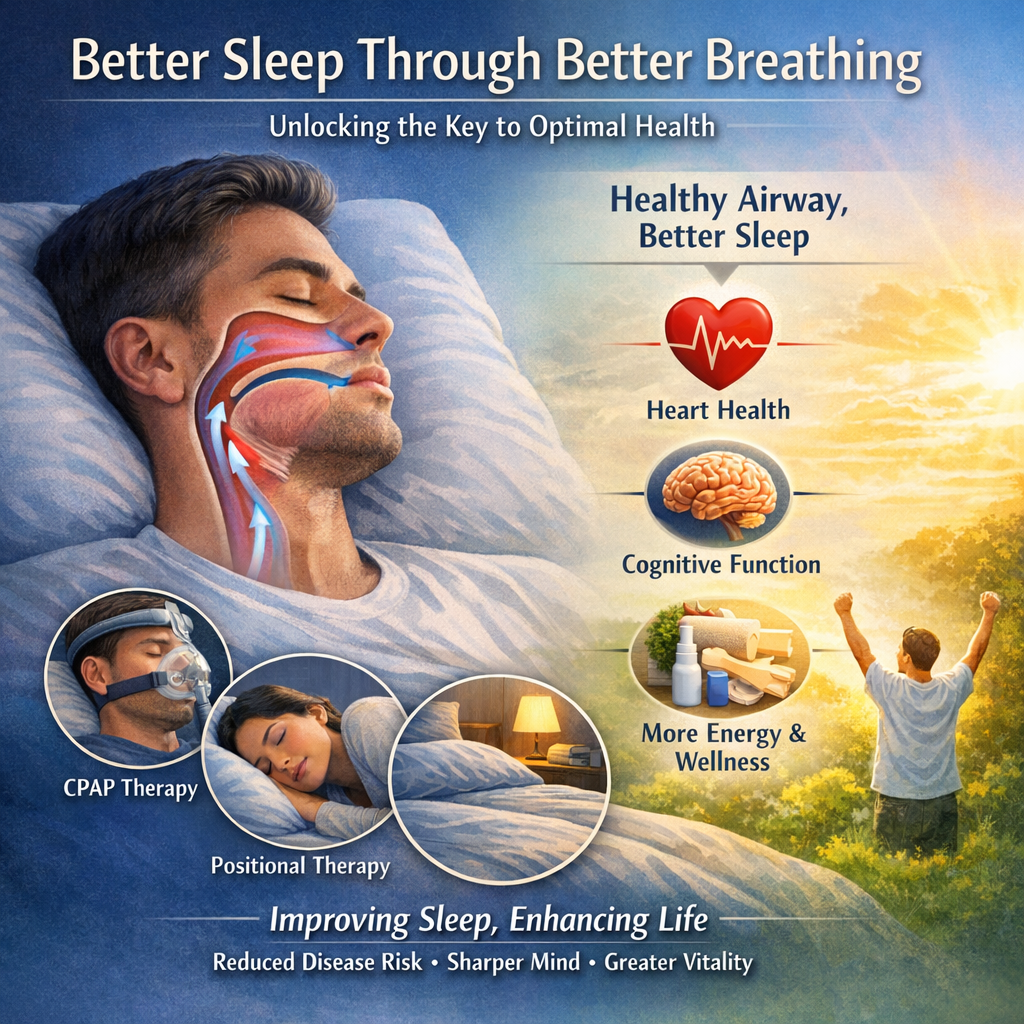
Unlocking the Sleep-Breathing Paradox: How Fixing Your Airway Could Revolutionize Your Health Beyond the Bedroom
When we think of **sleep**, we often consider factors like mattress quality, room temperature, and **sleep routines**. However, an often-overlooked aspect that could dramatically enhance sleep quality is the **airway**. Proper airway management can significantly impact our health, affecting everything from **cognitive function** to **cardiovascular health**. Understanding the intricate relationship between airway health and sleep is crucial for achieving optimally restful and restorative sleep.
At the core of sleep health is **breathing**. Our respiratory system plays a pivotal role when we sleep, not just in preventing sleep disorders like **obstructive sleep apnea (OSA)**, but in maintaining sleep quality itself. Any disruption in the airway, including the nasal passages, throat, and windpipe, can lead to **sleep-related breathing disorders**, causing interrupted sleep cycles and body stress.
The importance of airway health doesn’t stop in the bedroom. Poorly managed airway issues during sleep can have wide-reaching implications on a person’s overall health. Issues like **reduced oxygen levels during sleep** can lead to chronic fatigue, **hypertension**, and increased risk of **heart disease**. Ensuring that the airway is clear and functions properly can thus be a pivotal factor in improving these health issues.
A growing body of research suggests that addressing airway health may be one of the most effective strategies for people looking to improve their sleep as well as their overall health. **Continuous Positive Airway Pressure (CPAP)** devices and lifestyle adjustments like sleeping positions and dietary modifications are effective ways to optimize airway function.
Fixing airway issues is beneficial for everyone, not just those with diagnosed conditions like OSA. Enhancing airway function can amplify both daily energy levels and long-term health benefits. Properly addressing airway function can revolutionize health both within and beyond the bedroom.
Features: Professional and Medical Studies on Airway Health and Sleep
Several studies have highlighted the significance of airway health in promoting quality sleep and overall well-being. The most prevalent and scientifically explored condition related to airway health is **obstructive sleep apnea (OSA)**.
A study published in the [**American Journal of Respiratory and Critical Care Medicine**](https://www.atsjournals.org/journal/ajrccm) highlights the correlation between OSA and increased cardiovascular risks. Untreated OSA can lead to elevated blood pressure, increased inflammatory markers, and **metabolic syndrome**. Treatments such as CPAP devices have shown marked improvement in both sleep quality and cardiovascular health.
Another study in the [**Journal of Clinical Sleep Medicine**](https://jcsm.aasm.org) examined the impact of **positional therapy** on airway obstruction in sleep apnea patients. Findings indicated that sleeping in a lateral position rather than a supine position can significantly reduce episodes of apnea and improve oxygen saturation levels.
The benefits of addressing **nasal airway obstruction** have also been emphasized in various studies. According to a study in the [**American Journal of Rhinology & Allergy**](http://www.amjrhino.com), surgical correction of nasal obstruction often leads to improvement in sleep quality and reduction of daytime sleepiness.
Research is also expanding into the broader implications of airway health. A study in the [**Sleep Journal**](https://academic.oup.com/sleep) explored the connection between OSA and cognitive decline, suggesting untreated OSA may lead to lower cognitive function, increased risk of dementia, and memory impairments.
Addressing these issues requires a multidisciplinary approach including medical interventions, behavioral changes, and possibly surgical procedures. Airway management is a comprehensive strategy for enhancing systemic health.
Conclusion
The intricate interplay between sleep and breathing illustrates the crucial role airway health plays in both sleep quality and overall health. Addressing airway issues can improve sleep experiences, reduce chronic illness risks, and boost cognitive functioning. Numerous strategies exist to improve airway health. The benefits offer a promising avenue for those with sleep disorders and anyone aiming to enhance quality of life. Tackling the sleep-breathing paradox is a path towards better health and longevity.
Concise Summary
Ensuring optimal airway health is pivotal for enhancing sleep quality and overall health. Proper airway management can address conditions like obstructive sleep apnea, reduce risks of chronic illnesses like heart disease, and improve cognitive functions. Strategies for airway optimization include medical interventions like CPAP devices and lifestyle modifications such as positional therapy. Encouragingly, improving airway function benefits not just those with diagnosed conditions but anyone seeking better health and vitality, highlighting the revolutionary potential in tackling the sleep-breathing paradox.

Dominic E. is a passionate filmmaker navigating the exciting intersection of art and science. By day, he delves into the complexities of the human body as a full-time medical writer, meticulously translating intricate medical concepts into accessible and engaging narratives. By night, he explores the boundless realm of cinematic storytelling, crafting narratives that evoke emotion and challenge perspectives.
Film Student and Full-time Medical Writer for ContentVendor.com